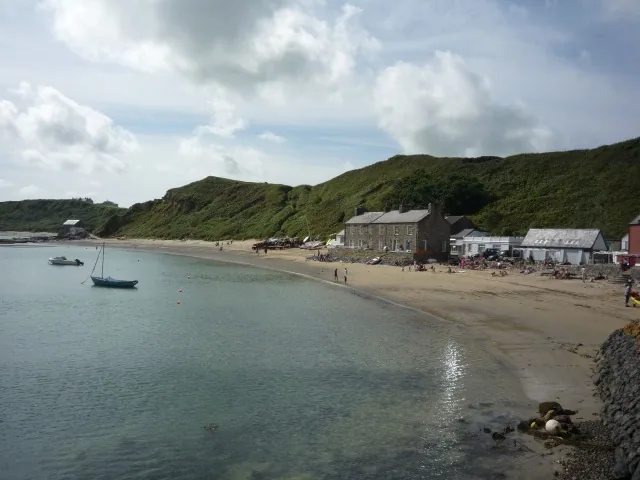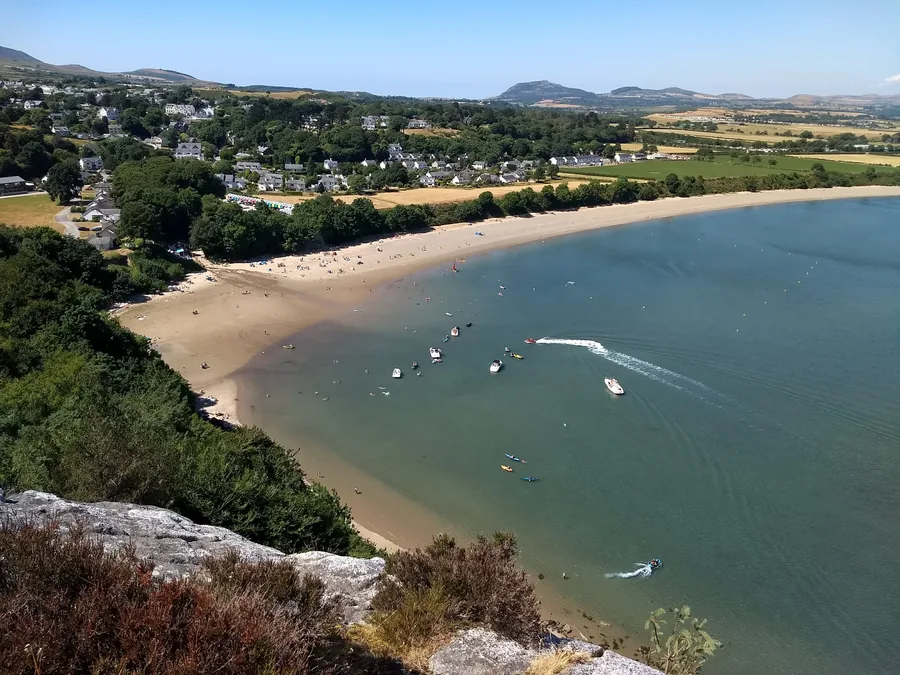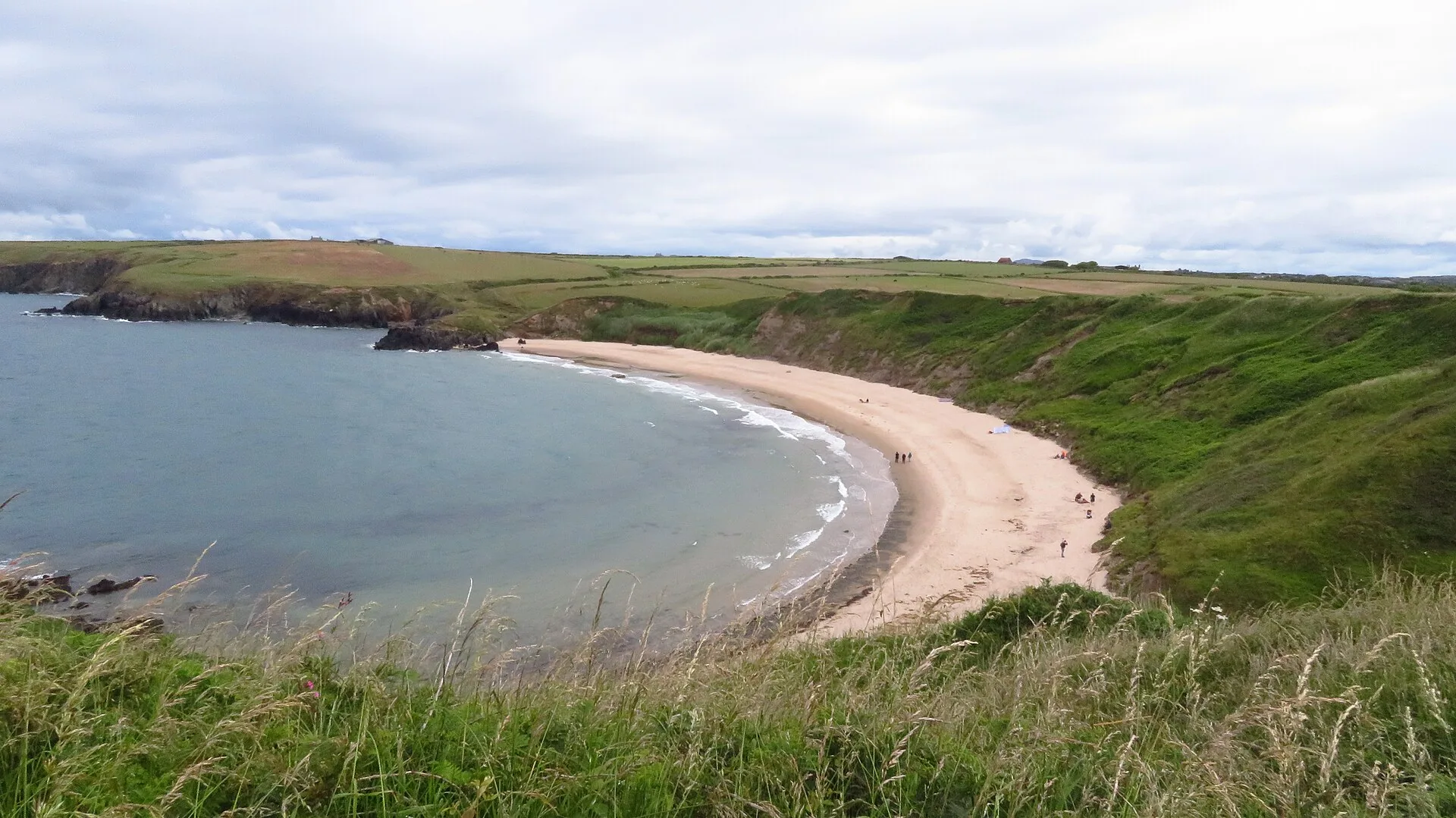
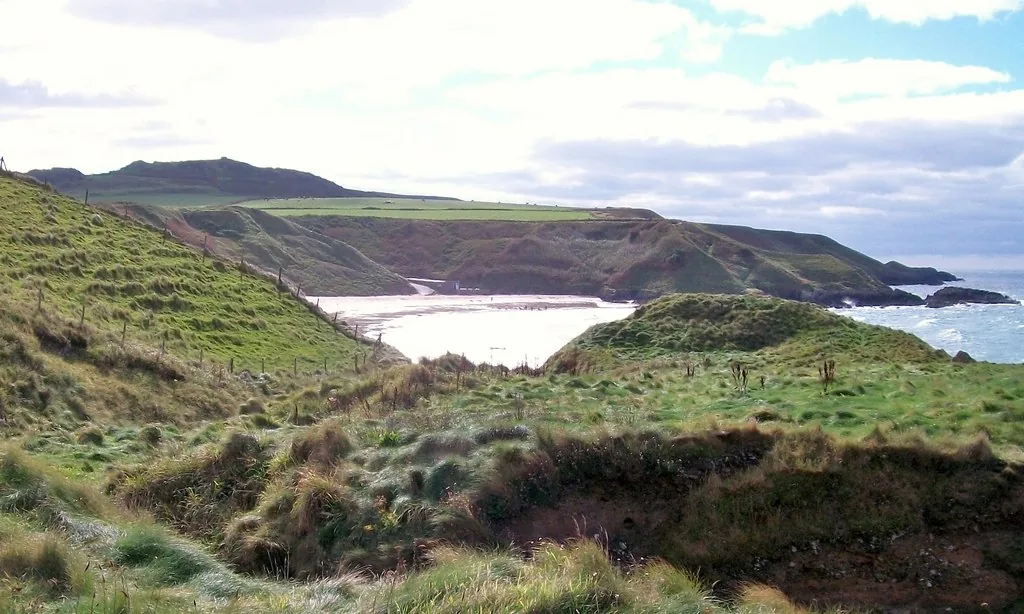
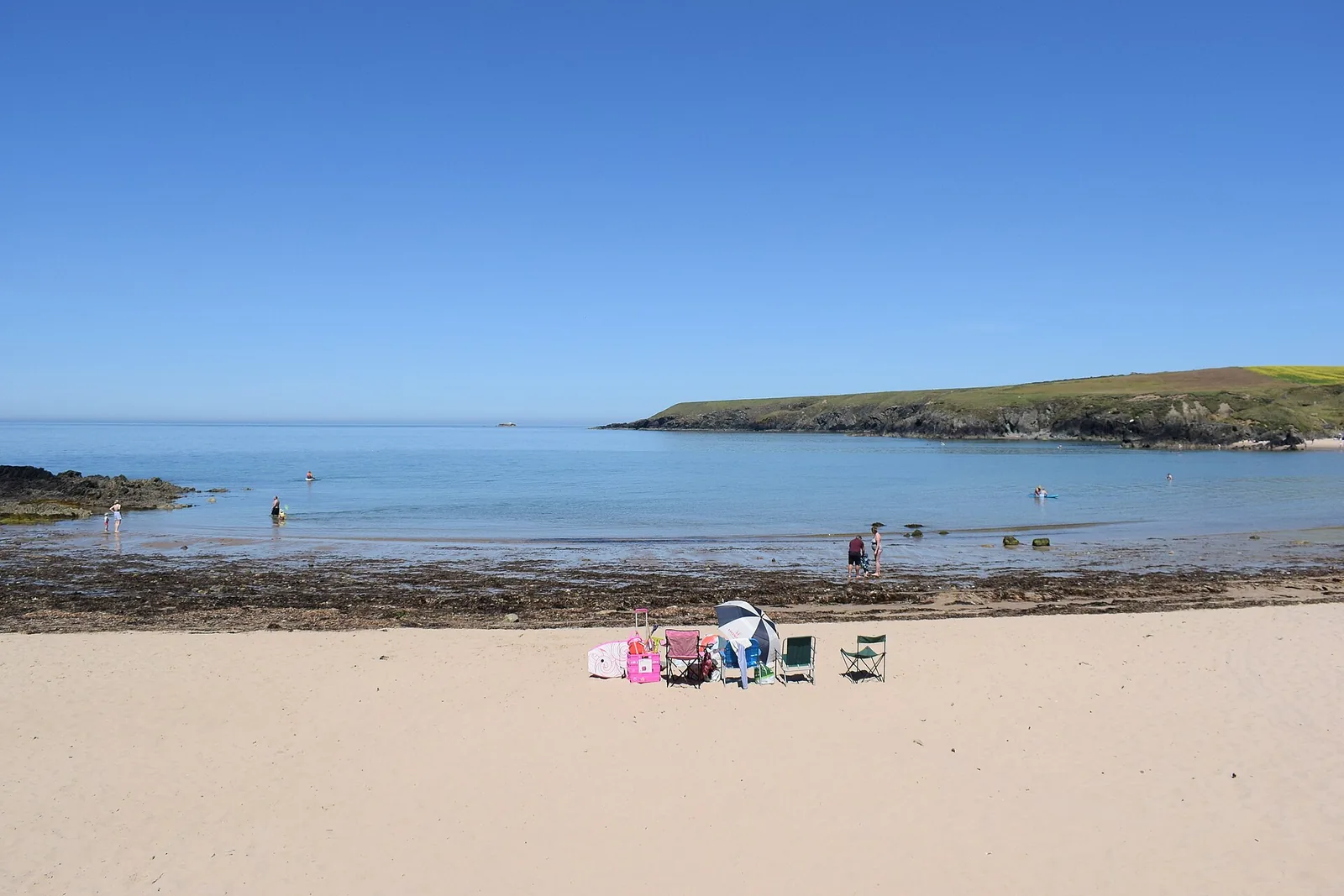
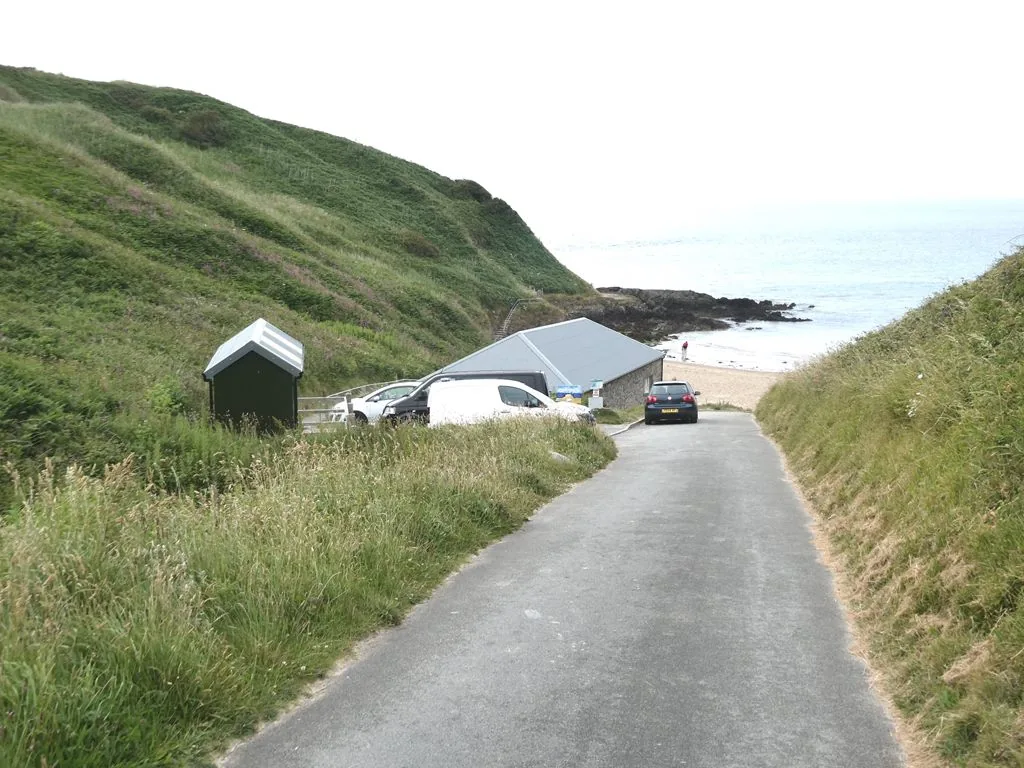
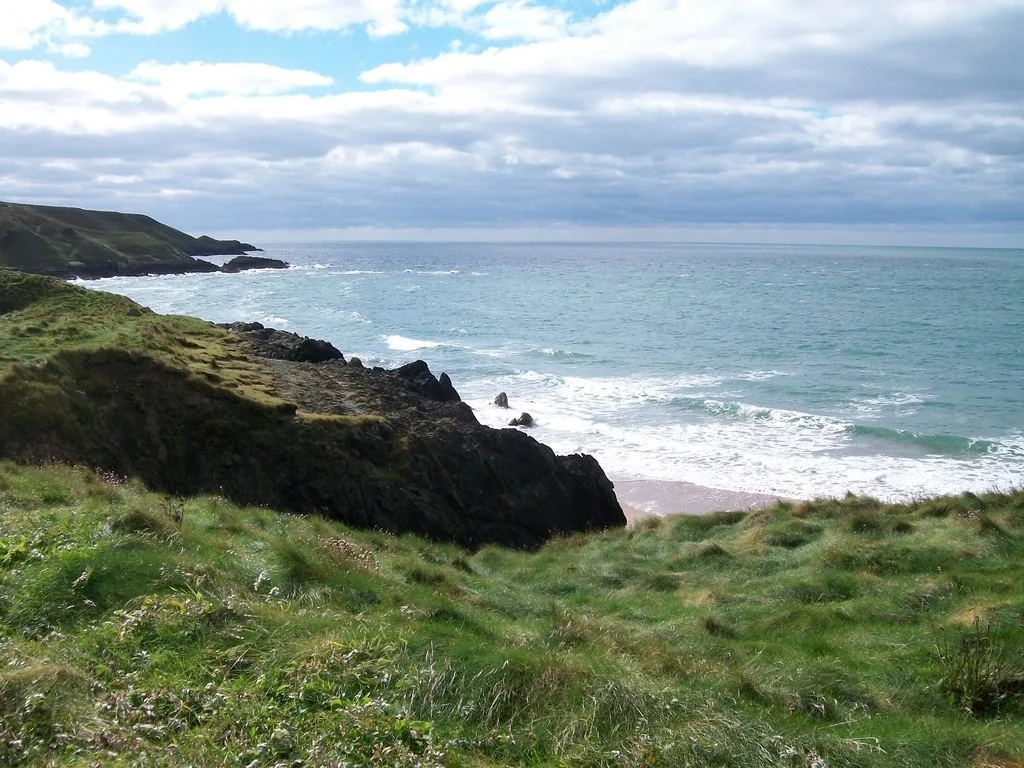
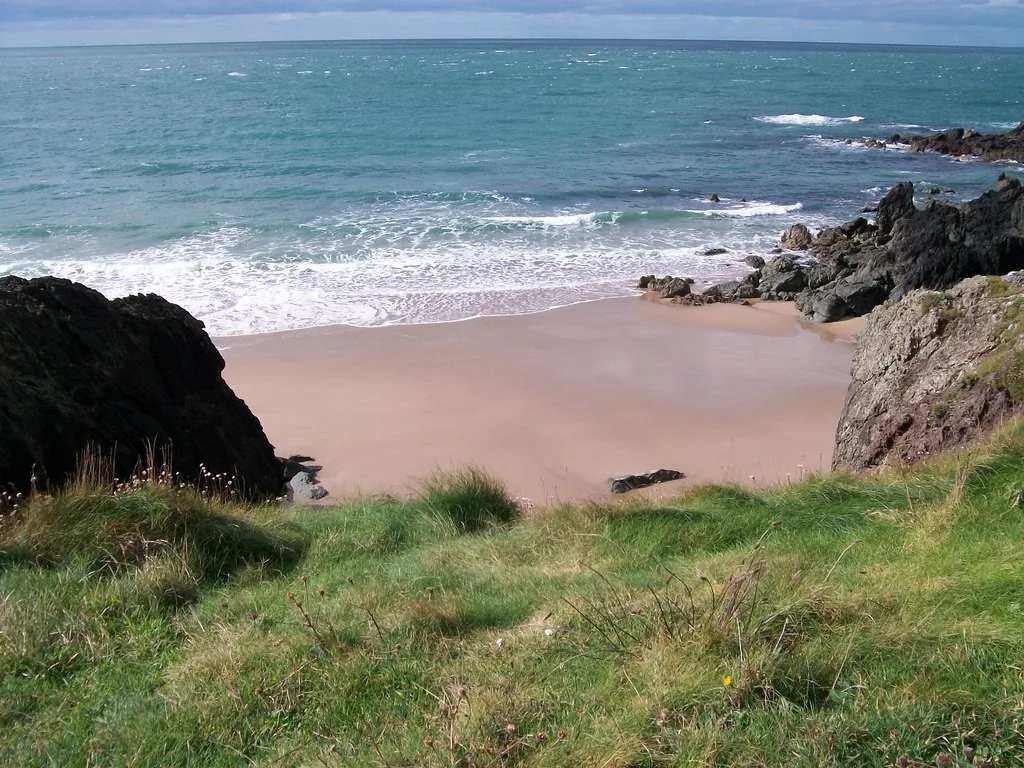
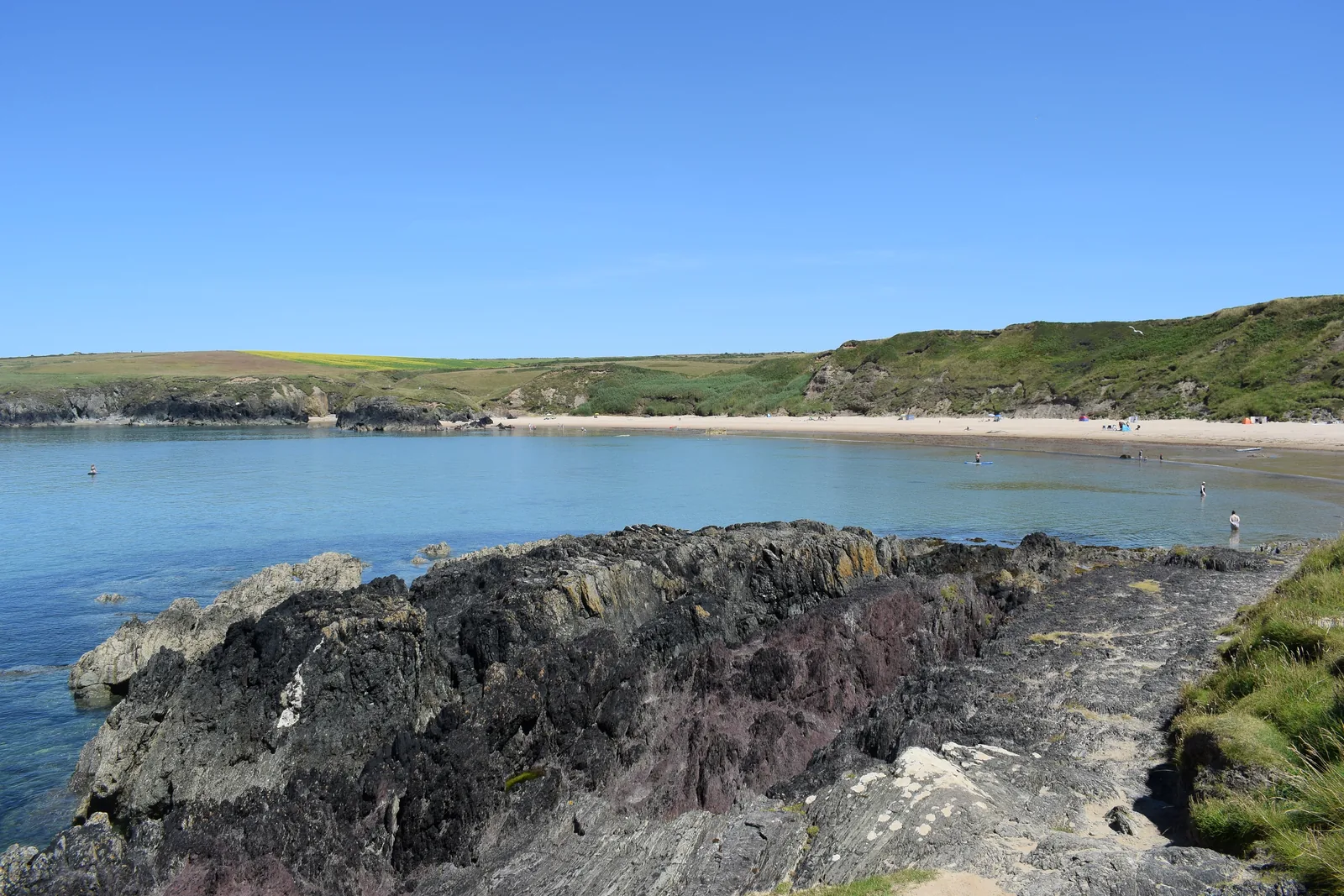
An elevated view of Porth Oer's curving cove, sand meeting clear water below cliffs and farmland.

Near Aberdaron, Llŷn Peninsula

Porth Oer Whistling Sands

A National Trust cove where dry sand whistles underfoot.

Before you go.

Get the season and the car park right, and Porth Oer is a straightforward stop on a Llŷn day.

CHECK FIRST · SEASONAL RULE

Dogs aren’t allowed on the beach between 1 April and 30 September; the rest of the year there’s no restriction. See the Whistling Sands beach guide for the current dates.

Time needed
Short stop, easy walk
Best time
Dry weather · the sand whistles more
Opening, entry & booking
Open beach, free, no booking · NT pay-and-display, tariff not published
Access & difficulty
Wales Coast Path both ways
Parking & start point
National Trust car park · short walk down to the beach
Getting there
Minor road between Aberdaron and Rhydlios · ~3¼ miles: car needed
Toilets, food & facilities
At the car park · Seasonal café, summer only
Dogs
Not on the beach, April–September
Plan with confidence. Detailed information on arrival, access, facilities, restrictions and local conditions.
Opening, entry & booking
Open
The beach is open access all year, free, with no ticket and no booking.
What you pay for
Parking. The National Trust car park sits beside the beach access lane and is pay-and-display; free to National Trust members.
Tariff
Not published in the sources checked for this guide. Check the machine or the NT sign on arrival.
Café season
The café trades through the summer only. Outside those months there is nothing on site, so bring what you need.
Parking, start point & arrival
Where
A National Trust car park sits beside the beach access lane, on the minor road between Aberdaron and Rhydlios. Open the National Trust car park in Google Maps.
Payment
Pay-and-display, though the current tariff isn’t published in the sources checked for this guide. Use the on-site machine as the final authority.
Distance
A short walk from the car park down to the beach.
Public transport & car-free access
Location
On the minor road between Aberdaron and Rhydlios, on the Llŷn Peninsula’s north coast (OS grid reference SH165298).
Nearest town
Aberdaron, about 5 km (3¼ miles) south; Pwllheli is the nearest larger town.
Postcode
Sources checked for this guide disagree on the exact postcode. Follow the grid reference or the brown-and-white signs from the Aberdaron–Rhydlios road instead.
Toilets, food & facilities
Toilets
At the car park.
Food
A seasonal café trades through the summer months, with ice cream and light snacks. Outside summer, bring your own.
Accessibility & terrain
From the car park
A short walk down the lane to the beach: easy by Llŷn standards, but a slope, not a level path.
Underfoot
Firm sand at the shore, softer above the tideline; the approach lane is surfaced.
The climb back
The return from the beach is uphill: short, but noticeable with children or a loaded bag.
Toilets
At the car park, at the top of the walk rather than at beach level.
Dogs & restrictions
On the beach
No dogs 1 April–30 September; unrestricted 1 October–31 March.
On arrival
An information panel at the car park shows the current beach restrictions.
Safety, weather & local conditions
In the water
No lifeguard service is confirmed for this beach, and submerged rocks are reported. Take care, especially around lower tide states.
Emergency
If you’re in danger, call 999 and ask for the Coastguard.

What to bring

  • Water
  • Snacks
  • Windproof layer
  • Sturdy shoes
  • Charged phone
  • Dog lead (outside summer)

This isn’t the view. It’s the sound underfoot.

Porth Oer looks like any small Llŷn cove until you cross the dry sand and it answers back: a dry, distinct whistle that gives the beach its English name.

The Wales Coast Path keeps going in both directions from the car park, so the cove is a pause in a longer walk, not a dead end.

Should this shape your day?

A short, easy stop, not a place to build a whole day around on its own.

Good fit for

  • coast-path walkers touring the Llŷn Peninsula
  • families wanting a compact, easy beach
  • surfers and bodyboarders
  • anyone curious about the whistling sand

Think twice if

  • you need a lifeguarded beach
  • you’re visiting with a dog in summer
  • you need fully confirmed step-free access
  • you’re expecting a large resort-style beach

Dogs change the summer

  • no dogs on the beach, 1 Apr–30 Sep
  • unrestricted 1 Oct–31 Mar
See the current dates

Best experience

Give it a dry, settled day: that’s when the sand is most likely to whistle underfoot.

A wide, curving stretch of the beach at Porth Oer, cliffs and farmland rising behind.
The path keeps going, either way you turn.

One walk, seven scenes.

See the shape of the visit before you commit to it.

  1. 01 The turn

    Off the Aberdaron–Rhydlios road.

  2. 02 Car park

    The National Trust car park.

  3. 03 The path down

    A short walk toward the beach.

  4. 04 The cove opens

    Cliffs either side, sand ahead.

  5. 05 The dry sand

    Cross it: listen for the whistle.

  6. 06 The coast path

    Either direction along the clifftop.

  7. 07 The return

    Back the same way, to the car park.

The parts people remember

Porth Oer isn’t one view. It’s a small sequence of changes underfoot and overhead.

  1. The sand answers you back

    A few steps across the dry upper beach, and the sand itself makes a sound: a dry, squeaking whistle no ordinary beach produces.

  2. Cliffs closing around a small bay

    The cove is small enough that the cliffs feel close on both sides as soon as you’re down on the sand.

  3. The coast path doesn’t stop here

    However you arrived, the Wales Coast Path keeps going in both directions along the clifftop: this beach is a pause, not a dead end.

  4. A working cove, once

    Long before the car park, boats worked this same small bay: a detail easy to miss on a beach day.

  5. The whistle stops before the car park does

    Walking the short path back up, the dry upper sand is the first thing you leave behind, and the sound goes with it. A few paces on and the cove reads as one more notch in the Llŷn cliffs.

The cove asks for a pause, not a plan.

Cove Archive

What’s known, told plainly.

Two field notes: a storm, and a working coastline before this was a beach day out.

Not every place has a deep archive. Here, two things are known, and both are told honestly, single source and all.

Field notes

Two entries. Open one to read the note.

Storm & record Fact

Nine ships, one storm

Field note I · filed under record

A calm cove has a rougher record than its name suggests.

What is recorded

A storm on 26 October 1859 wrecked nine ships at Porthor, seven of them with complete loss of life.Single source

What to notice there

Nothing on the beach marks the night. The cove today gives no sign it was ever a dangerous stretch of coast.
Continue exploring

Sand that whistles underfoot is a small gift the Llŷn keeps giving.