Toilets and parking sit right at the car park: the lake circuit itself is genuinely graded, not a flat stroll.
CHECK FIRST · PARKING
The car park is card only, and the exact tariff varies. Check it on arrival rather than assuming. Toilets at the centre are open 24 hours, but the kiosk is daytime only.
Time needed
~2 hours for the lake circuit · half a day with the drive and facilities
Best time
No sourced seasonal guidance · 1 Mar–31 Jul lead rule applies
Opening, entry & booking
Open access NNR, free, no booking · you pay only to park at Ogwen
Access & difficulty
5 km circuit, 140 m ascent · rough mountain ground, not step-free
Parking & start point
Card only · exact tariff varies, check on arrival
Getting there
T10 bus and the Bws Ogwen shuttle stop at Ogwen · A5 by car
Toilets, food & facilities
24-hour toilets at the centre · kiosk usually open in the day
Dogs
On a lead · Mar–Jul mandatory, advised year-round
Plan with confidence.Detailed information on arrival, access, facilities, restrictions and local conditions.
Opening, entry & booking
The reserve
Cwm Idwal is an open-access National Nature Reserve. It is free, unfenced and has no opening hours: there is nothing to book and nothing to enter.
What you pay for
Parking at the Ogwen Centre car park: pay-and-display, card and contactless only, no cash.
Tariff
£6 for the day (expires at midnight) or £3 for up to 4 hours, set by Eryri National Park Authority. Check the machine on arrival.
Facilities keep their own hours
Toilets are 24-hour; the kiosk is usually 9am–4pm (longer in summer, weekends only in January) and the information room 8am–4pm. The reserve does not close when they do.
Seasonal rule
A 2 m lead is required on Open Access Land from 1 March to 31 July.
Pay-and-display, card/contactless only, no cash: £6 for the day (expires at midnight) or £3 for up to 4 hours. Eryri National Park Authority’s Ogwen page carries the current tariff.
Overflow
Bethesda Football Club car park (£7/day) and the Llyn Ogwen car parks toward Capel Curig (coach parking, about 1 km on).
Overnight
No overnight parking or camping. Double yellow lines along parts of the A5: no parking on them at any time.
Public transport & car-free access
Bus
The TrawsCymru T10 (Bangor–Bethesda–Betws-y-Coed–Corwen) stops at Ogwen, and Eryri National Park Authority names it as the way in. Partneriaeth Ogwen also runs the Bws Ogwen electric minibus from Bethesda, but it publishes no fixed timetable page. Check the current service before travelling.
Coach
Directed to the car parks by Llyn Ogwen, about 1 km toward Capel Curig.
Toilets, food & facilities
Toilets
24-hour, including an accessible toilet, at the Cwm Idwal / Ogwen Centre.
SEASONAL WINDOW
Kiosk usually 9am–4pm, longer in summer, weekends only in January.
Also there
An information room (8am–4pm) and free Wi-Fi at the centre.
Accessibility & terrain
The circuit
The official Eryri route is 5 km, graded moderate, with about 140 m of ascent and roughly 2 hours' walking.
Underfoot
Rough mountain ground: rock, pitched path and loose sections. Not step-free, and not suitable for wheelchairs or pushchairs beyond the car park area.
At the centre
24-hour toilets including an accessible toilet, and free Wi-Fi at the Ogwen Centre.
Going higher
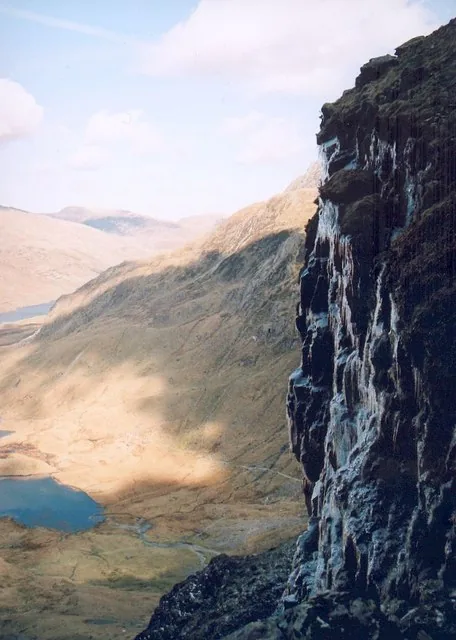
Devil's Kitchen and the routes on to Y Garn and Glyder Fawr are a serious step up in difficulty from the lake circuit. Do not treat them as an extension of it.
Dogs & restrictions
SEASONAL WINDOW
2 m lead required on Open Access Land, 1 March–31 July.
Year-round
Lead or close control advised near livestock at all times.
Context
The reserve has no boundary fence: shepherded flocks graze the bordering land, not the reserve itself.
Safety, weather & local conditions
Emergency
Call 999 and ask for Police, then Mountain Rescue. Ogwen Valley Mountain Rescue covers this valley.
Beyond the lake
Devil’s Kitchen and the routes on to Y Garn and Glyder Fawr are steep, loose underfoot in places, and need proper mountain preparation. Check the Met Office mountain forecast before continuing.
Swimming
Not permitted in the lake
PLACE-SPECIFIC DETAILS
Access & terrain
Terrain
Open Access Land, with maintained stone paths in the more fragile sections; the main lake path is about 4 km.
Shorter option
An alternative loop skips the steep pull toward Twll Du (Devil’s Kitchen).
Cycling
The Lôn Las Ogwen route connects from Bangor to the centre.
Other place details
Reserve status
Wales’ first National Nature Reserve (1954)
Lake circuit
~5 km, Moderate, ~2 hours
Reserve size
398 hectares, below Y Garn and Glyder Fawr
What to bring
Water
Snacks
Sturdy footwear
Waterproofs
Card for parking (no cash)
Dog lead if needed
Met Office forecast checked beyond the lake
Not a flat stroll round a pretty lake.
The car park is popular and the path is graded: those aren’t the same thing. Cwm Idwal’s official circuit is genuinely Moderate, with a real, steep, unsurfaced stretch toward Devil’s Kitchen.
Keep going past that hinge point and the ground changes again: scree, scrambling, and two of Wales’ higher summits rising straight out of the reserve.
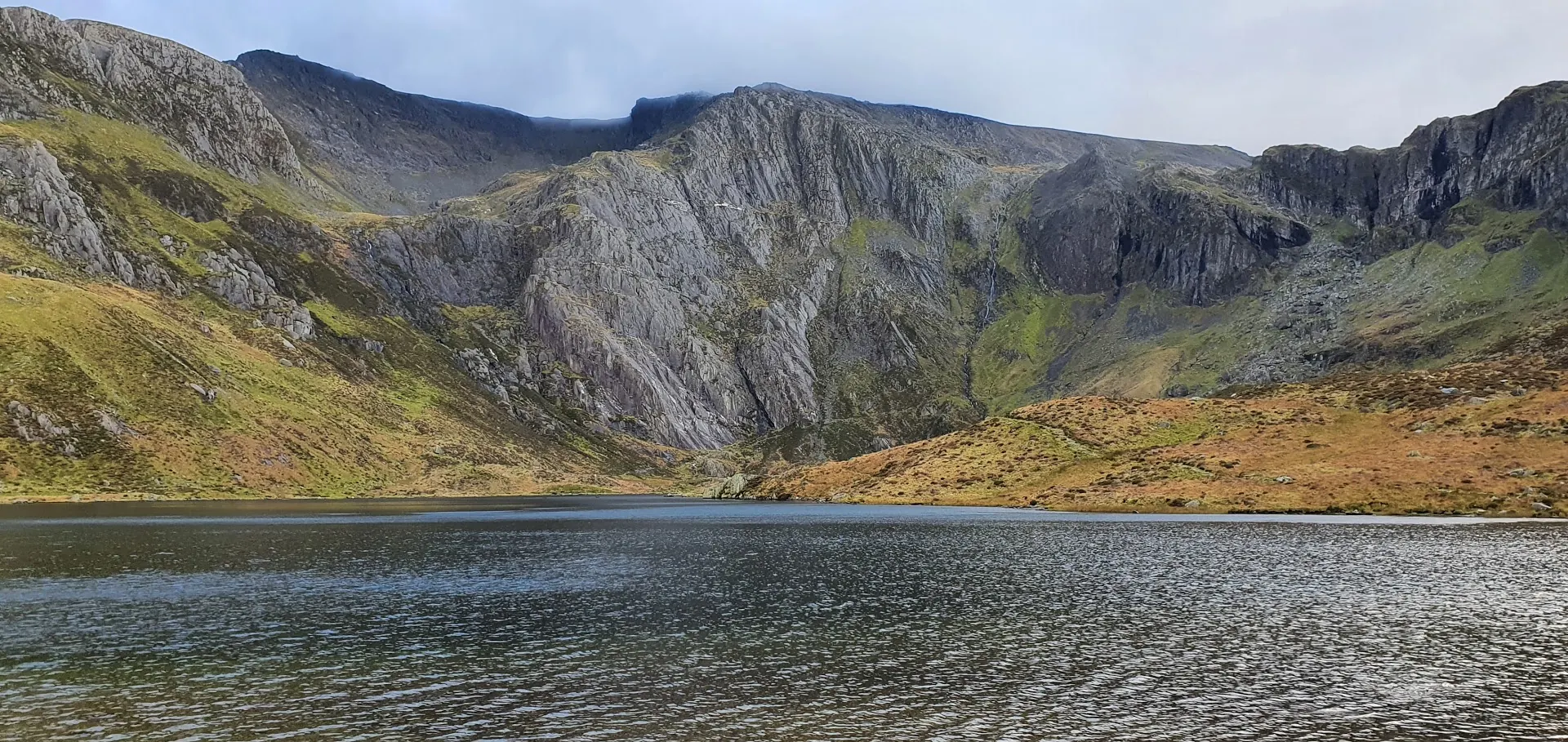
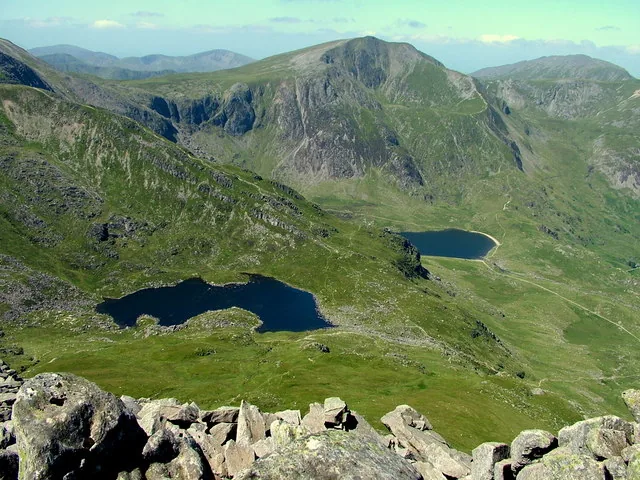
The cwm holds the lake in a ring of cliff.
Is this the day out you think it is?
A genuine two-hour circuit, with a serious mountain valley-head rising straight out of it.
Good fit for
walkers wanting a genuinely graded, well-signed circuit with guaranteed toilets
anyone interested in geology or the Darwin connection
scramblers and climbers using it as the approach to the Idwal Slabs or Devil’s Kitchen
a first, structured taste of the Glyderau
Think twice if
you’re expecting a flat, easy, all-weather stroll: the grading is genuinely Moderate
you’re heading beyond the lake without checking the forecast and proper footwear first
you need step-free access: the circuit includes a real unsurfaced climb
you’re relying on the car park having space: it fills fast on sunny weekends
The valley’s slopes hold the fold in the rock that brought Darwin back in 1842.
One circuit, seven scenes.
See the shape of the visit before you commit to it.
01 Arrival
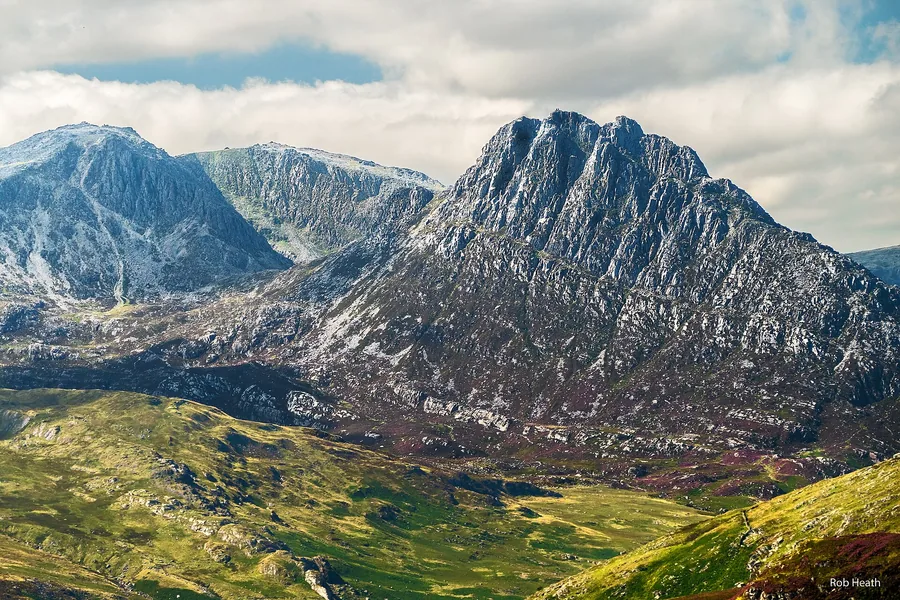
The A5 beside Llyn Ogwen, into the car park at the foot of Tryfan.
02 The centre
Toilets, a kiosk, and the signed start of the reserve path.
03 The approach climbs
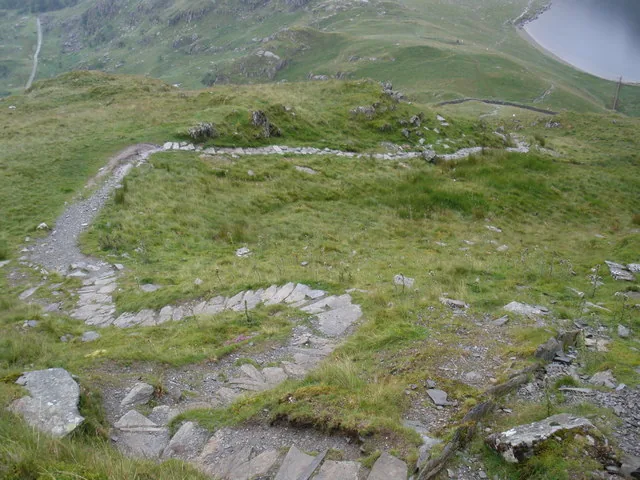
A maintained path rises through grazed, ordinary ground.
04 The lake opens out
An amphitheatre of cliffs, the Idwal Slabs across the water.
05 Round the shore
Stone paths trace the water; climbers often visible opposite.
06 The ground steepens
Toward Twll Du, where the shorter route quietly turns back.
07 Back to the valley
The lower path, the A5, and Llyn Ogwen opening out again.
Seen along the way.
Rock, water and scree: the visit before you make it.
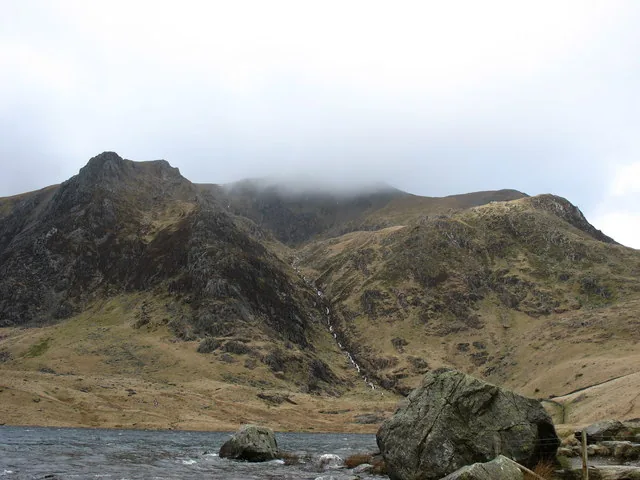
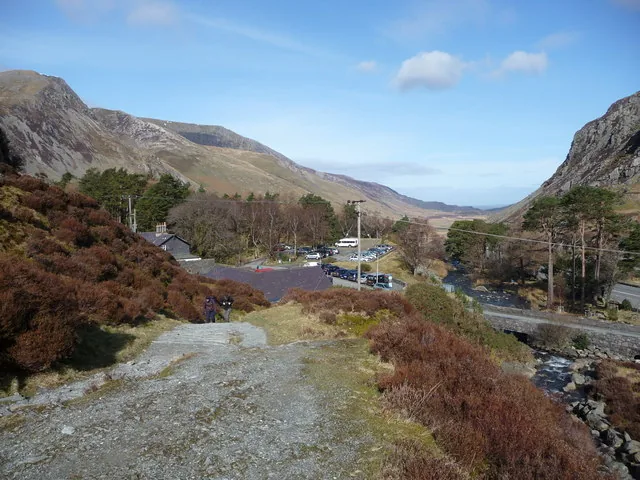
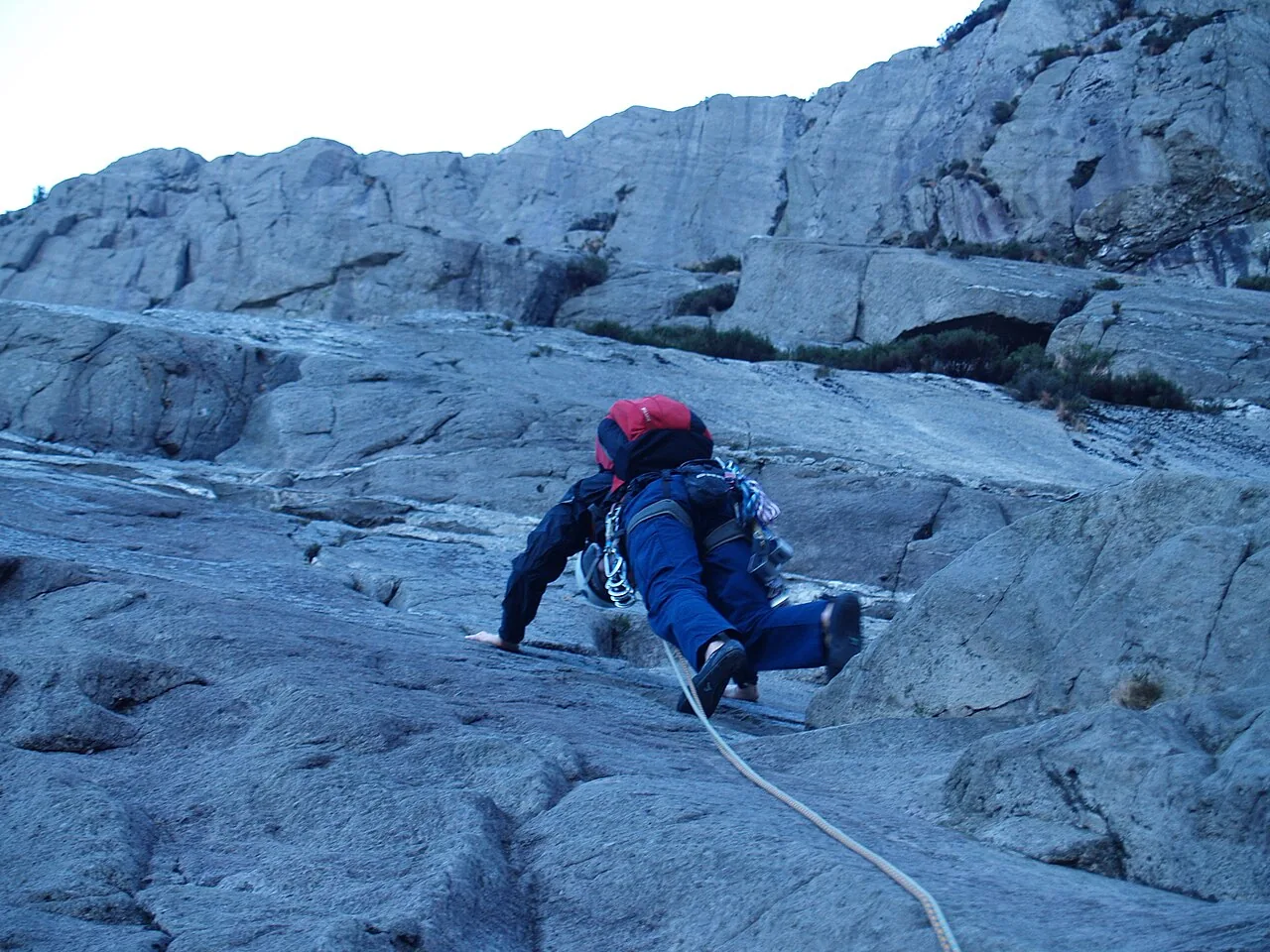
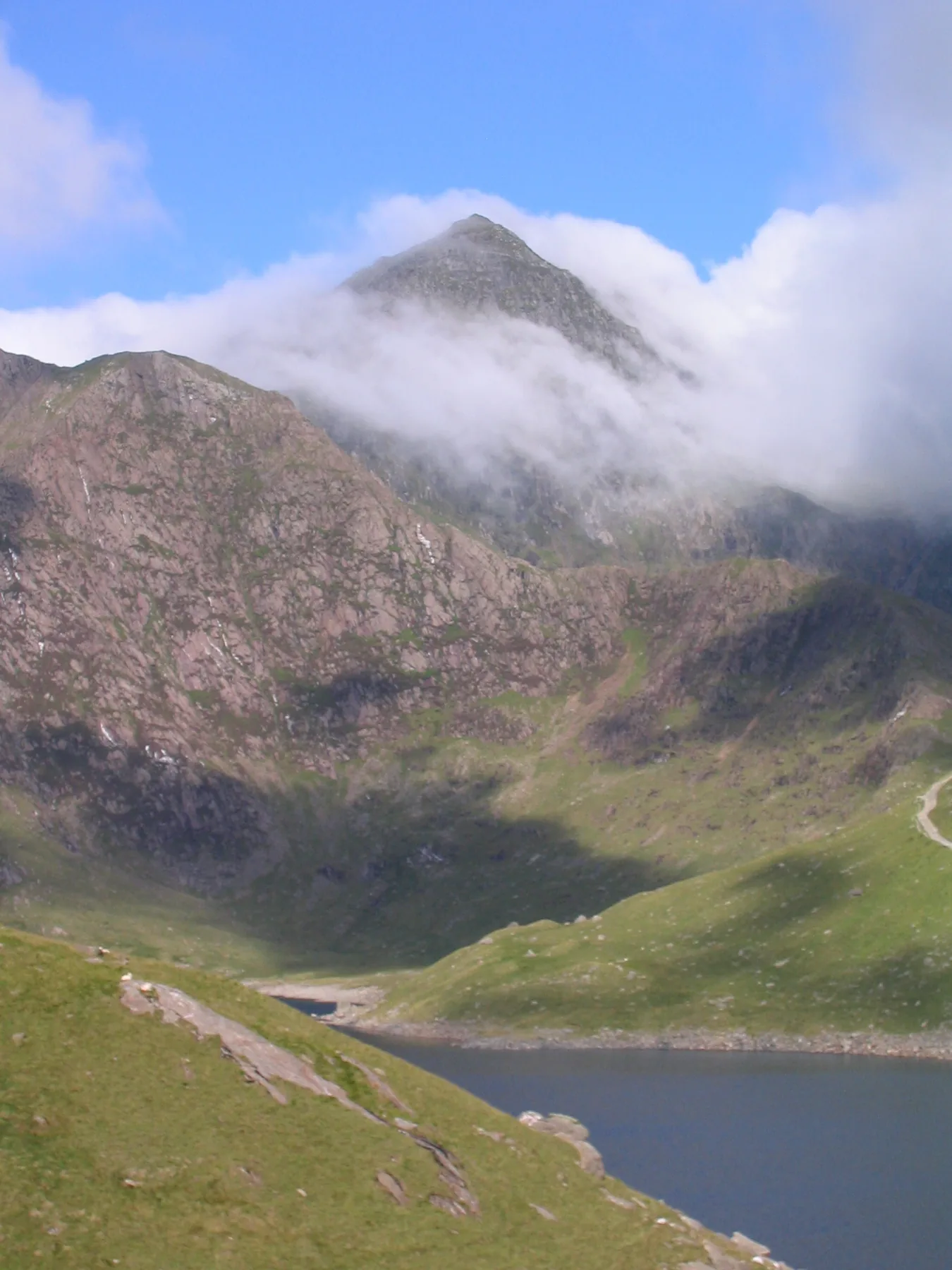
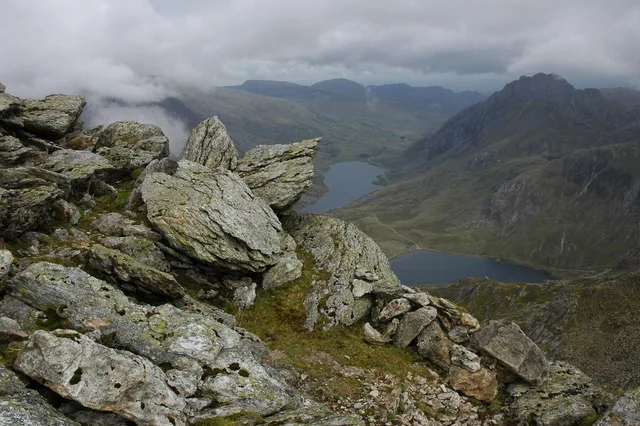
The path down to the car park: where every visit beginsThe Idwal Slabs: a training ground for generations of climbersTwll Du, the Devil’s Kitchen: where the lake circuit gives way to steeper groundThe managed path keeps the ground from washing awayY Garn: one of two summits reachable from this same car park
The parts people remember
A lake walk that changes character partway round.
01
Off the A5, onto grazed ground
The path leaves the valley floor through ordinary in-bye pasture: sheep, walls and a maintained surface, with nothing yet of what is above.
02
The cwm holds the lake
The ground levels and Llyn Idwal is simply there, ringed by cliff on three sides, with the Slabs rising in one clean sheet across the water.
03
Round the shore, slowly
Stone paths trace the water's edge. Climbers show as small marks on the Slabs opposite, which is when the scale of the far wall becomes readable.
04
A fold in the rock face
Toward the cleft at the head of the cwm the strata bend visibly, a curve running up through the cliff that the eye can follow without instruction.
05
The hinge, and back
The ground steepens toward Twll Du and the walk quietly becomes something else. Turning here sends you down again, with Llyn Ogwen widening below.
A circuit that stays easy exactly as long as you let it.
Reserve Archive
Old stories, carefully told.
Five field notes on what this reserve means: designation, land, geology, and two legends that made it as far as the reserve’s own website.
Some of this is history. Some of it is folklore. Both shape the feeling of the cwm.
Field notes
Five entries. Open one to read the note.
Designation Fact
Wales’ first reserve
Field note I · filed under designation
This wasn’t the first place in Wales worth protecting: it was the first one Wales actually did.
What is known
Cwm Idwal became Wales’ first National Nature Reserve in 1954, now managed in partnership by Natural Resources Wales, the National Trust and Eryri National Park Authority. It carries Special Area of Conservation status, and Llyn Idwal itself is protected under the RAMSAR wetlands convention.
What that covers
The reserve runs to 398 hectares across three cwms — Idwal, Cneifion and Clud — reaching up to the summits of Y Garn and Glyder Fawr.
What to notice there
The paths themselves are part of the management: stone-surfaced routes engineered to concentrate foot traffic and protect the fragile ground around them.
Land & recovery Fact
Giving the land back
Field note II · filed under management
Part of the cwm has been quietly watching itself recover for over two decades.
What is known
Sheep and cattle grazing inside the reserve was abolished completely in 1998. There’s no boundary fence: shepherds keep livestock on the agricultural land that borders Cwm Idwal instead.
What that meant
It turned parts of the cwm into a long-running natural-succession study: watching what grows back once grazing stops.
What to notice there
The reserve shares its edge informally with grazing land: dogs and walkers meet shepherded flocks on the approach, with no fence to mark the line.
Geology Fact
Darwin’s return
Field note III · filed under geology
He walked past the evidence once, aged 22, and didn’t see it. Eleven years later, he came back.
What is known
Charles Darwin visited Cwm Idwal in 1831 with his geology teacher Adam Sedgwick. He returned in 1842, after seeing glaciers firsthand in Tierra del Fuego, and recognised what had shaped the valley.
In his own words
“A house burnt down by fire did not tell its story more plainly than did this valley,” he wrote of what he saw.
What to notice there
The fold in the rock — the Idwal syncline — still runs visibly up toward Twll Du. The rock itself is Ordovician, laid down around 450 million years ago.
Folklore Folklore
The legend of Prince Idwal
Field note IV · filed under the unproven
The lake’s name comes from a story, not a record, and the reserve tells it that way itself.
What is known
Very little as fact. The story sits outside the documented record, and the reserve's own site labels it as legend, not history.
What tradition says
The story tells of Prince Idwal, drowned in the lake by his cousin Dunawd at his jealous uncle Nefydd’s order. His grieving father, Owain Gwynedd, renamed the lake in his memory and banished Nefydd. It’s said no bird crosses the lake’s surface to this day.
What to notice there
Nothing marks the story on the ground. What you take from it is the name on the map, and the quiet of the water.
Folklore Folklore
The legend of Twll Du
Field note V · filed under the unproven
Even the cleft above the lake carries a story the reserve is honest about not being able to prove.
What is known
Twll Du — “black hole” — is the cleft’s Welsh name; Devil’s Kitchen is the name most visitors use for it today.
What tradition says
Druids on Anglesey are said to have called on the old gods against the advancing Roman legions. Lightning split the mountain, and the mist that followed hid Anglesey from the invaders.
What to notice there
The cleft itself needs no legend: it’s the steepest, darkest feature above the lake, and the point where the shorter circuit turns back.Translation, not independently sourced
Don’t stop at the lake.
Four real Eryri stops within a genuine same-day-trip distance: three of them straight off the same valley.