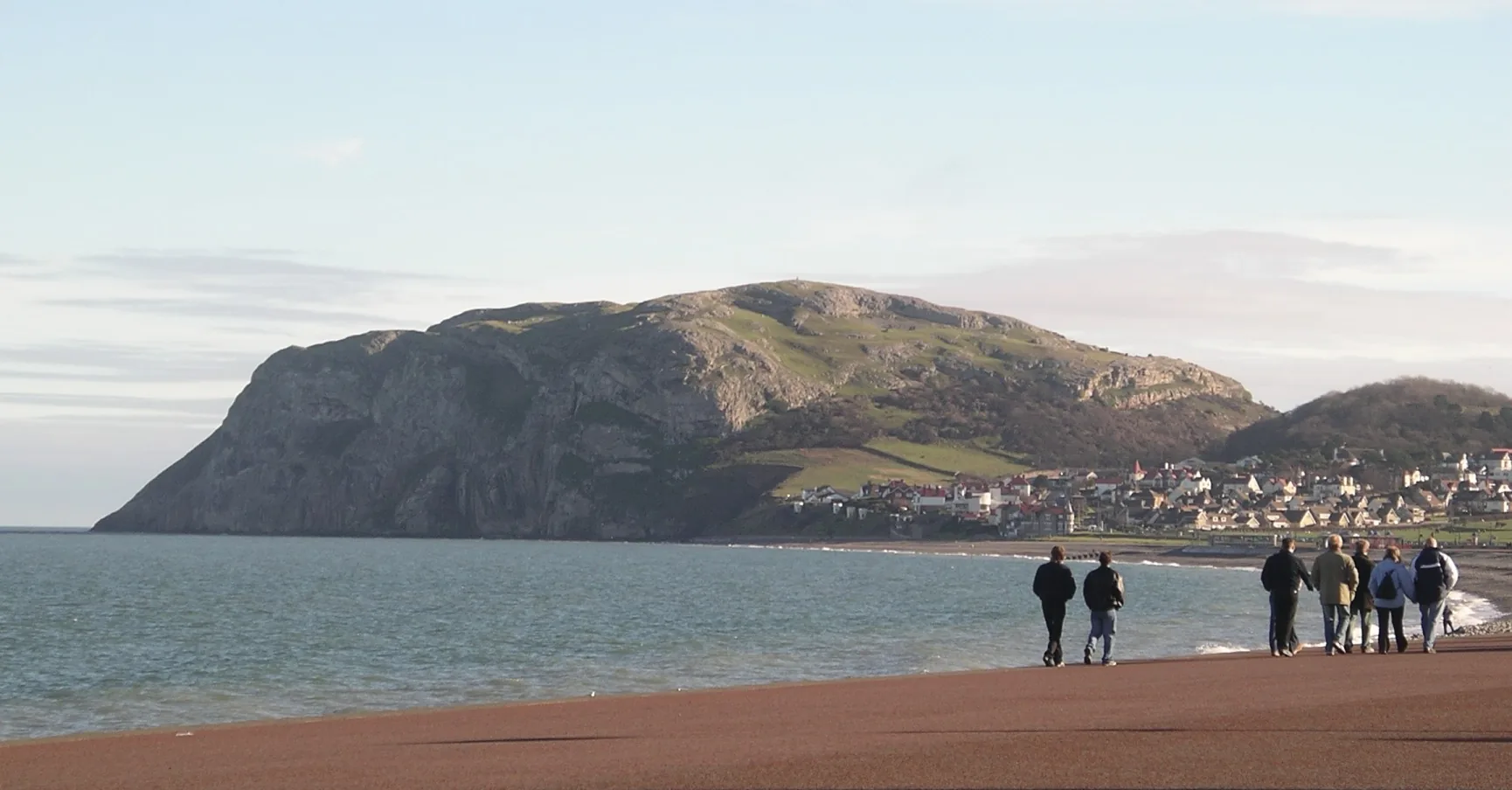
A short, real headland walk: steep in places, with a genuine wildlife-watching discipline.
CHECK FIRST · TERRAIN
The paths are steep and uneven, very slippery when wet, and carry falling-rock and sudden drop-off hazards near the cliff edge. If you come for the seals at Angel Bay, stay at least 100m back from them.
Time needed
Signed 4km circular, or a shorter Angel Bay out-and-back
Best time
Autumn/winter for seals; March–August for nesting seabirds
Opening, entry & booking
Open at all times
Access & difficulty
Steep, uneven cliff paths · 150 m to the Angel Bay path
Parking & start point
Promenade or small upper car park · no confirmed charge
Getting there
Penrhyn Bay promenade · the circular starts at the roundabout
Toilets, food & facilities
None confirmed on the headland itself
Dogs
On a lead within the nature reserve
Plan with confidence.Detailed information on arrival, access, facilities, restrictions and local conditions.
Opening, entry & booking
Open
Open headland, all year, free. There is no gate, ticket or booking; Rhiwledyn Nature Reserve and the coast path are open access.
Parking
No official source lists a charge for the promenade street parking or the small upper car park.
What is restricted
Not access but behaviour: this is a nature reserve with breeding seabirds March–August and seals at Angel Bay in autumn and winter. Dogs on leads throughout.
Booking
None: there is nothing to book and nobody on site.
Parking, start point & arrival
Promenade
Street parking on the Penrhyn Bay promenade, about 150m from the reserve footpath.
Upper car park
A small car park near grid ref SH 812 821, limited spaces.
Cost
No official source lists a parking charge for either; treat as unconfirmed rather than assuming free.
The official Wales Coast Path circular walk starts at the Penrhyn Bay roundabout and runs about 4km / 2.5 miles.
Shorter route
Park on the promenade and walk roughly 150m to the Rhiwledyn reserve footpath entrance for a shorter Angel Bay out-and-back.
By bus
Penrhyn Bay is on local routes between Llandudno and Rhos-on-Sea. No route number is confirmed for this guide; plan door to door with the Traveline Cymru journey planner, and check the current service before travelling.
No toilets or food are listed for the headland itself; use facilities in Penrhyn Bay or Llandudno before setting out.
Accessibility & terrain
Not step-free
Steep, uneven paths throughout, with falling-rock and sudden drop-off hazards near the cliff edge. There is no accessible route onto the headland.
When it is worst
Very slippery when wet: the limestone and the worn path both hold water.
The shorter option
From the promenade it is roughly 150 m to the Rhiwledyn reserve footpath entrance, which gives an Angel Bay out-and-back rather than the full 4 km circuit.
Viewing seals
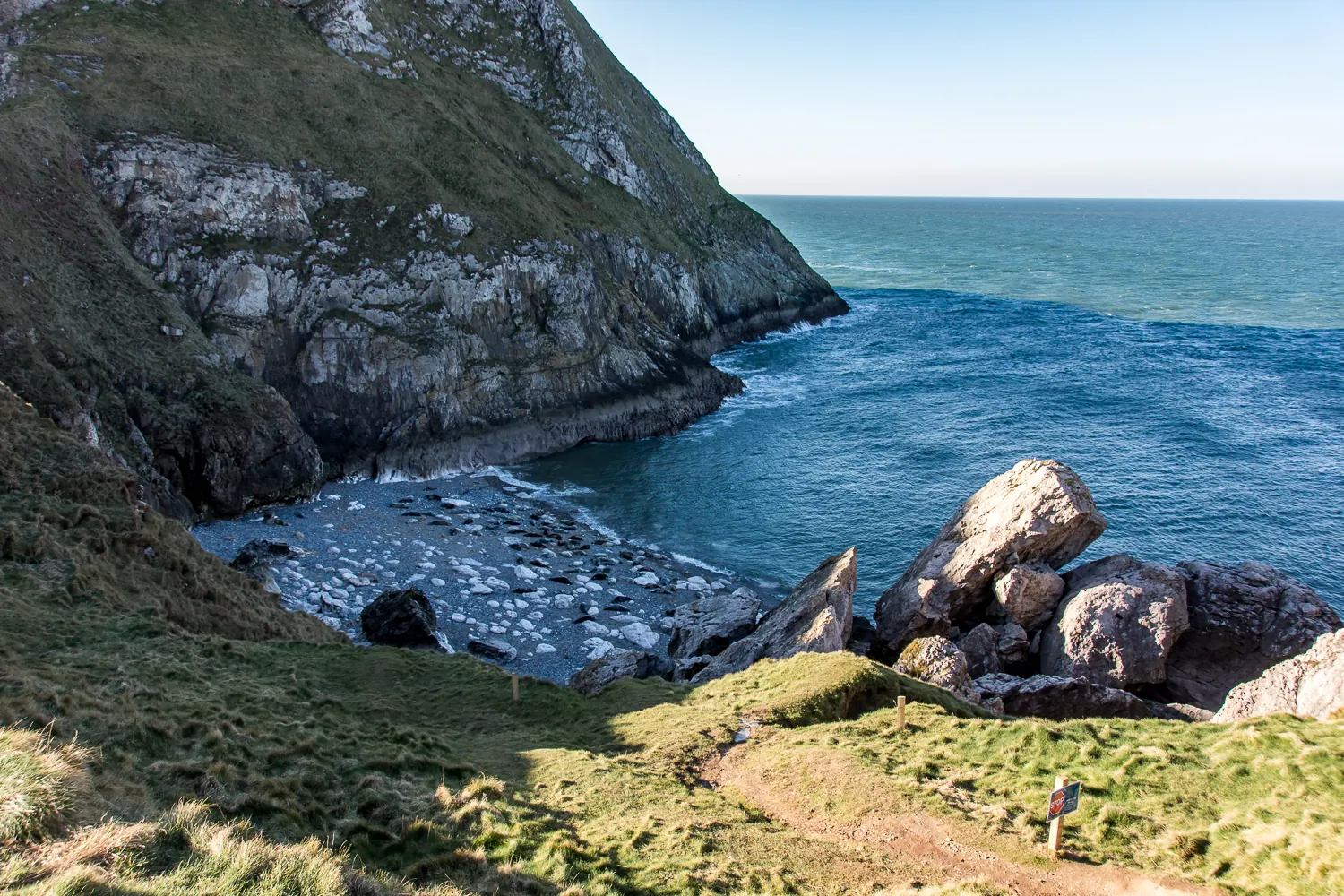
Angel Bay is viewed from the clifftop above; there is no safe descent to the beach, and approaching seals is not permitted.
Dogs & restrictions
Rhiwledyn Nature Reserve
Dogs must be on a lead throughout the reserve.
Wider headland
No official rule was found beyond the reserve boundary; keep dogs close and on a lead near cliff edges regardless.
Safety, weather & local conditions
Underfoot
Steep, uneven paths, very slippery when wet, with falling-rock and sudden drop-off hazards near the cliff edge.
Seal & seabird watching
Stay at least 100m from seals where possible, never approach, chase, feed or touch them, and keep dogs on a lead and in sight near coastal wildlife.
Seals watched from the clifftop only · no path to the beach
What to bring
Sturdy walking shoes
Windproof layer
Water
Binoculars
Dog lead
Not just a headland.
The Little Orme is a working limestone cliff, not a viewpoint car park: a Site of Special Scientific Interest where cormorant, guillemot, razorbill, kittiwake and shag actually nest, and where grey seals haul out on the shingle at Angel Bay below, watched from above, by design, never approached.
Layered underneath the wildlife is real history: a 1580s secret Catholic printing press, a 19th-century limestone quarry, and a Second World War coastal gunnery school, all folded into one short coastal walk above Llandudno Bay.
Headland, cliff and quiet cove, one coastline.
Should this shape your day?
A short, honest headland walk with a real wildlife-watching discipline, not a manufactured "hidden gem."
Good fit for
walkers wanting a short, genuine coastal route near Llandudno
birdwatchers and seal-watchers with binoculars
anyone wanting to watch seals responsibly, from a distance
visitors extending a Llandudno trip who want real coastal wildness
Think twice if
you need step-free or fully accessible paths; none is published here
you're expecting to reach the beach at Angel Bay; you can't, by design
you dislike steep, uneven, sometimes slippery ground
you're relying on toilets or food on-site; none is confirmed
Before you go
open at all times · no confirmed entry fee
dogs on a lead within the nature reserve
seals are watched from the clifftop only, 100m+ back
Walk the full circular route past the old quarry ground to the Angel Bay clifftop and on to the summit trig point, rather than treating this as a single roadside viewpoint.
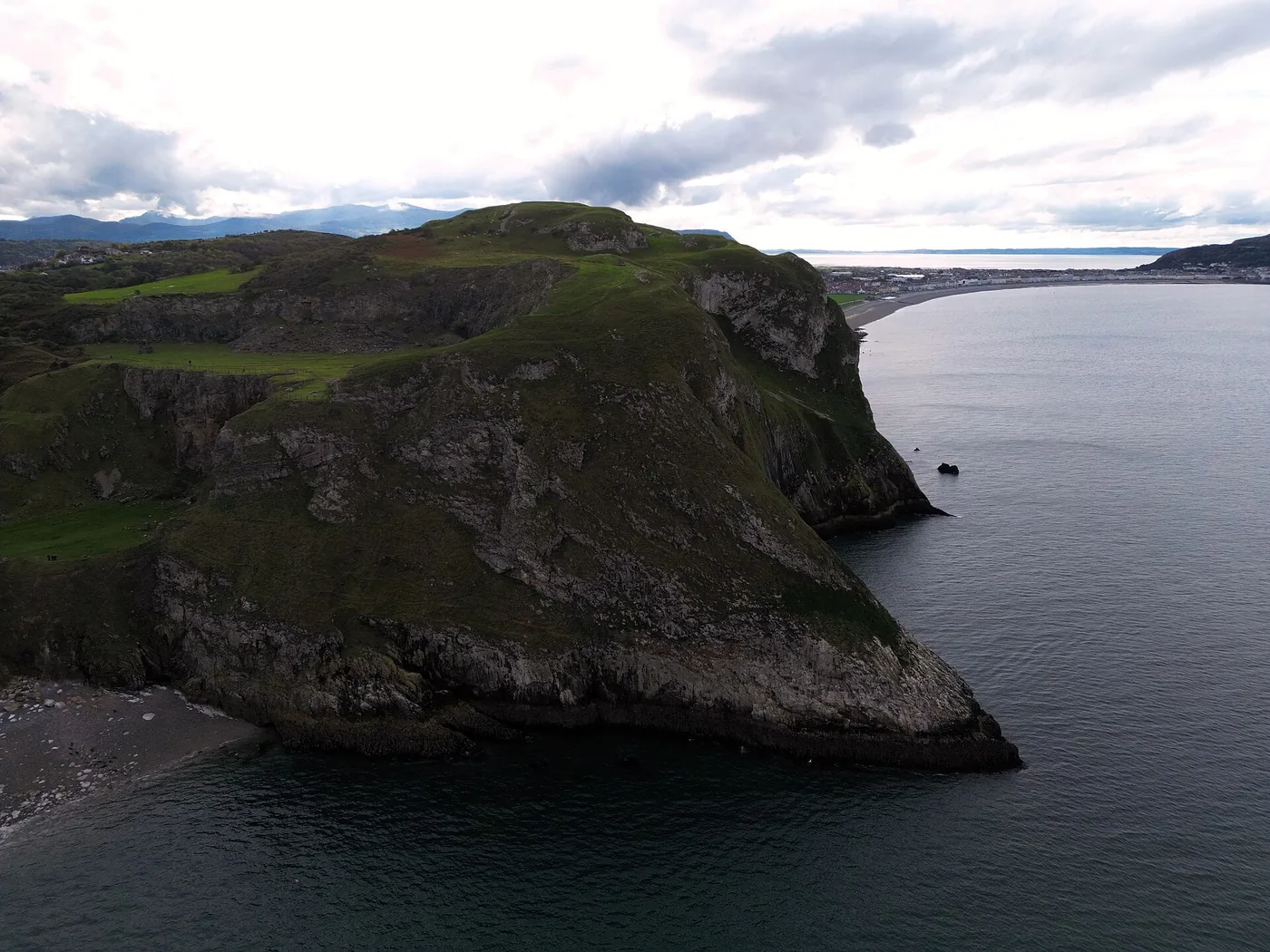
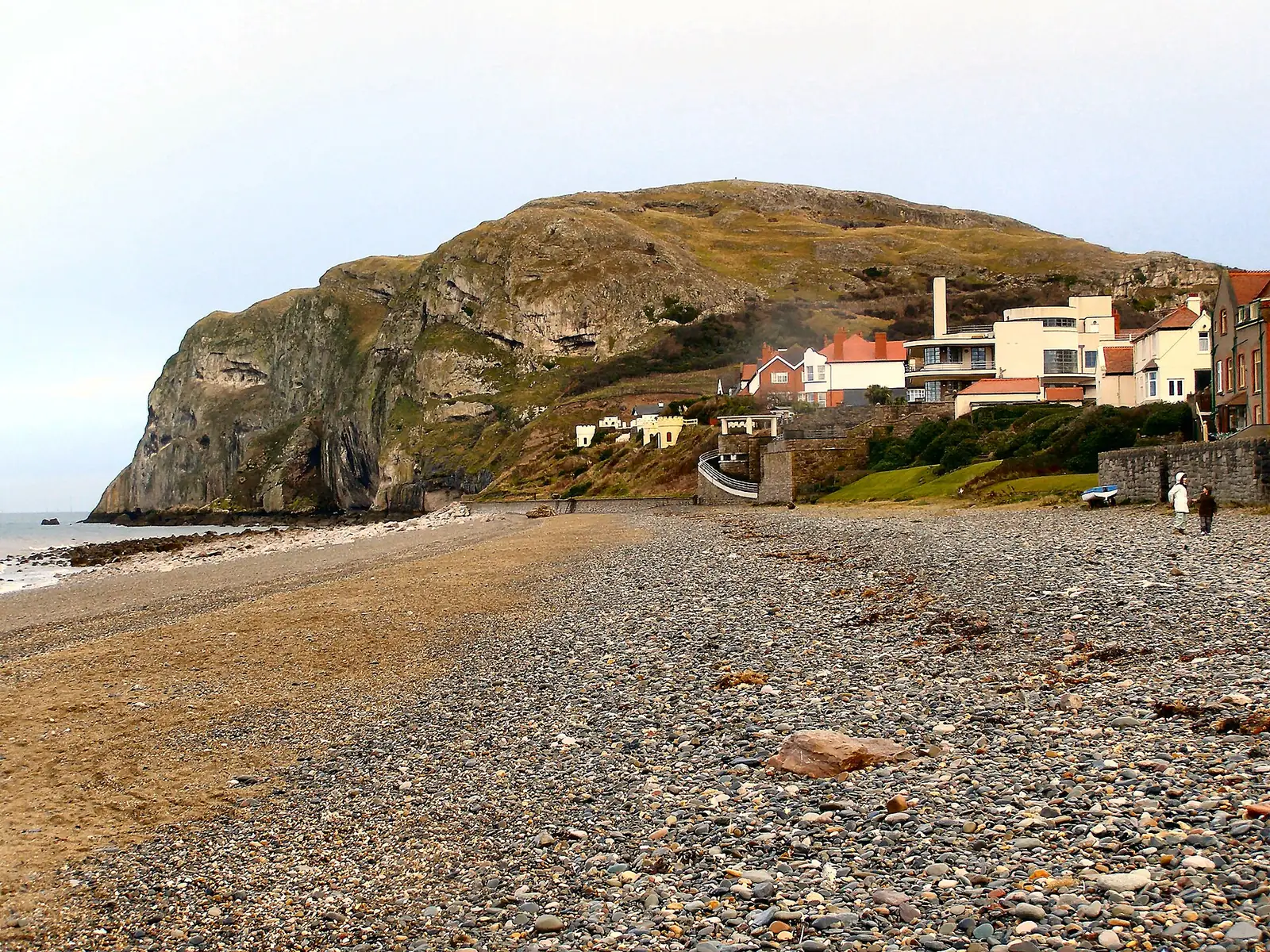
The whole headland, seen from the water: Angel Bay tucked into its eastern side.
One headland, seven scenes.
The signed circular route, from the road to the summit and back.
01 Arrive
Promenade parking or the Penrhyn Bay roundabout, for the full circular route.
02 Approach
A short climb onto open limestone grassland and former quarry ground.
03 Threshold
Into Rhiwledyn Nature Reserve, where the path narrows and steepens.
04 The seabird cliff
Nesting cormorant, guillemot, razorbill, kittiwake and shag, March–August.
05 Angel Bay clifftop
The viewpoint above Porth Dyniewaid, seals watched from above only.
06 The summit
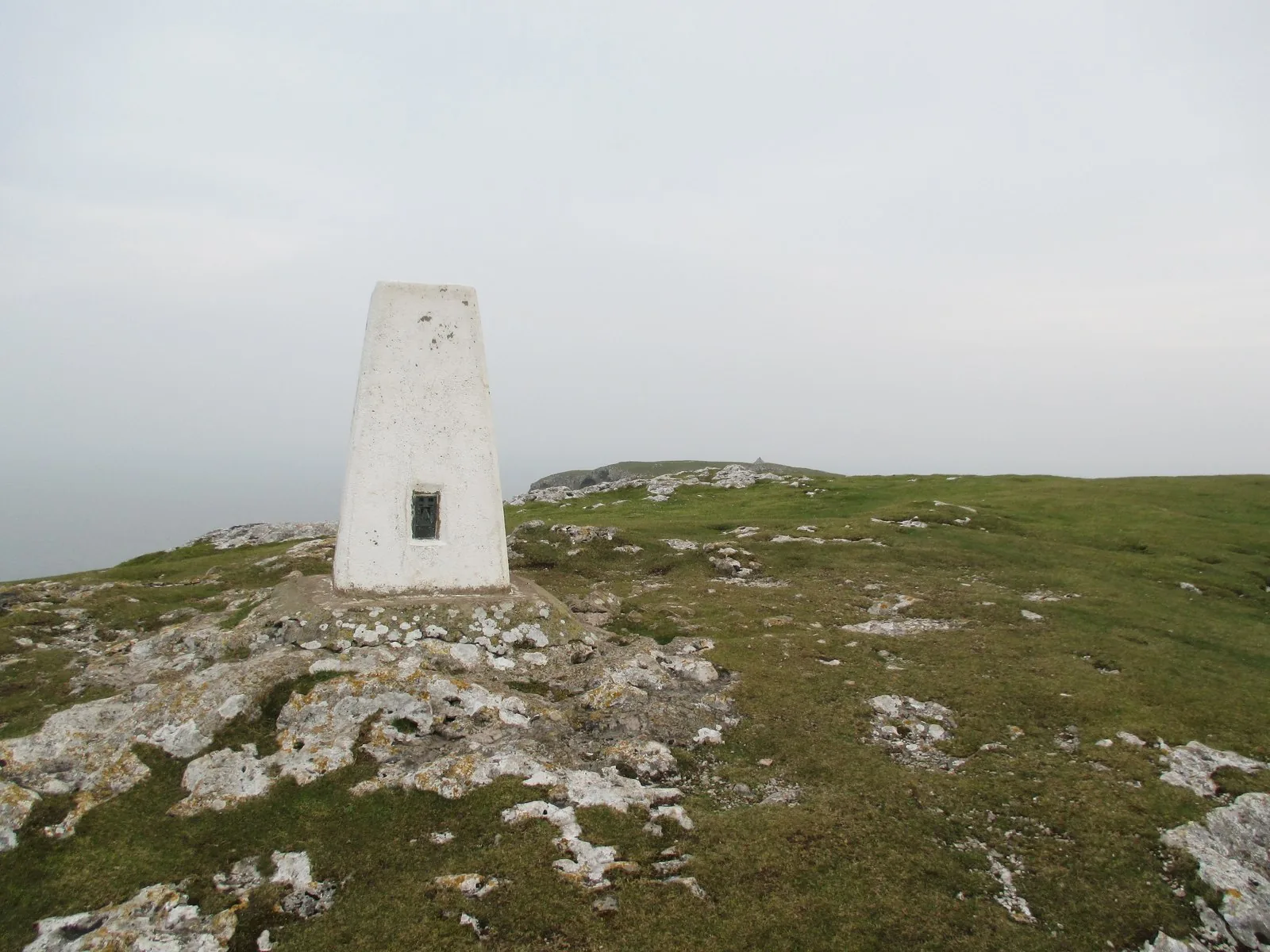
The trig pillar and views over Llandudno Bay, Colwyn Bay and Anglesey.
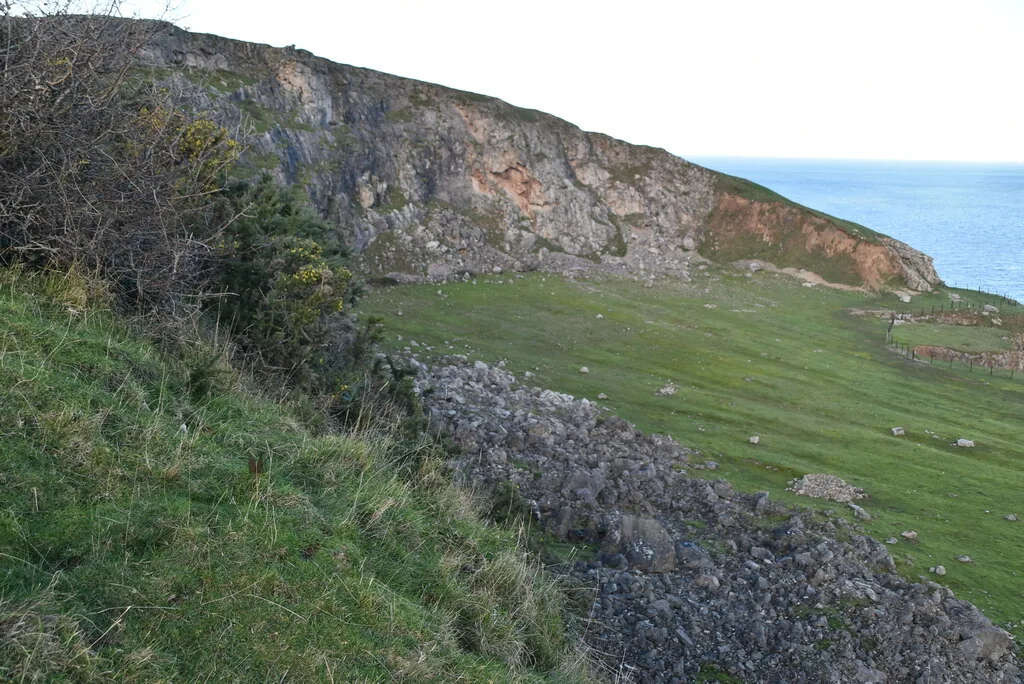
07 Back through the quarry
Worked limestone faces on the descent, back to the road.
Seen along the way.
Seals, quarry, trig point, limestone and coast: the visit before you make it.
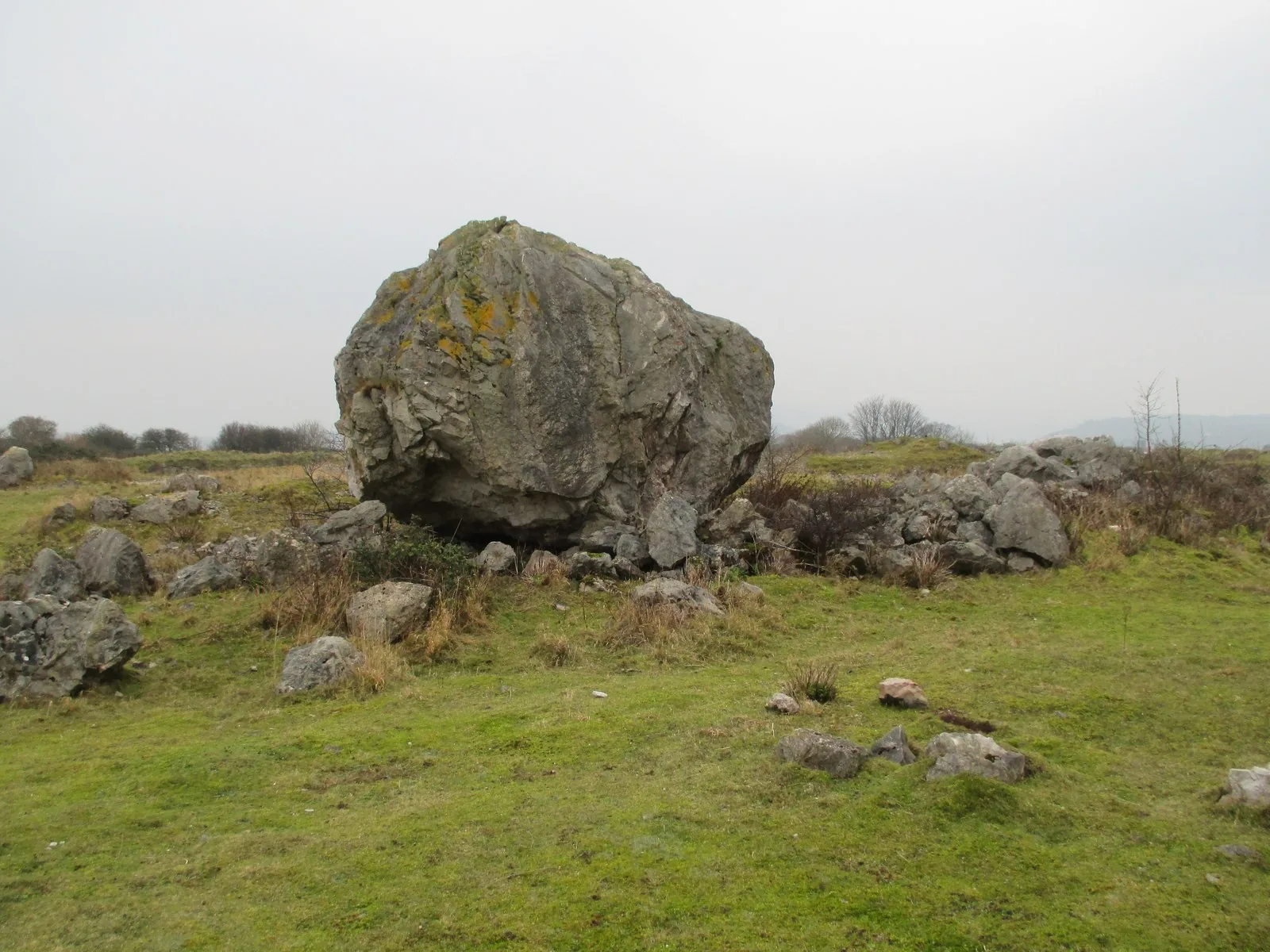
Angel Bay · seals seen from above, never the beachThe old quarry ground the coast path still crossesThe trig pillar on the higher of the Little Orme's two topsLimestone, weathered and lichen-marked, along the reserveLooking back at the headland from Ormes Bay beach
The parts people remember
The Little Orme isn't one view. It's a working cliff, a hidden cove, and a headland with a longer memory than it looks.
01
The cliff is working, not decorative
The ledges here aren't a backdrop: cormorants, guillemots and kittiwakes are actually nesting on them, close enough to watch without a scope.
02
Seen, never met
The seals at Angel Bay are always below you, on a beach you can't walk down to; the whole encounter happens at a clifftop distance, by design.
03
A book printed in secret
Somewhere in this headland's caves, hidden printers ran off the first book ever printed in Wales, working for months before the smoke gave them away.
04
Standing where quarrymen once stood
The path back down runs straight through the worked faces of a limestone quarry that shipped stone out for half a century before it fell silent.
05
Two summits, one trig point
Only the higher of the Little Orme's two tops carries the pillar, and from it the coast opens out both ways: Llandudno one side, Colwyn Bay and Anglesey the other.
A small headland that keeps turning out to be bigger than the view from the road suggests.
Little Orme Archive
Old stories, carefully told.
Three field notes on what this headland has been: a secret press, a quarry, and a scientifically important cliff.
Some of this is documented history. One thread is tradition, honestly labelled as such.
Field notes
Three entries. Open one to read the note.
Faith & persecution Folklore + fact
The secret printing press
Field note I · filed under 1586–87
In the winter of 1586–87, hidden printers on this headland produced the first book ever printed in Wales.
What is known
The Catholic devotional work Y Drych Cristianogawl was secretly printed in late 1586–early 1587 on land belonging to Robert Pugh of Penrhyn Creuddyn on the Little Orme's Head, by printer Roger Thackwell with priest William Davies (later martyred) and several others. The National Library of Wales holds this history directly.
What isn’t exact
The exact cave has not been identified with certainty; the National Library of Wales notes it may since have been destroyed by later quarrying. The popular story of a forty-man posse and an escape through a cave chimney is not corroborated by the Library's own account; treat it as unconfirmed retelling, not documented history.
What to notice there
Several caves are recorded on the headland in the national historic environment record: a reminder that this quiet cliff had a use its wildflowers and seabirds don't advertise.
Industry & war Documented history
The quarry and the gunnery school
Field note II · filed under 1889–1945
The quiet grassland the coast path crosses today was once an industrial quarry, then a wartime gunnery range.
What is documented
Limestone quarrying began under the Little Orme's Head Limestone Quarry Company, founded 1889, shipping stone by sea to Scotland's steel and chemical industries into the 1930s. During the Second World War, a Royal Artillery coastal gunnery school used the former quarry for training.
What isn’t exact
These dates and details come from a single secondary source rather than an official record; treat exact years and unit numbers as indicative, not exact.
What to notice there
The worked rock faces along the path are the quarry's visible legacy; look for the change from grazed grassland to bare, cut stone.
Geology & wildlife Official designation
A scientifically important cliff
Field note III · filed under the SSSI citation
Natural Resources Wales designates the whole headland a Site of Special Scientific Interest, and its own citation calls the Little Orme's Carboniferous reef the best exposed example of its kind in Wales.
What is known
The Creigiau Rhiwledyn/Little Ormes Head SSSI (notified 1960, extended 1978, 1982, 2002; roughly 35.5 hectares) is designated for its Carboniferous geology, nationally scarce lichens and limestone grassland, and nationally important breeding cormorant, alongside guillemot, razorbill, kittiwake and shag. The headland's caves have historically supported hibernating lesser horseshoe bats.
What isn’t exact
Grey seal numbers at Angel Bay are widely reported to peak in autumn and winter, but no official source in this guide's research confirms a precise seasonal count; treat "how many seals" as genuinely variable, not a fixed figure.
What to notice there
The North Wales Wildlife Trust manages Rhiwledyn Nature Reserve, a five-hectare part of the wider SSSI, with its own limestone grassland wildflowers and butterflies each spring and summer.
Don’t let the day end at one pin.
Three honest stops nearby, not padded to a round number.