Get the way up and the season right, and the Orme feels effortless.
CHECK FIRST · PARKING
Reaching the headland by the coast road means the Marine Drive toll: £5.80 per car at the time of research. The mines, tram and cable car are all ticketed separately again on top of that.
Time needed
Half a day · a full day combining the separate attractions
Best time
Summer for seabirds and butterflies · a clear day for the long views
Opening, entry & booking
Mines, tram & cable car ticketed separately
Access & difficulty
Open headland, no charge
Parking & start point
Marine Drive toll, £5.80/car
Getting there
Tramway from Llandudno · cable car · or the Marine Drive toll road
Toilets, food & facilities
Summit Visitor Centre only · Summit Complex café
Dogs
On lead · goats & sheep graze freely
Plan with confidence.Detailed information on arrival, access, facilities, restrictions and local conditions.
Opening, entry & booking
The headland
Open access all year and free; the Orme itself has no gate, ticket or closing time.
What is ticketed separately
The Bronze Age Mines, the Great Orme Tramway and the aerial cable car are three separate operations with their own tickets, seasons and hours. None is included with the others.
Marine Drive toll
£5.80 per car, which covers parking around the headland and at the summit.
Tramway season
March to early November, from Victoria Station, Llandudno.
Cable car season
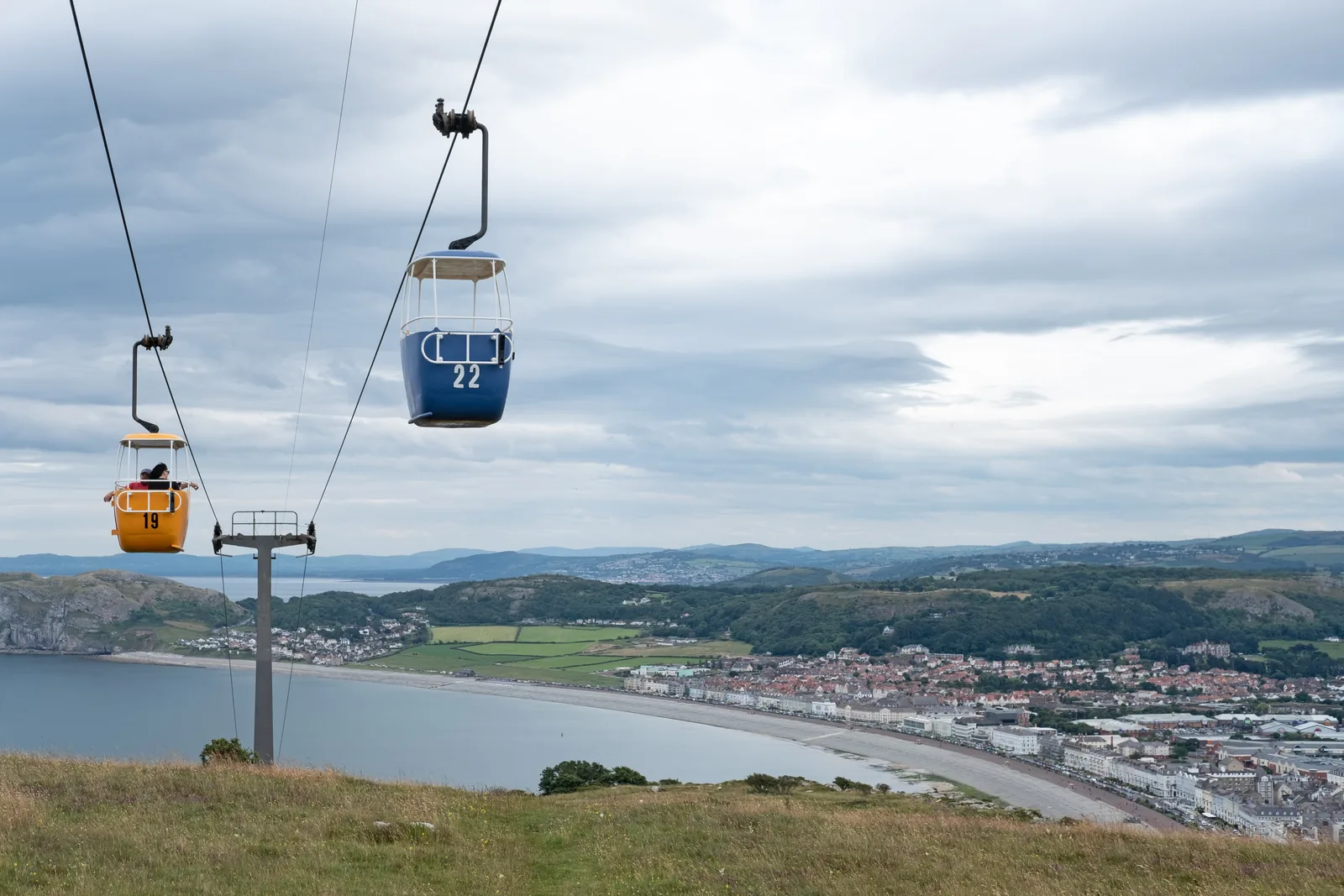
Roughly Easter to late October, and weather permitting; it stops in high wind.
At the Summit Visitor Centre, including an accessible toilet. Free entry to the Visitor Centre itself.
Food
Café/bar at the Summit Complex; the Rest and Be Thankful café on Marine Drive, seasonal off-peak.
Accessibility & terrain
Tramway
Folding non-powered wheelchairs only; no electric wheelchairs or mobility scooters.
Mines
Wheelchairs and pushchairs unsuitable underground: 35 steps down and up, uneven ground.
Visitor Centre
Ramped main entrance with some steps; accessible toilet on site.
Dogs & restrictions
Open headland
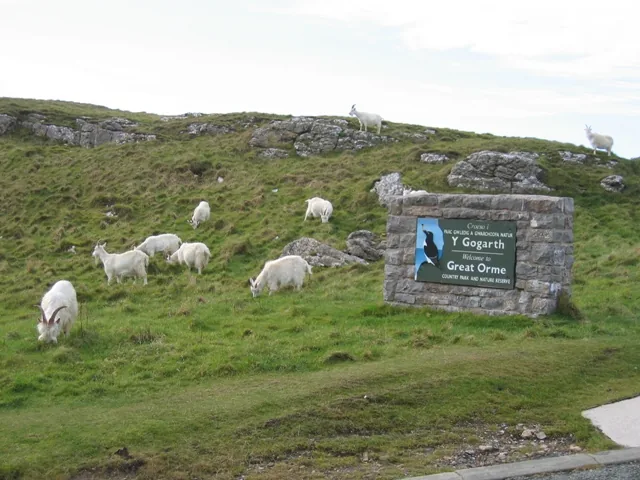
On lead or under close control at all times; sheep and Kashmiri goats graze freely.
Tramway
Well-behaved dogs on leads welcome, small fare; service dogs free.
Bronze Age Mines
Dogs welcome throughout, including underground.
Safety, weather & local conditions
On the headland
General coastal-cliff caution applies: a working headland with cliff edges, exposed in poor weather.
Underground
The mine stays 5–8°C year-round; bring a layer even in summer.
Emergency
In an emergency, call 999.
PLACE-SPECIFIC DETAILS
Other place details
Nature Trail
~4 miles, steep in places
Family
Trail suits families; mine underground has limits
What to bring
Windproof layer
Walking shoes
Water
Cash or card for the toll
Warm layer for the mine
Dog lead
Not just a view.
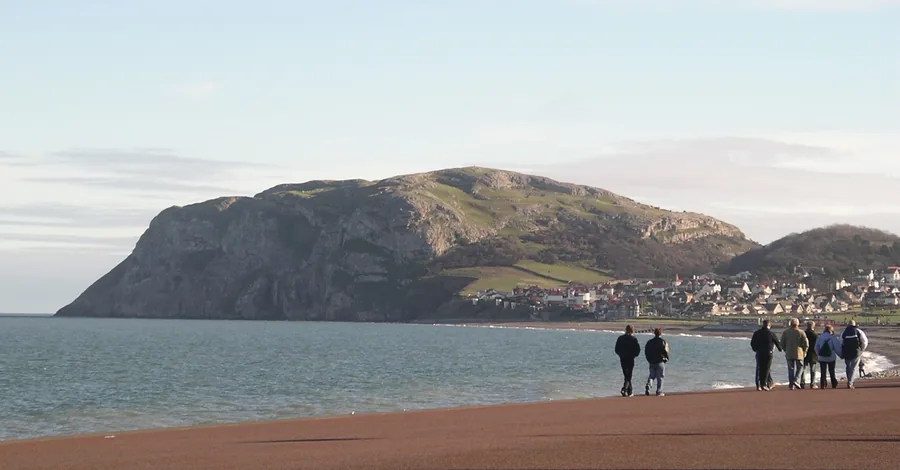
The Great Orme carries three registers at once: a 4,000-year-old copper mine cut by Bronze Age hands, a headland where choughs nest and Kashmiri goats graze free, and a set of Victorian engineering — tramway, cable car, toll road — that still carries people to the same summit today.
Most visitors see one or two of these. Few places let you move between deep time, wildlife and everyday engineering in a single afternoon.
Mine, headland and tramway, one hill.
Should this shape your day?
Free to walk, but the tramway, cable car and mines each keep their own season.
Good fit for
walkers wanting a big coastal summit with variety
families combining a tram or cable-car ride with the mines
anyone drawn to prehistoric industry
Welsh coastal wildlife enthusiasts
photographers after the wide sea views
Think twice if
you want one quick stop; attractions run separate seasons and tickets
you need step-free access to the tramway or the mine underground
you're visiting in deep winter, when most attractions are shut
you dislike sharing a path with free-roaming livestock
you’d rather not pay the Marine Drive toll to reach the headland by car
Before you go
the headland itself is free and always open
tramway, mines and cable car are each separately seasonal
Combine the free open headland — Nature Trail, views, wildlife — with at least one paid attraction, rather than treating the Orme as a single sight.
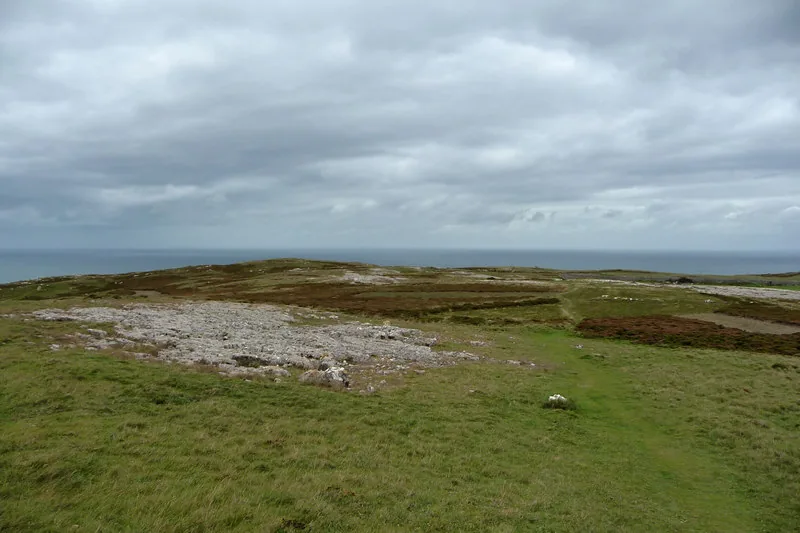
Limestone grassland and sheep, long before the Summit Complex comes into view.
One headland, seven scenes.
See the shape of the visit before you choose your way up.
01 Choosing your way up
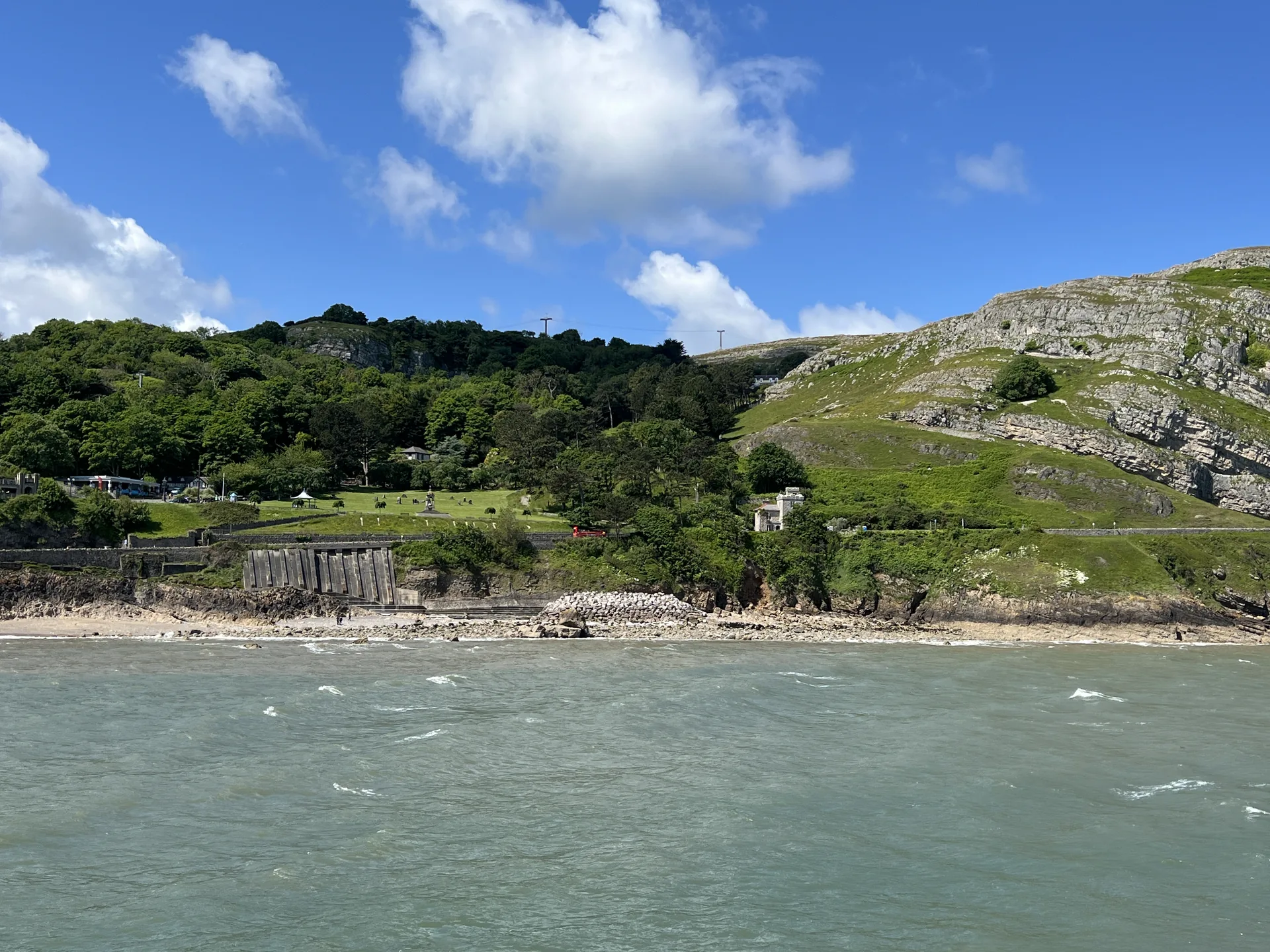
On foot, by tram, by cable car, or around Marine Drive.
02 The Summit Complex
Visitor centre, café, and both the tram and cable-car stations.
03 The view opens out
Snowdonia, Anglesey and the Irish Sea from 207m up.
04 Going underground
Thirty-five steps down into a 4,000-year-old copper mine.
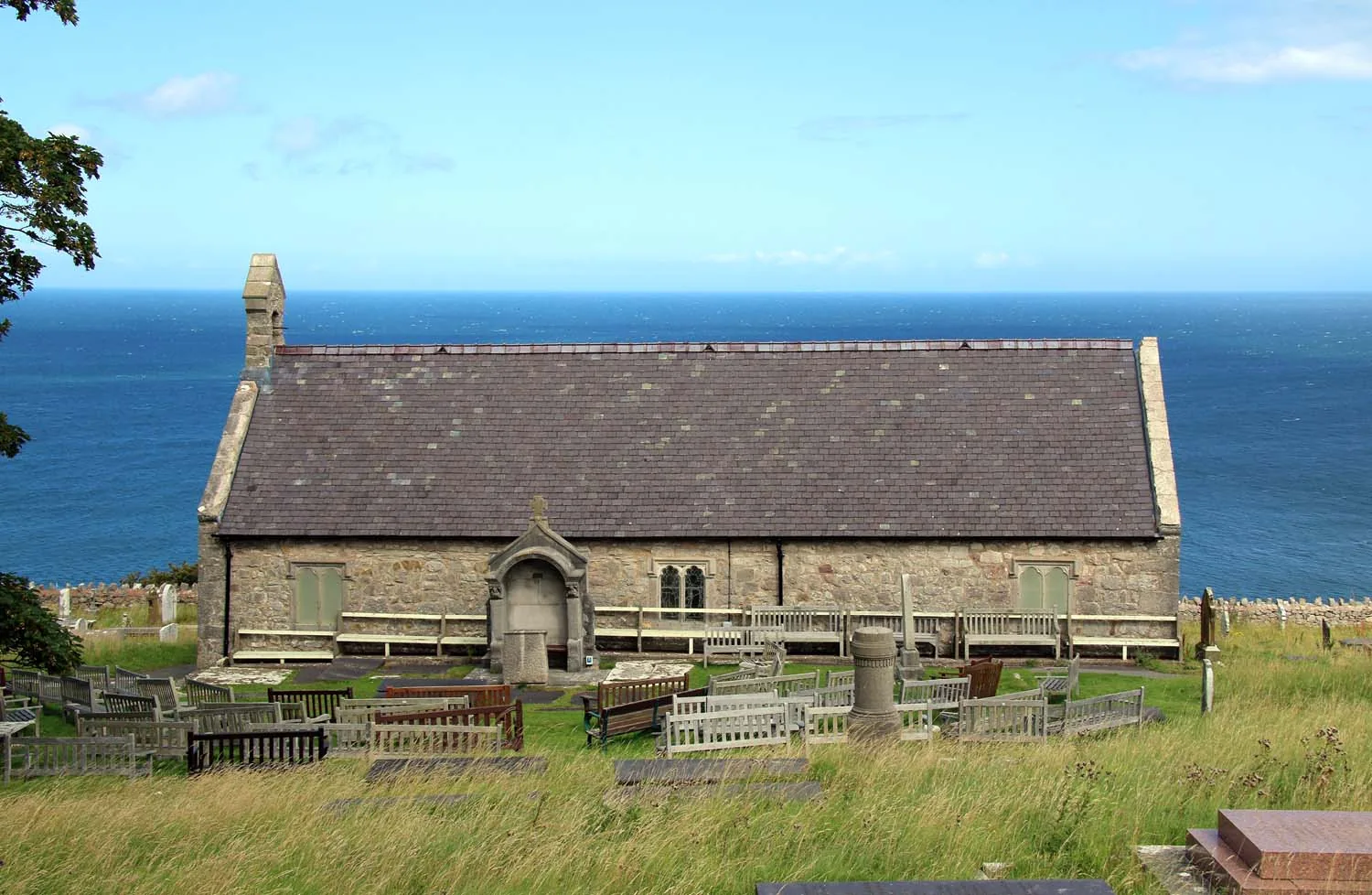
05 St Tudno’s churchyard
A clifftop church, still used for open-air summer services.
06 Sharing the ground
Free-roaming goats, breeding seabirds, a rare butterfly.
07 The way back down
Marine Drive’s one-way sweep, or the tram and cable car home.
Seen along the way.
Tram, mine, church, goats and cable car: the visit before you make it.
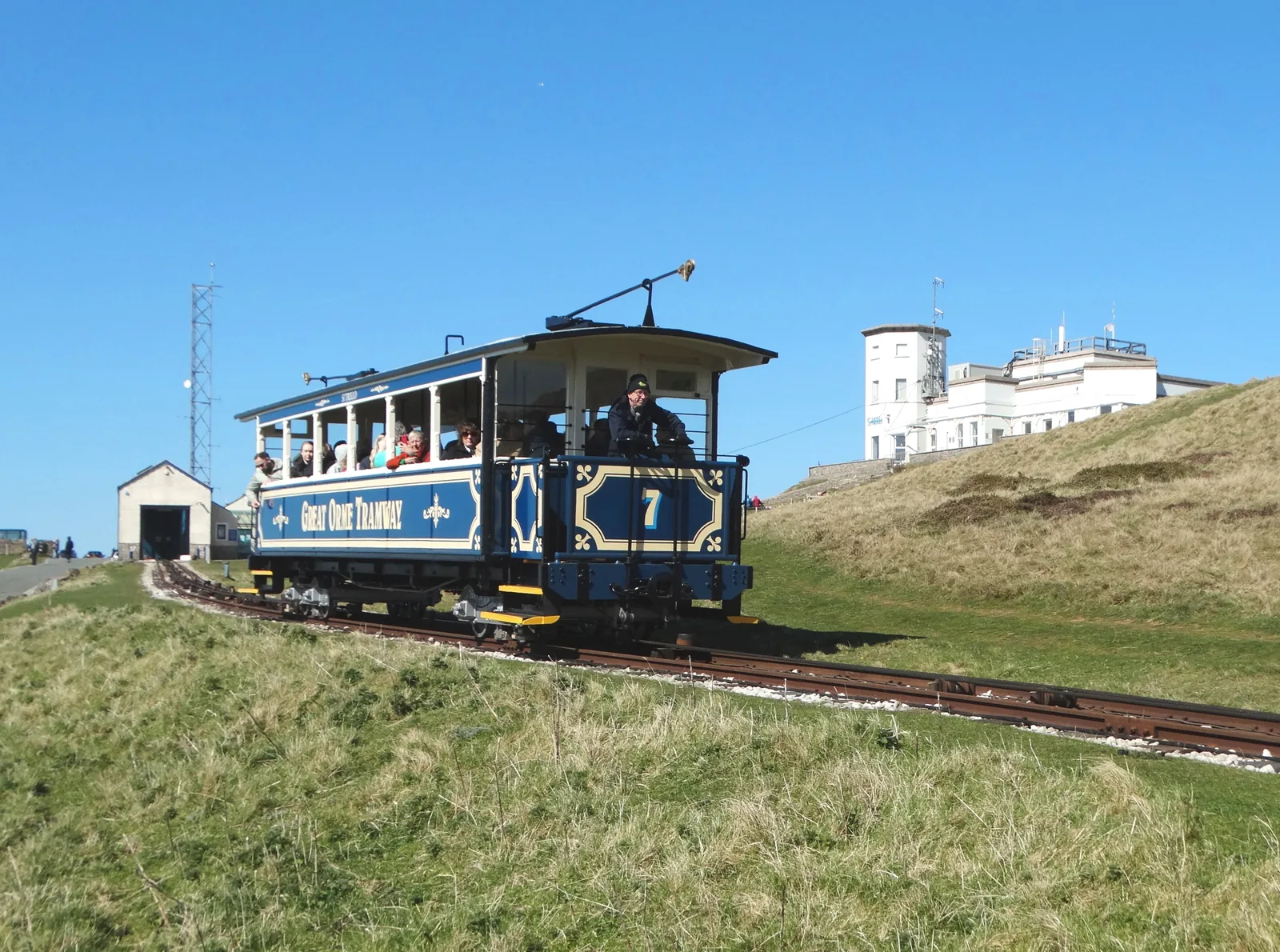
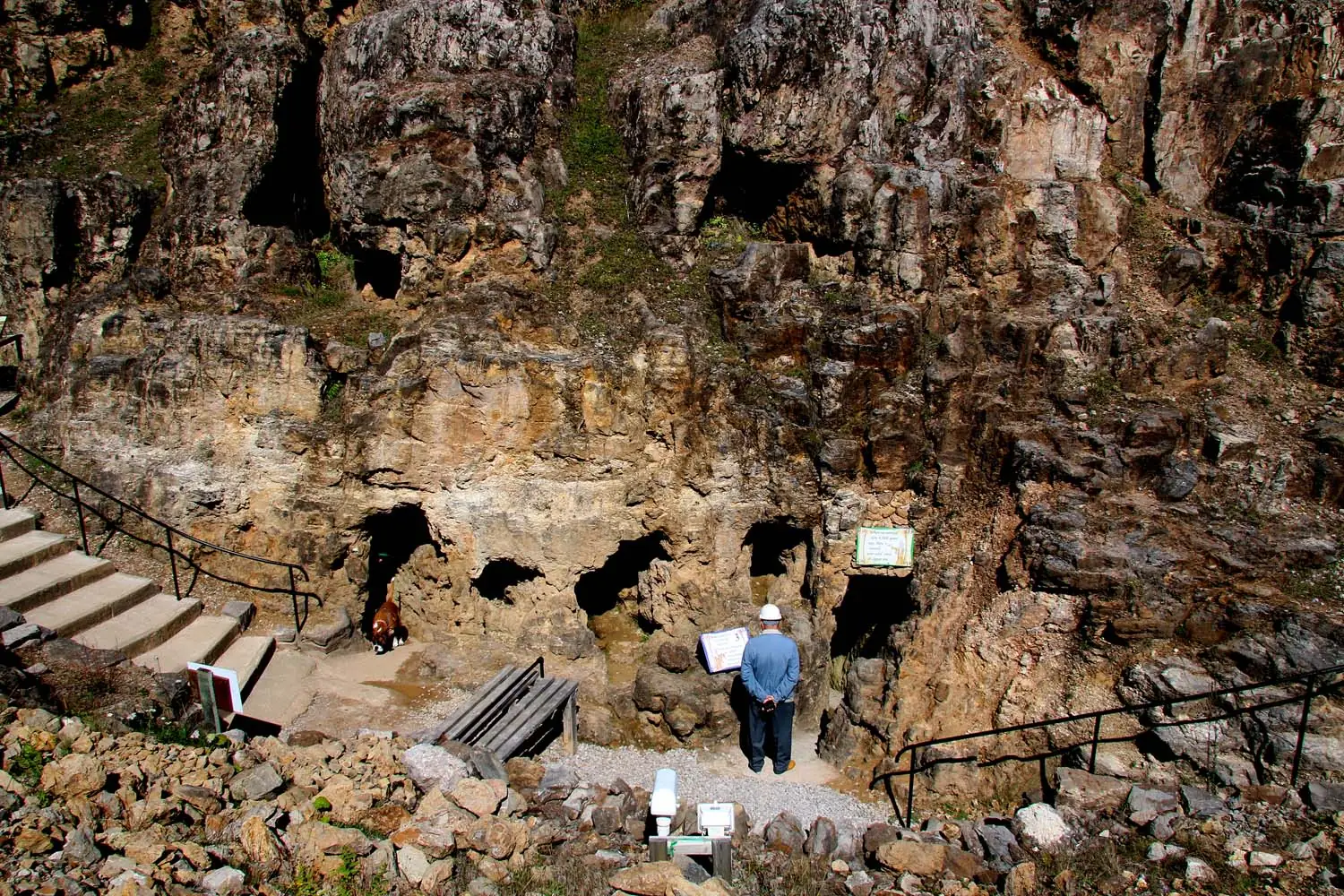
The Great Orme Tramway · cable-hauled since 1902Entrances to the 4,000-year-old copper minesSt Tudno’s Church, above the seaThe free-roaming Kashmiri goatsThe aerial cable car, over the bay
The parts people remember
One headland carrying several different places on top of each other.
01
Lifted off the town
However you come up (tram, cable car or the toll road round the cliff), the streets drop away quickly and Llandudno is suddenly a long way below.
02
Sightlines in every direction
From the top the headland gives up all its distances at once: Eryri inland one way, Anglesey and open Irish Sea the other.
03
Thirty-five steps down
Going below ground changes everything. The air cools, the light goes artificial, and the passages narrow to tunnels cut by hand out of the rock.
04
Goats, unhurried
Kashmiri goats cross the paths at their own pace and graze the cliff grass, and a stone pulpit sits built into the churchyard wall at St Tudno's.
05
The one-way sweep down
Marine Drive takes the way back along the cliff edge in a single direction, sea on one side and rock wall on the other, the whole way round.
A hill you can spend a day on and still leave one of its layers untouched.
Orme Archive
Old stories, carefully told.
Three field notes on what this headland has been: mine, church, and Victorian engineering.
Some of this is documented history. One thread is tradition, honestly labelled as such.
Field notes
Three entries. Open one to read the note.
Deep time Fact
The Bronze Age copper mines
Field note I · filed under industry
People were mining copper out of this hill roughly 4,000 years ago, with stone and bone, not metal tools.
What is known
Mining activity began around 4,000 years ago and was most intensive 1700–1400 BC, using stone hammers and bone tools. Commercial mining resumed in the late 17th century and continued until 1881. The modern visitor site opened in 1991.
What isn’t exact
The site describes itself as the largest prehistoric copper mine yet found anywhere, the operator’s own account. Figures for total tonnage and tunnel length rest on a single secondary source, so treat them as approximate.
What to notice there
Thirty-five steps down, a temperature of 5–8°C year-round, low ceilings and uneven ground: a working mine, not a polished museum corridor.
Faith & legend Folklore + fact
St Tudno’s Church
Field note II · filed under the clifftop parish
A hermit’s cell, tradition says, became a church, and the church gave Llandudno its name.
What is known
The building has fabric dated to the 12th and mostly 15th centuries. Its roof was badly damaged in an 1839 storm, and it was fully restored in 1855 at the sole cost of William Henry Reece.
What tradition says
A Celtic missionary, Tudno, is said to have founded a hermit’s cell here in the 6th century, and the settlement that grew around his llan (enclosure) became Llandudno. This is a foundation tradition, not an archaeologically dated fact.
What to notice there
Open-air summer services still run from a stone pulpit built into the churchyard wall in 1914, a tradition that has continued since at least the 19th century.
Victorian engineering Working history
Tramway, cable car & Marine Drive
Field note III · filed under getting to the top
Three different generations each found their own way to put people on this summit.
What is known
Marine Drive, the toll road around the headland, was completed in 1878. The cable-hauled Great Orme Tramway followed in 1902. The aerial cable car came much later, in 1969.
What isn’t exact
It’s easy to assume all three run to the same rules. In fact the cable car’s own hours and fares aren’t published anywhere this dossier could confirm directly, only that it’s wind-dependent and seasonal, unlike the tramway’s and mine’s clearly stated timetables.
What to notice there
Each has its own season, cost and pace; plan which one (or which combination) actually suits your day, rather than assuming any one of them will simply be running.
Don’t let the day end at one pin.
Four more places within a few miles of the headland.