Get the opening days and the terrain right, and Gwrych feels like the rescue in progress that it is.
CHECK FIRST · OPENING
Open weekends year-round, 10am–5pm (last admission 4pm), and daily through the summer holidays; closed on weekdays the rest of the year. Check today’s opening hours before you travel.
Time needed
2–3 hours for the grounds and the ruin
Best time
Dry weather · the ground is uneven and part-ruined
Opening, entry & booking
Weekends year-round · daily in summer holidays
Access & difficulty
Uneven, part-ruined terrain · not step-free
Parking & start point
On-site car park · then a 300m uphill walk to the courtyard
Getting there
Abergele & Pensarn station · buses 12/13/21
Toilets, food & facilities
Temporary toilets, no running water · pop-up snacks and drinks
Dogs
Dog-friendly per the operator · confirm lead rules on arrival
Plan with confidence.Detailed information on arrival, access, facilities, restrictions and local conditions.
Opening, entry & booking
Pre-booking
Recommended, to help the Trust manage visitor flow.
Walk-up
General Admission tickets are also sold at the ticket office on arrival.
Price
The current admission price wasn’t published on the ticket shop at the time of research; check the current price on the Trust’s plan your visit page before you go.
Parking, start point & arrival
On site
An all-weather car park, with a roughly 300m uphill walk from there to the castle courtyard. Open Gwrych Castle in Google Maps; the car park is at the visitor entrance, not the courtyard.
Charge
The exact tariff isn’t confirmed from a source we could verify; check current pricing on the operator’s site.
Turn off the A547 onto Tan y Gopa Road, then follow the drive past Manorafon Farm and the golf club.
Sat-nav
Sat-nav will get you close, but not to the actual entrance; follow the signed route, not the pin.
By rail / bus
Nearest station is Abergele & Pensarn. The castle’s own Find Us page names routes 12, 13 and 21 as calling at the stop immediately outside the main entrance. Route 12 is Arriva’s Rhyl–Llandudno service. Check the current service before travelling.
Toilets, food & facilities
Toilets
Temporary portaloo toilets on the main terrace only; there’s no running water anywhere on site.
Food
A pop-up shop and café selling light snacks and drinks, not a full café.
Accessibility & terrain
Terrain
Uneven ground, with steps and slopes throughout the visitor route.
Wheelchairs & pushchairs
Most standard routes aren’t suitable; a limited accessible route exists, but the gardens and chapel involve steps.
On arrival
Flag any accessibility needs at the Visitors Centre next to the car park.
Dogs & restrictions
General policy
The operator describes Gwrych as a dog-friendly attraction.
On lead
Third-party visitor listings say dogs must stay on leads; this isn’t stated in the operator’s own visit page text we checked, so confirm on arrival.
Safety, weather & local conditions
A part-ruined building
This is a conservation site under active repair, not a finished attraction. Keep to marked routes and away from unstable masonry.
Underfoot
Uneven, part-ruined terrain with a 300 m uphill walk from the car park. Poor in wet weather and not step-free anywhere.
No running water
There is no running water on site and only temporary toilets; carry your own water.
Exposure
The grounds climb the hillside above Abergele with little shelter; take a layer even on a mild day.
PLACE-SPECIFIC DETAILS
Other place details
Heritage
Grade I listed; Trust-restored since 2018
What to bring
Sturdy footwear
Waterproof layer
Water
Cash or card for tickets
Camera
Not a finished attraction: a rescue in progress.
Built in the 1810s and 1820s for Lloyd Hesketh Bamford-Hesketh, Gwrych Castle spent decades as a derelict, asset-stripped ruin before a preservation trust bought the site outright in 2018. What you walk through today is a working restoration, not a polished heritage set piece.
There’s no running water on site, and much of the route is uneven stone and steps: a genuine rescue, still mid-repair.
One shell, still standing.
Should this shape your day?
A ruin still being rescued, not a finished heritage attraction.
Good fit for
visitors who want real heritage-in-progress
anyone interested in the WWII Kindertransport story
I’m A Celebrity viewers curious to see the filming location
visitors happy with slopes and steps
Think twice if
you need step-free access beyond the car park
you expect full toilets, running water, or a proper café
you’re planning a weekday visit outside the summer holidays
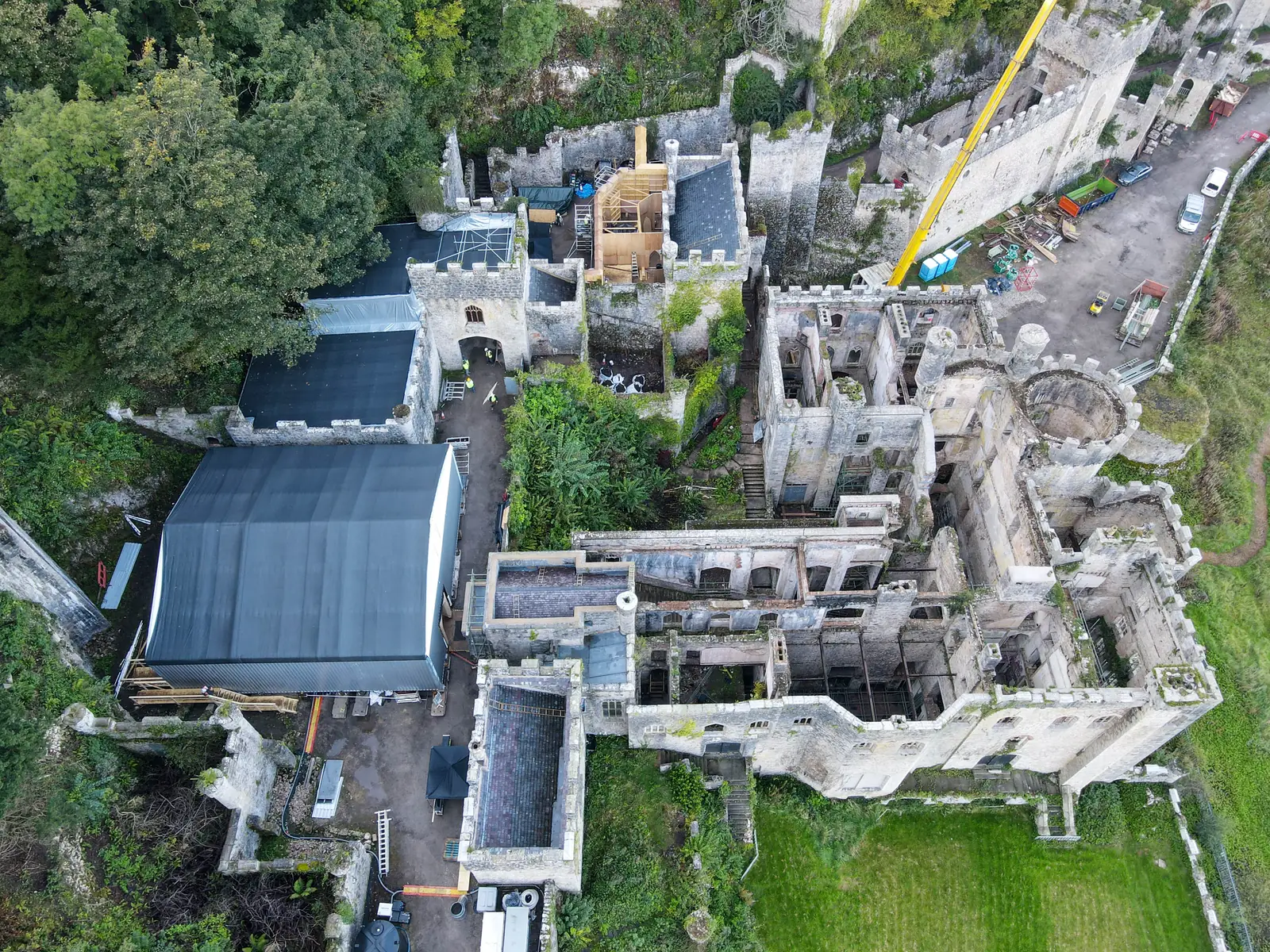
Cross the courtyard where I’m A Celebrity was filmed, then walk on into the shell of the castle itself: the clearest sign the rescue is still under way.
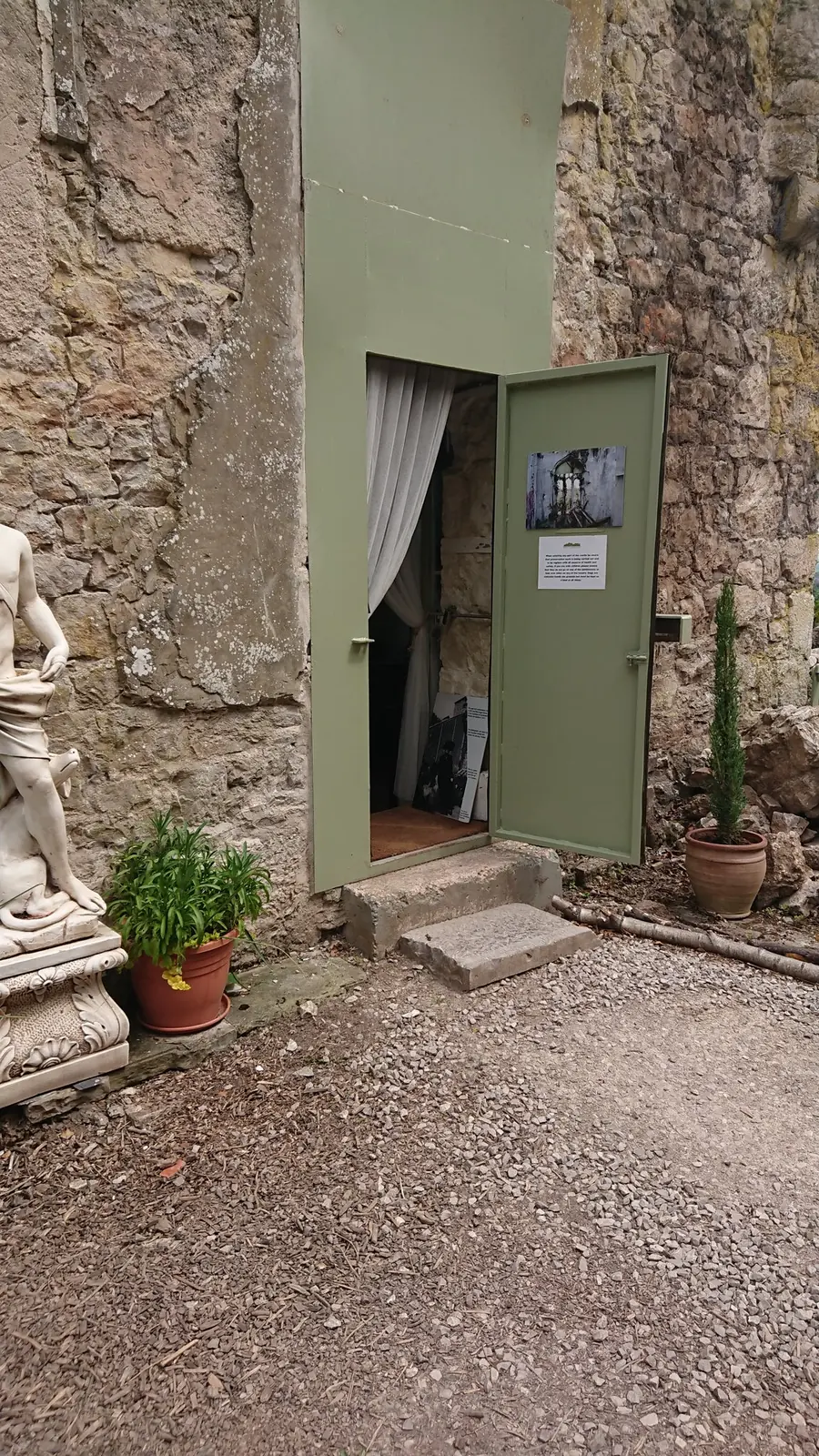
A modern door, an old wall: one small sign of the rescue.
One visit, seven scenes.
See the shape of the visit before you commit to it.
01 Arrival
The signed turn off Tan y Gopa Road.
02 The climb
An all-weather car park, then 300m uphill.
03 Checking in
The Visitors Centre, beside the car park.
04 The courtyard
Where I’m A Celebrity was filmed.
05 The gardens
Grounds and paths, with steps in places.
06 The chapel
Street’s 1870s family chapel, up more steps.
07 Inside the shell
The ruined castle itself, still being repaired.
Seen along the way.
Stone, steps and scaffolding: the visit before you make it.
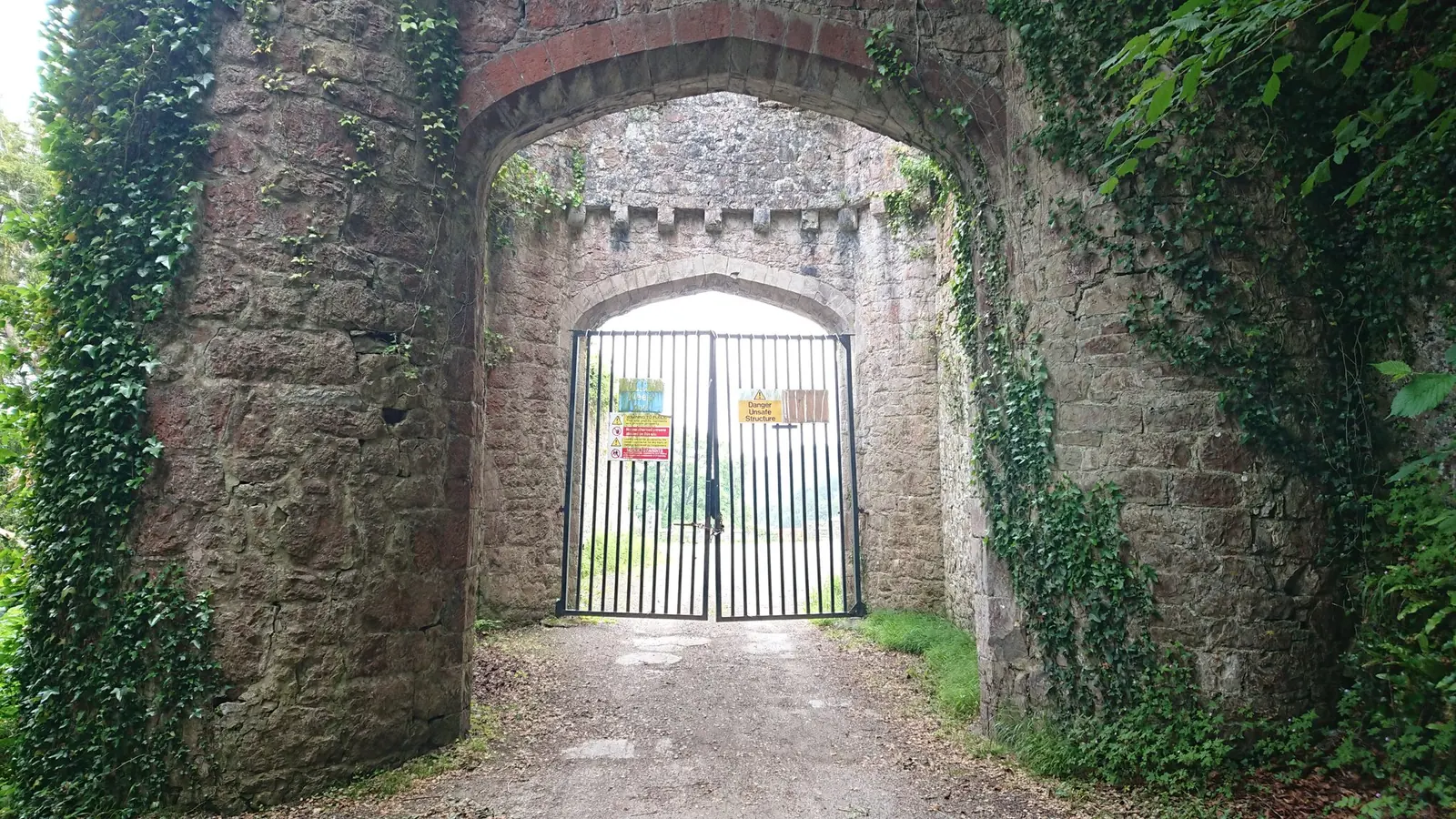
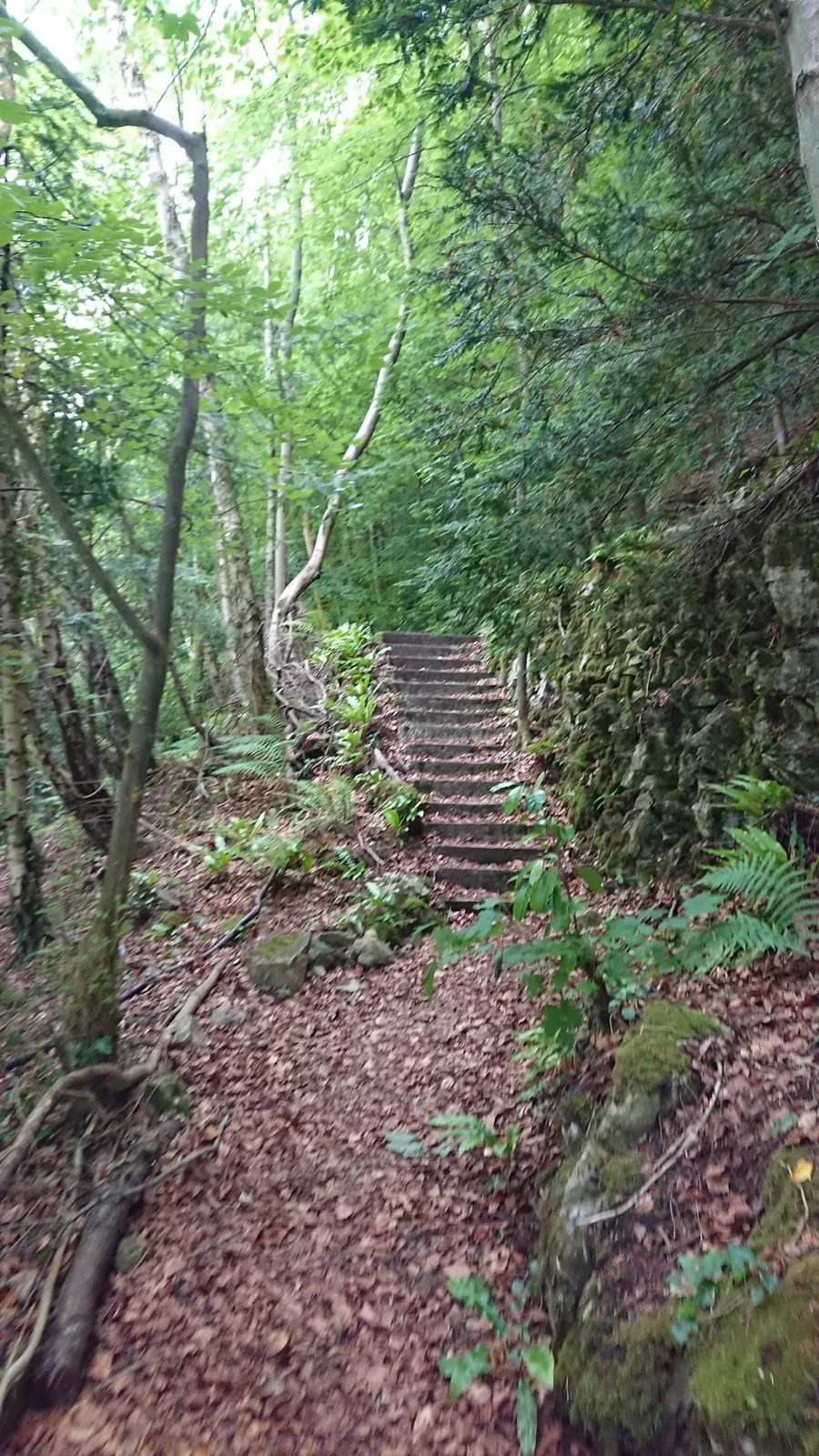
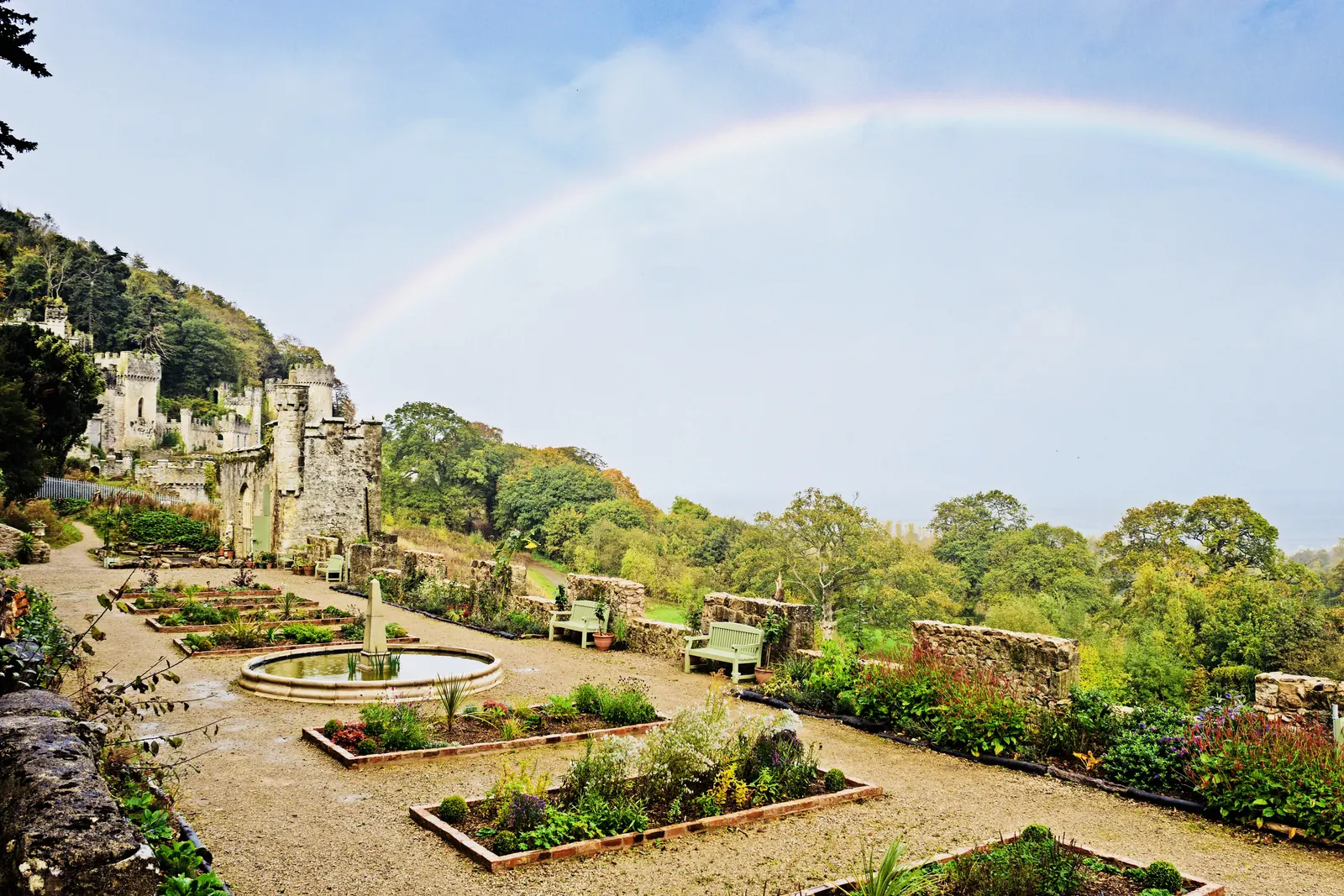
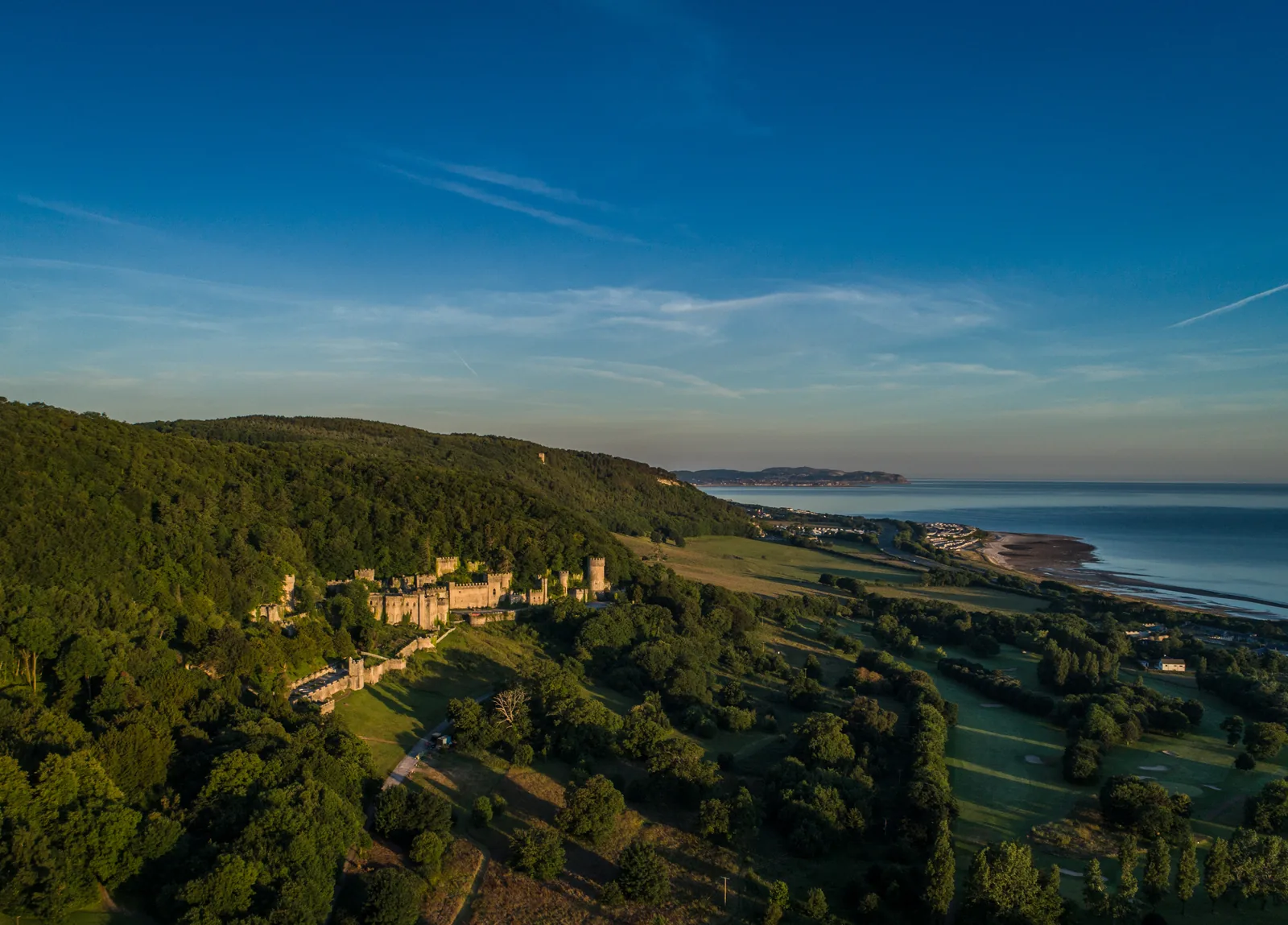
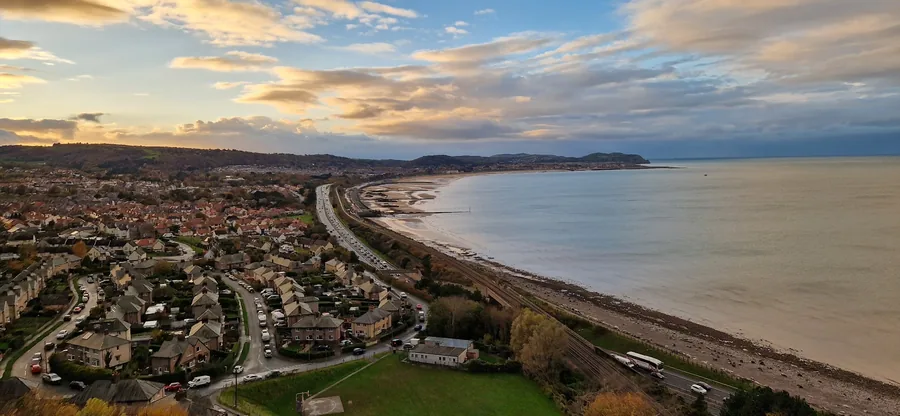
The gateway arch · ivy over stone, on the way inA wooded path within the groundsThe 2020 production build · the castle mid-transformationThe restored formal gardenThe estate above the coast, looking toward the sea
The parts people remember
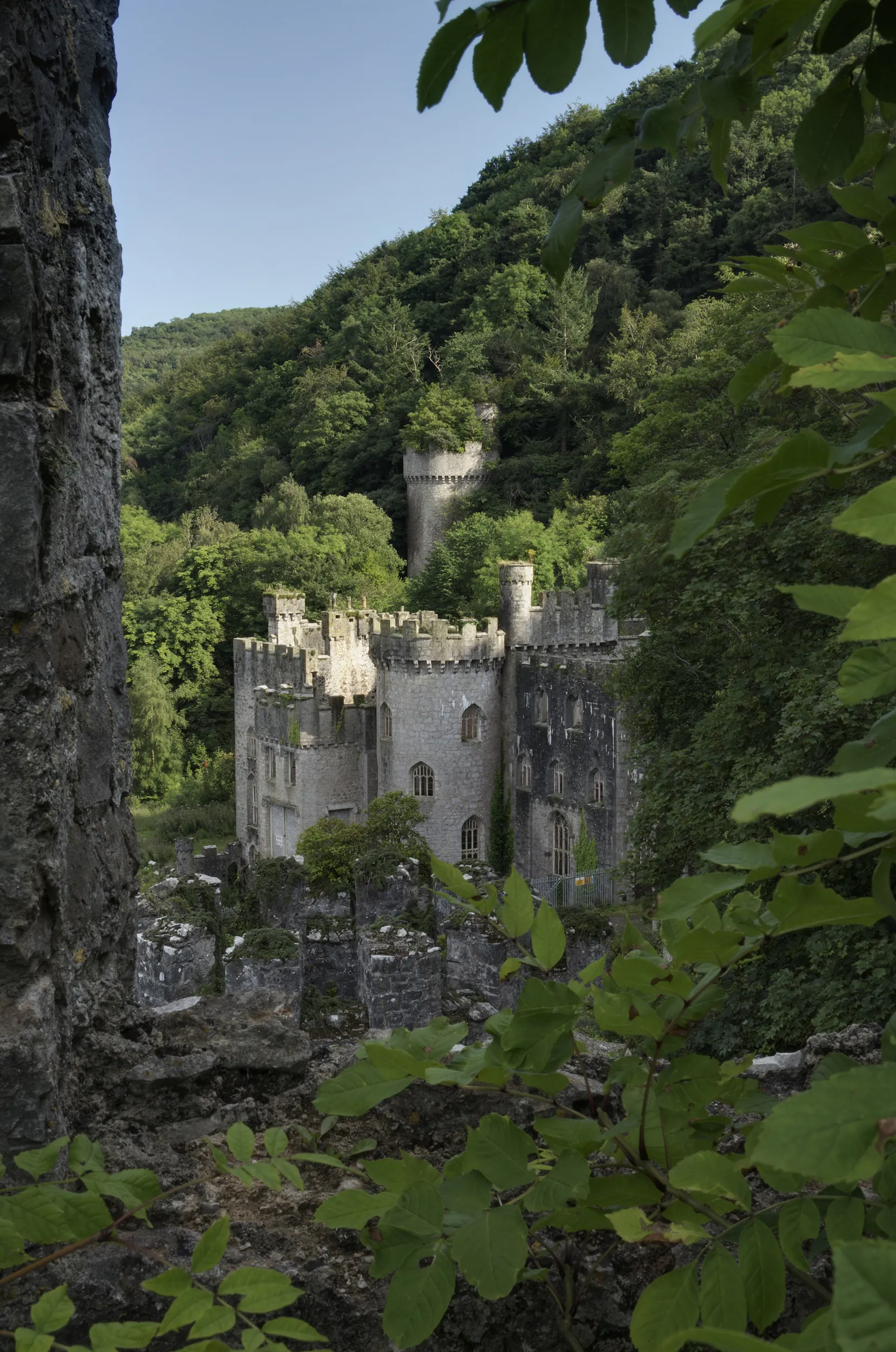
A long, ruined face on a wooded hillside, and a rescue you can watch happening.
01
The climb comes first
The car park is not the castle. A few hundred metres of uphill track come before anything of the building shows through the trees.
02
The facade along the hill
Gwrych does not sit as one block. Its turrets and battlements string out sideways along the hillside, appearing in pieces through the woodland as you climb.
03
Inside a shell
Through the gateway the scale changes: roofless rooms, open sky where floors were, and a courtyard that is still a building site as much as a ruin.
04
New joinery in old stone
The repairs are not hidden. A modern door sits flush in weathered masonry, ivy still holds one archway, and the seam between saved and unsaved runs right through the walls.
05
Down through the ferns
The stepped woodland path takes you back below the castle, and between the trees the ground keeps dropping until the sea shows beyond the estate.
A building caught mid-repair, and honest about it.
Castle Archive
Old stories, carefully told.
Four field notes on what this castle has seen: construction, wartime refuge, decline, and a rescue.
All four notes below are documented history. The Queen Victoria “visit” sometimes mentioned elsewhere is legend-level and not confirmed, so it isn’t told here.
Field notes
Four entries. Open one to read the note.
Construction Fact
A memorial in stone
Field note I · filed under construction
Built 1812–1822 as a memorial to a family line, by a chain of the era’s notable architects.
What is known
Lloyd Hesketh Bamford-Hesketh commissioned the castle as a memorial to his mother’s ancestors, the Lloyds of Gwrych, replacing an earlier house on the site. Building ran 1812–1822.
Further detail
Charles Busby and Thomas Rickman worked on the early design; Henry Kennedy added bedroom wings and staircases in the 1840s; George Edmund Street designed the family chapel in the 1870s.
What to notice there
Nearly a century of building shows in the castle’s layers: the chapel alone is decades younger than the earliest towers.
Wartime refuge Fact
The Kindertransport years
Field note II · filed under wartime history
More than 200 Jewish refugee children found safety here between 1939 and 1941.
What is known
During WWII, more than 200 Kindertransport children escaped Nazi-occupied Europe to Gwrych Castle, living and training here under an agricultural scheme (hachshara) after Lord Dundonald donated the property rent-free.
What it shows
The castle’s grounds turned a private estate into a working refuge: young people preparing for a future life, on borrowed land, in borrowed time.
What to notice there
The scale is easy to miss from the ruin alone; two hundred lives passed through these grounds in just two years.
Decline & rescue Fact
Sold, stripped, saved
Field note III · filed under ownership & restoration
From a 20-year-run as “the Showplace of Wales” to decades of vandalism, then a rescue two decades in the making.
What is known
The estate was sold in 1946, ending centuries of family ownership. Leslie Salts bought it in 1948 and ran it as a visitor attraction for around twenty years, before decline set in: public closure in 1985, the last joust in 1987, and later asset-stripping and vandalism under a subsequent owner.
What it shows
Gwrych Castle Preservation Trust, founded in 1997, forced a sale away from neglect in 2006 and finally bought the castle and estate outright in 2018, with National Heritage Memorial Fund support.
What to notice there
The unfinished repairs on view aren’t neglect; they’re the visible evidence of a restoration still under way.
Recognition Fact
The I’m A Celebrity years
Field note IV · filed under recognition
A pandemic kept the show in the UK, and put this castle on screens across the country.
What is known
Gwrych Castle was the UK filming location for I’m A Celebrity… Get Me Out of Here! series 20 (2020) and 21 (2021), after COVID-19 travel restrictions ruled out the usual Australian location.
What it shows
For many recent visitors, the castle’s profile now rests on two seasons of television, but the site’s own material foregrounds the restoration and the wartime history as the deeper story.
What to notice there
The main courtyard is the space most viewers will recognise first, and the one most visibly mid-repair.
Don’t let the day end at one pin.
Four stops along the Conwy coast; distances are approximate, calculated in a straight line.