Get the tide and the season right and Cemlyn rewards a slow, quiet visit: a lagoon, a shingle ridge, and a summer full of terns.
CHECK FIRST · TIDE
The western (Bryn Aber) car park and the shingle beach flood around high water. Check tide times for Cemlyn before you go, or use the higher east car park. Met Office, reading from the Cemaes Bay station 2.5 miles east.
Time needed
A short stop to half a day
Best time
May–July for the terns
Opening, entry & booking
Free · open access
Access & difficulty
Level views near the car parks · ridge is loose shingle
Parking & start point
Two free car parks, east & west
Getting there
A5025 at Tregele, then narrow lanes · no bus to the reserve
Toilets, food & facilities
None on site · nearest in Cemaes
Dogs
On leads, year-round
Plan with confidence.Detailed information on arrival, access, facilities, restrictions and local conditions.
Opening, entry & booking
Open
Open access all year, free, no ticket and no booking. Cemlyn is a North Wales Wildlife Trust nature reserve, not a gated attraction.
Parking
Two free car parks, one at each end of the bay: Bryn Aber to the west for the weir and tern viewing, and the beach car park to the east.
Seasonal restriction
From late April to August the ridge top is restricted while the terns nest. Walk the seaward side of the ridge instead. This is the one rule that changes what you can do here.
One at each end of the bay: the western one is Bryn Aber (for the weir and tern-viewing), the eastern one is by the beach.
Cost
Both car parks are free.
West car park
Bryn Aber sits low by the shore and floods around high tide. See the tide rule above.
Approach
Rough, unsurfaced ground reached by narrow lanes with passing places.
Public transport & car-free access
From
Turn off the A5025 at Tregele, between Valley and Amlwch, then follow narrow lanes down to Cemlyn.
Nearest village
Cemaes, about two miles east, for shops, fuel and food.
Sat nav
Bryn Aber postcode LL67 0DY covers a wide area, so follow the lanes, not the pin, for the last stretch.
Public transport
No timetabled service runs to the reserve. Route 61 reaches Cemaes, about two miles east; plan the last stretch with Traveline Cymru. Check the current service before travelling.
Toilets, food & facilities
On site
No toilets, café or facilities are listed at the reserve. Treat it as a bring-everything stop.
Nearest
Cemaes village, about two miles away, has the closest shops and refreshments.
Accessibility & terrain
Near the car parks
Level ground and lagoon views are reachable at both ends of the bay without walking the ridge at all.
The shingle ridge
Loose, steep pebbles: strenuous underfoot, and unsuitable for prams or wheelchairs.
Tidal flooding
The west car park and the shingle beach flood for around an hour either side of high water.
In the nesting season
The seaward side of the ridge is the permitted route from late April to August, which is also the rougher walking.
Dogs & restrictions
Rule
Dogs must be kept on leads at all times, throughout the reserve.
Why
It is a nesting site for island- and ground-nesting seabirds; loose dogs are one of the documented disturbance risks.
Set by
North Wales Wildlife Trust, the reserve’s managing body. A conservation rule, not a council order.
Safety, weather & local conditions
Tidal flooding
The west car park and shingle beach flood for around an hour either side of high water.
Underfoot
Loose, steep shingle on the ridge; take care near open water and the exposed coastal edge in poor conditions.
Exposure
Open to the weather with no shelter along this stretch of the north coast.
Emergency
In danger on the shore or cut off by the tide, call 999 and ask for the Coastguard.
What to bring
Water & snacks
Binoculars
Windproof layer
Sturdy shoes
Tide times saved
Dog lead
Charged phone
Don’t come for the beach. Come for the terns.
Behind a curved shingle ridge lies a shallow, brackish lagoon, and on its low islands, from May to July, nests Wales’s only colony of Sandwich terns: thousands of birds, loud and close.
None of it is quite natural. The lagoon was made in the 1930s, and it is watched over every summer so it stays this alive.
Lagoon, shingle ridge, and a summer of terns.
Should this shape your day?
Worth the drive, worth the tide check.
Good fit for
birdwatchers and quiet-coast walkers
anyone who likes a place with a season
tide-aware planners
people drawn to a working conservation story
Think twice if
you need toilets or a café on site
you want a level, all-abilities path
you were hoping for an off-lead dog walk
you want a swim-and-sandcastles beach
Tide changes the west end
the west (Bryn Aber) car park floods
check before you go, or park east
Met Office times are read from the Cemaes Bay station, 2.5 miles east
May to July, at the Bryn Aber end when the tide allows, watching the colony from the seaward side of the ridge.
The bay curves away behind the shingle: Cemlyn on a still summer day.
One visit, seven scenes.
See the shape of the visit before you make it.
01 Arrive
Narrow lanes down to the coast. Pick your end by the tide.
02 Bryn Aber
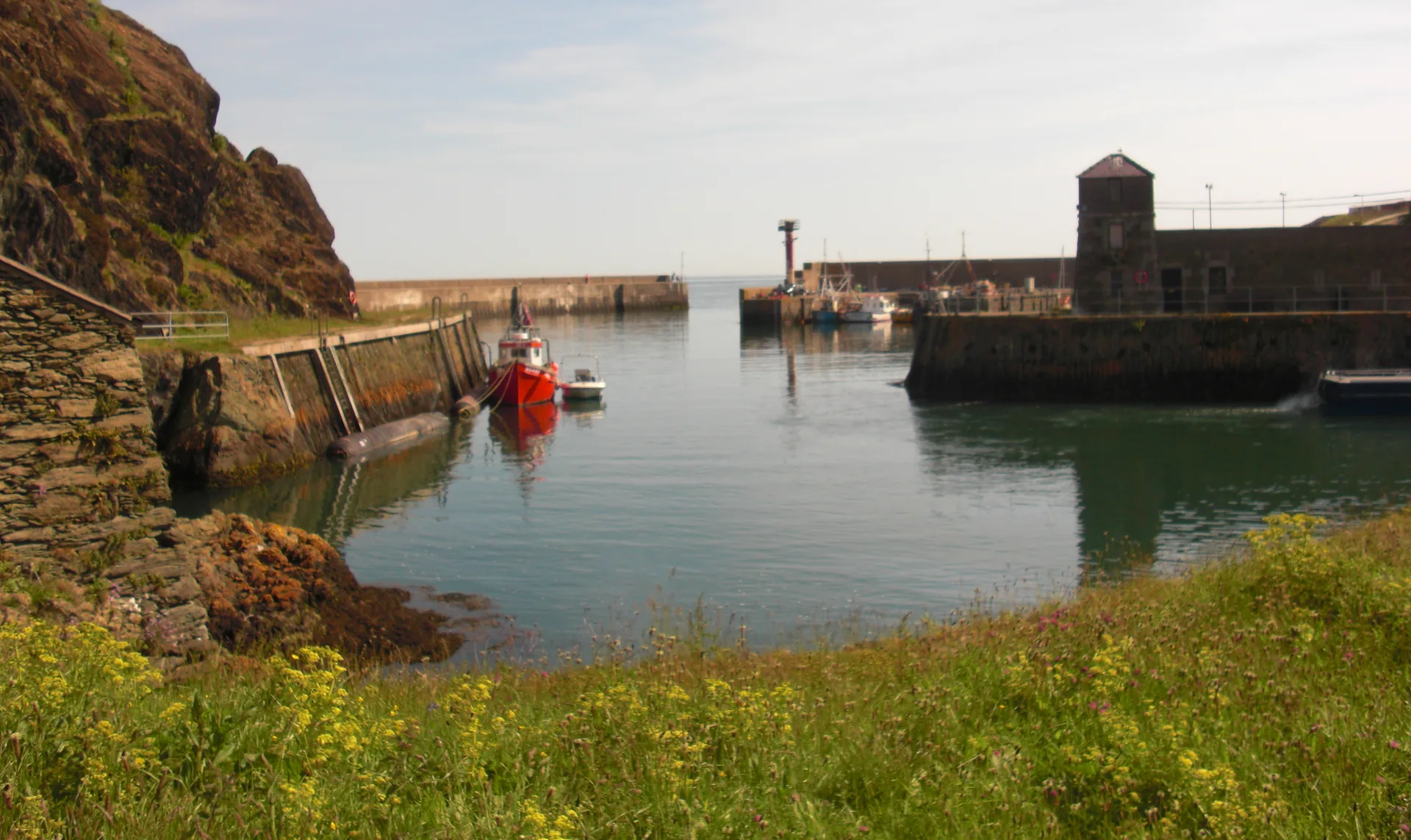
The weir at the west end, where the lagoon was made.
03 The lagoon
Still water and low islands, the sea just over the ridge.
04 The colony
In summer, the sound reaches you before the birds do.
May–Aug
05 The ridge
Loose shingle underfoot, sea one side, lagoon the other.
06 The headland
The north coast opens out; Wylfa sits along the shore.
07 Back
Evening light, and the terns still working the water.
Seen along the way.
Lagoon, ridge, birds and sky: the visit before you make it.
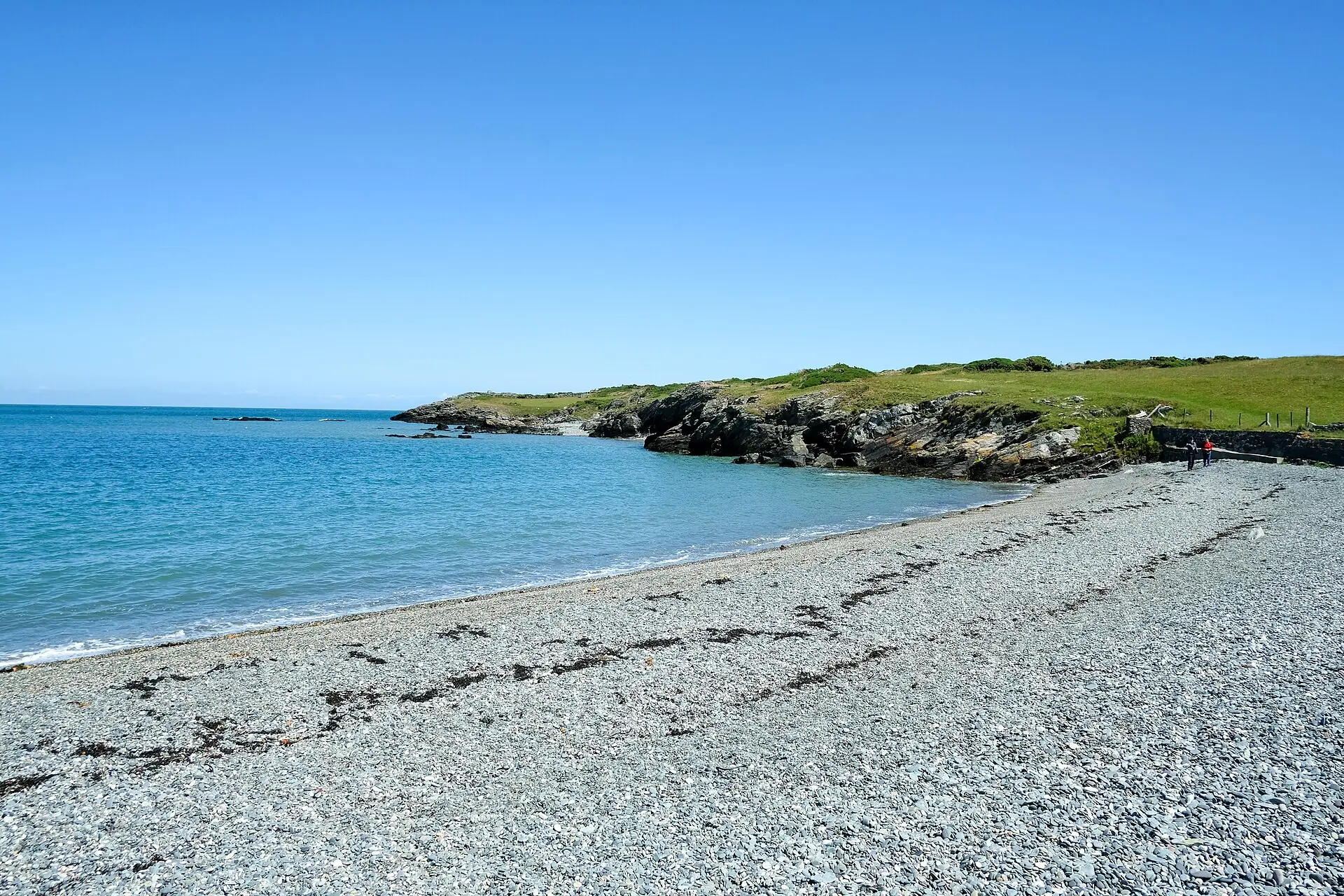
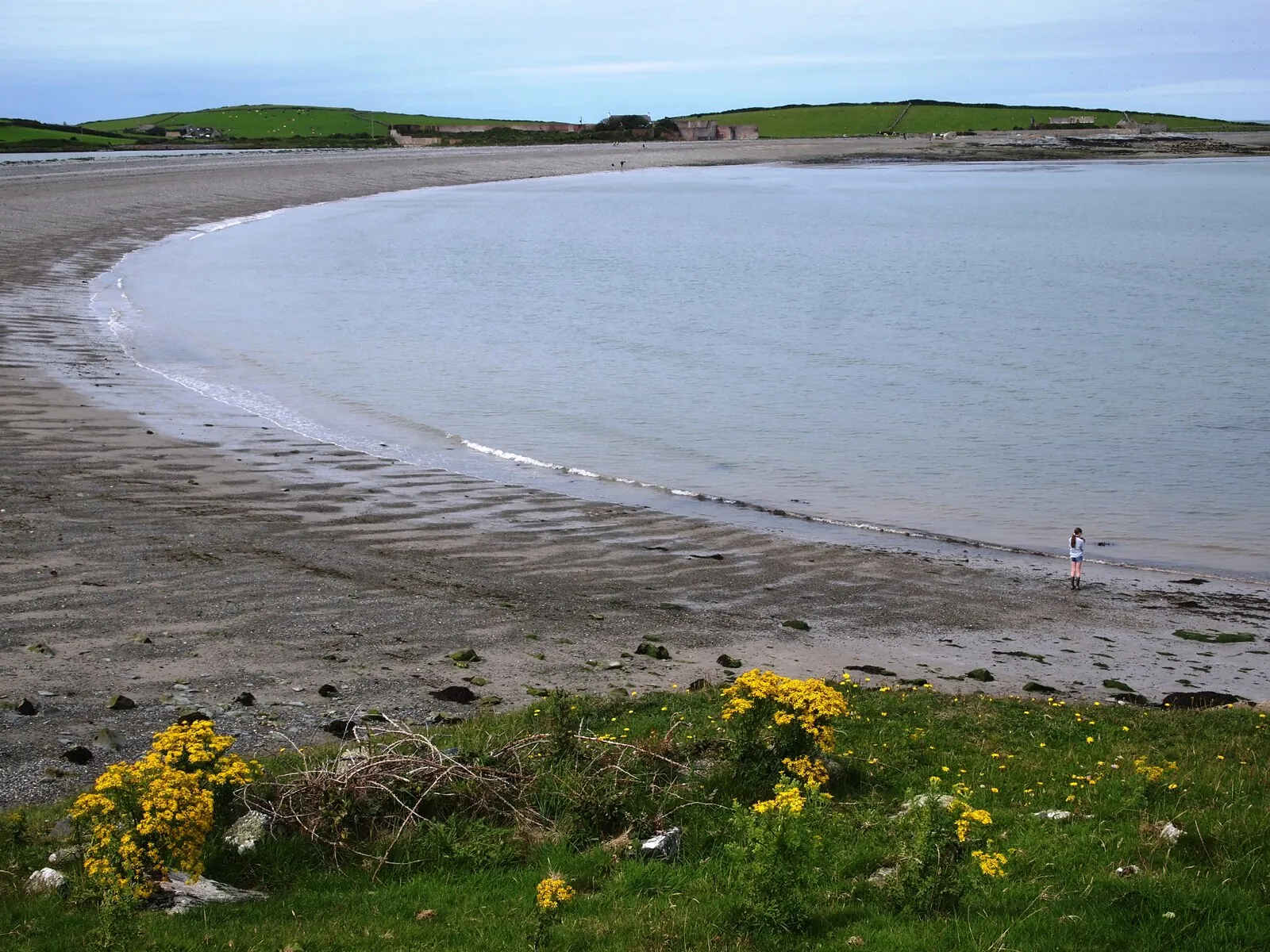
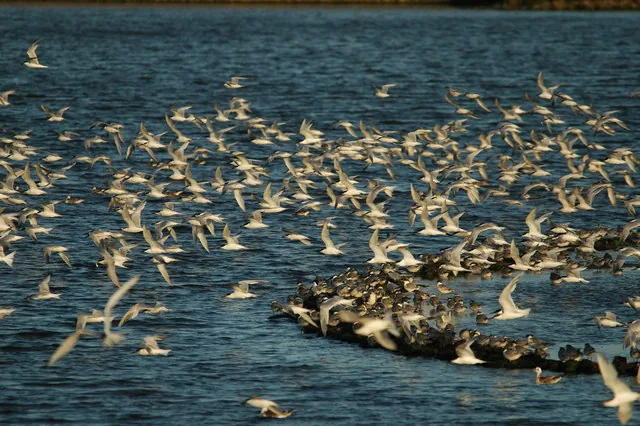
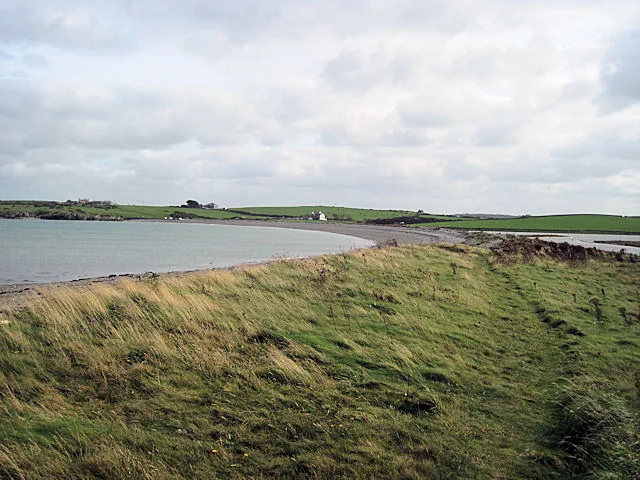
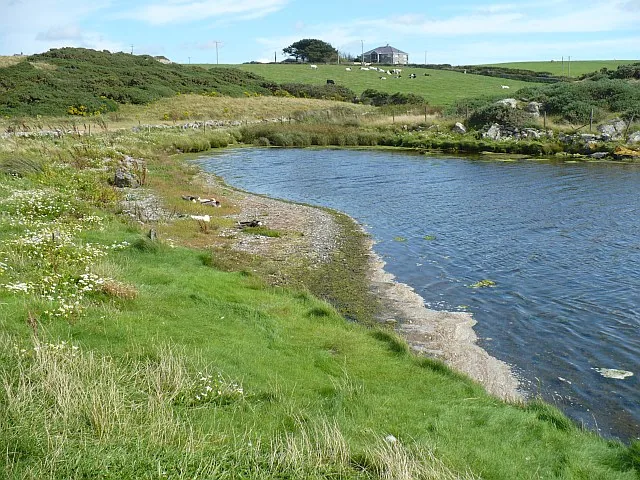
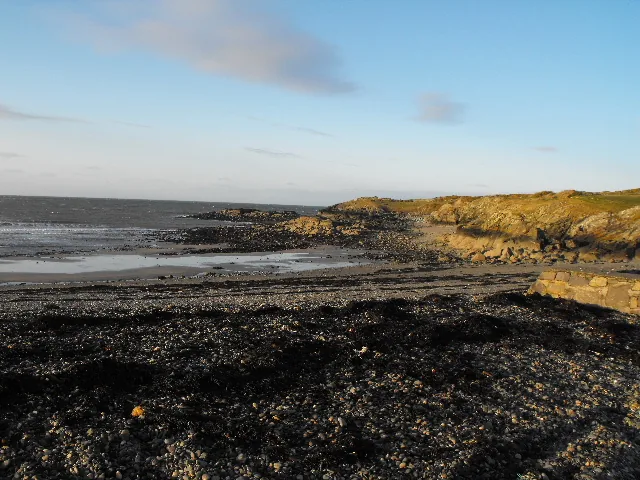
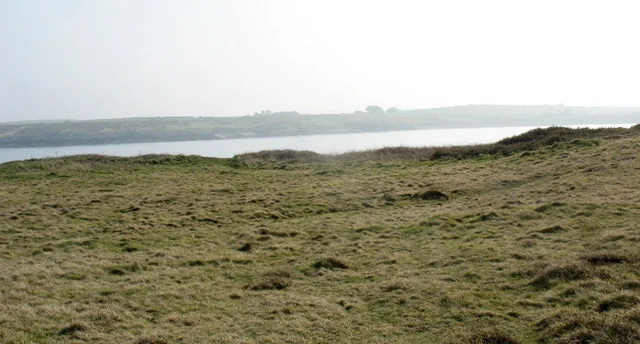
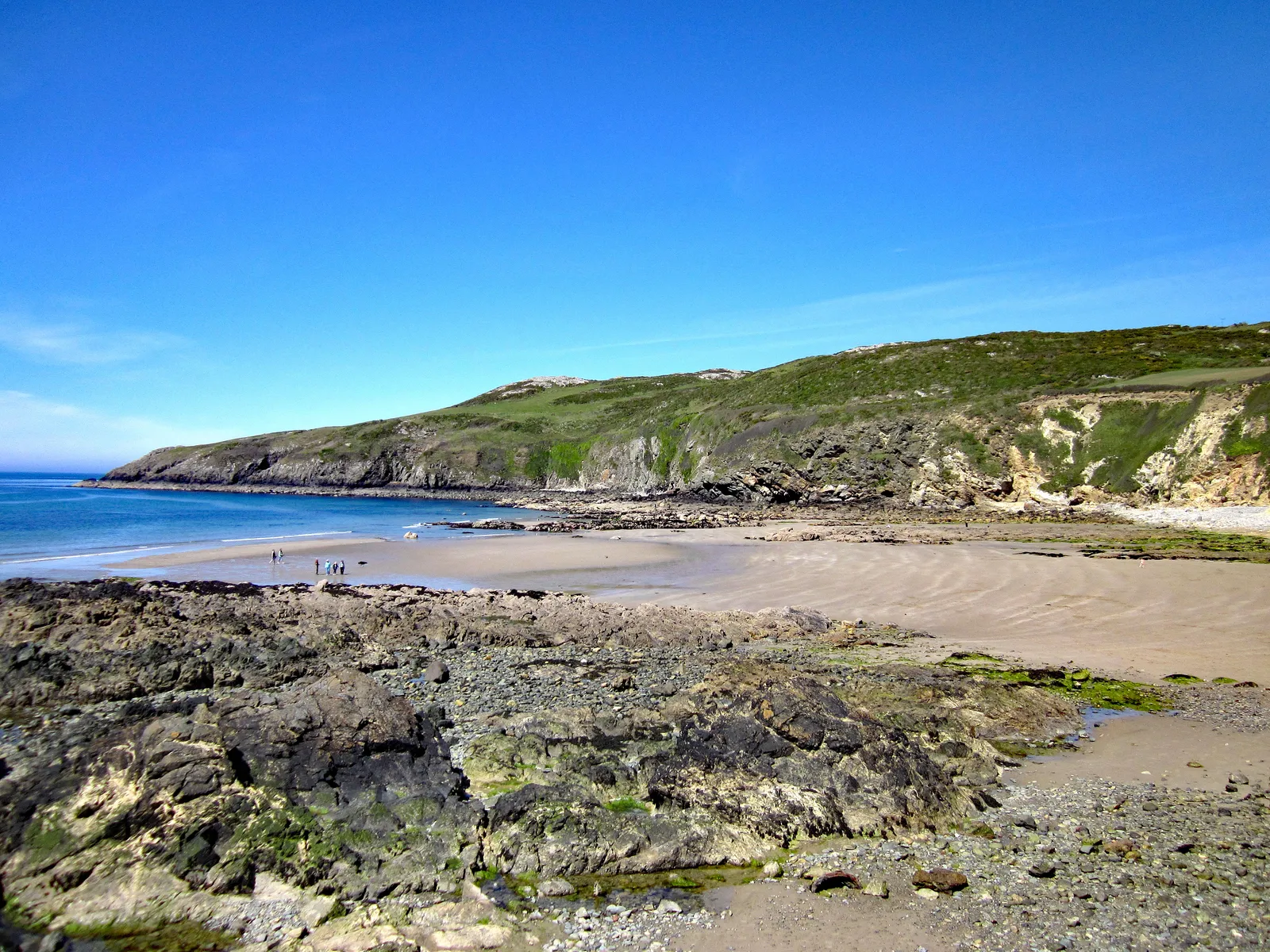
The colony over the lagoon islands: the reason to come in summerAlong Esgair Cemlyn: the shingle spit, wind off the seaThe still, brackish lagoon and its grassy banksThe bay at low water: rock and weed uncoveredThe quiet headland, Trwyn Cemlyn, and a misty bay
The parts people remember
Cemlyn changes sharply with the season. During the tern season the colony dominates the lagoon; outside it, the shingle ridge and open water feel much quieter.
01
The islands in full voice
In early summer the low islands are packed and loud. The whole colony, working the air at once.
02
The ridge the sea built
A long wall of pebbles thrown up by storms, loose and shifting under your feet as you walk it.
03
Calm water, wild sea
Still, brackish water on one hand; the open Irish Sea breaking just over the ridge on the other.
04
Watched over
You keep your distance and the birds stay settled, a place that only works because people mind it.
05
The turn of the season
The same shingle, empty and silent out of summer, waiting for the birds to come back.
What remains is the contrast between the exposed shingle ridge and the sheltered lagoon behind it.
Cemlyn Archive
A made place, honestly told.
Four field notes on Cemlyn: the man-made lagoon, the colony it feeds, the storm-built ridge, and a name that isn’t quite settled.
Some of this is documented fact. Some of it is interpretation. The page keeps them apart.
Field notes
Four entries. Open one to read the note.
Made landscape Fact
Hewitt’s lagoon
Field note I · filed under the made landscape
The still water behind the ridge isn’t natural; a wealthy flyer built it for the birds.
What is known
In the 1930s Captain Vivian Hewitt bought Bryn Aber, the house at the west end, and had a dam and weir built across the stream draining to the sea. Tidal saltmarsh became the stable, brackish lagoon, with the low islands the terns now nest on.
How he’s remembered
Hewitt was a keen ornithologist and one of Britain’s early aviators, recalled for an early solo flight across the Irish Sea. Cemlyn was, in effect, his private bird sanctuary.
What to notice there
The weir still sets the water level at the Bryn Aber (west) end. The house sits behind it; the nesting islands sit out in the pool.
Living record Fact
Wales’s only Sandwich terns
Field note II · filed under the colony
For a few months each year, Cemlyn holds one of Britain’s most important tern colonies.
What is known
Around 1,500 pairs of Sandwich terns nest on the lagoon islands: Wales’s only breeding colony, the third-largest in the UK, and roughly a fifth of the UK population. Arctic and common terns breed here too; in 2025 roseate terns bred successfully for the first time in about thirty years.
Why it matters
Lose Cemlyn and Wales loses its Sandwich terns entirely. The site is part of the Ynys Feurig, Cemlyn Bay and The Skerries Special Protection Area.
What to notice there
Watch from the shore and the marked paths. Wardens are present through the season and predators are kept in check. The noise you hear is the colony working, and it stays that way only if it is left undisturbed.
The made shore Fact
The shingle ridge
Field note III · filed under the made shore
The curved bank of pebbles between lagoon and sea has a name, and a violent origin.
What is known
Esgair Cemlyn, the crescent shingle ridge, was built and reshaped by longshore drift and storms, and a nineteenth-century storm is credited with piling up much of what stands today. It is what holds the lagoon apart from the open sea.
What the name means
“Esgair” is a ridge or spit of gravel, the same word used for the eskers left behind by melting ice.
What to notice there
Loose and steep to walk. In the nesting season keep to the seaward side. The top of the ridge is where the birds are.
Names & meaning Unproven
What “Cemlyn” means
Field note IV · filed under the unproven
Even the name isn’t settled, and saying so is the honest answer.
What is known
The Welsh Language Commissioner records the standard form (Cemlyn) without giving a meaning.
What’s often said
It is commonly read as a “crooked” or “winding lake” (cam plus llyn), which fits the curved lagoon behind the ridge. It is an interpretation, not a documented fact.Meaning · records unclear
What to take from it
Read the name as a good fit for the place, not a proven history.