A compact town-centre castle where ground level is easy and the towers add stairs.
CHECK FIRST · OPENING
Beaumaris keeps seasonal Cadw hours, with last admission 30 minutes before closing, and it’s closed on 24–26 December and 1 January. Check current Cadw opening hours before you set off. You can buy tickets on arrival, and booking isn’t required.
Time needed
About an hour · longer with the towers and wall walks
Best time
July and August · longest opening hours
Opening, entry & booking
Paid entry, seasonal hours · buy on arrival, no booking
Access & difficulty
Easy at ground level · stairs and uneven floors above
Parking & start point
Castle Street visitor centre · paid car parks a short flat walk
Getting there
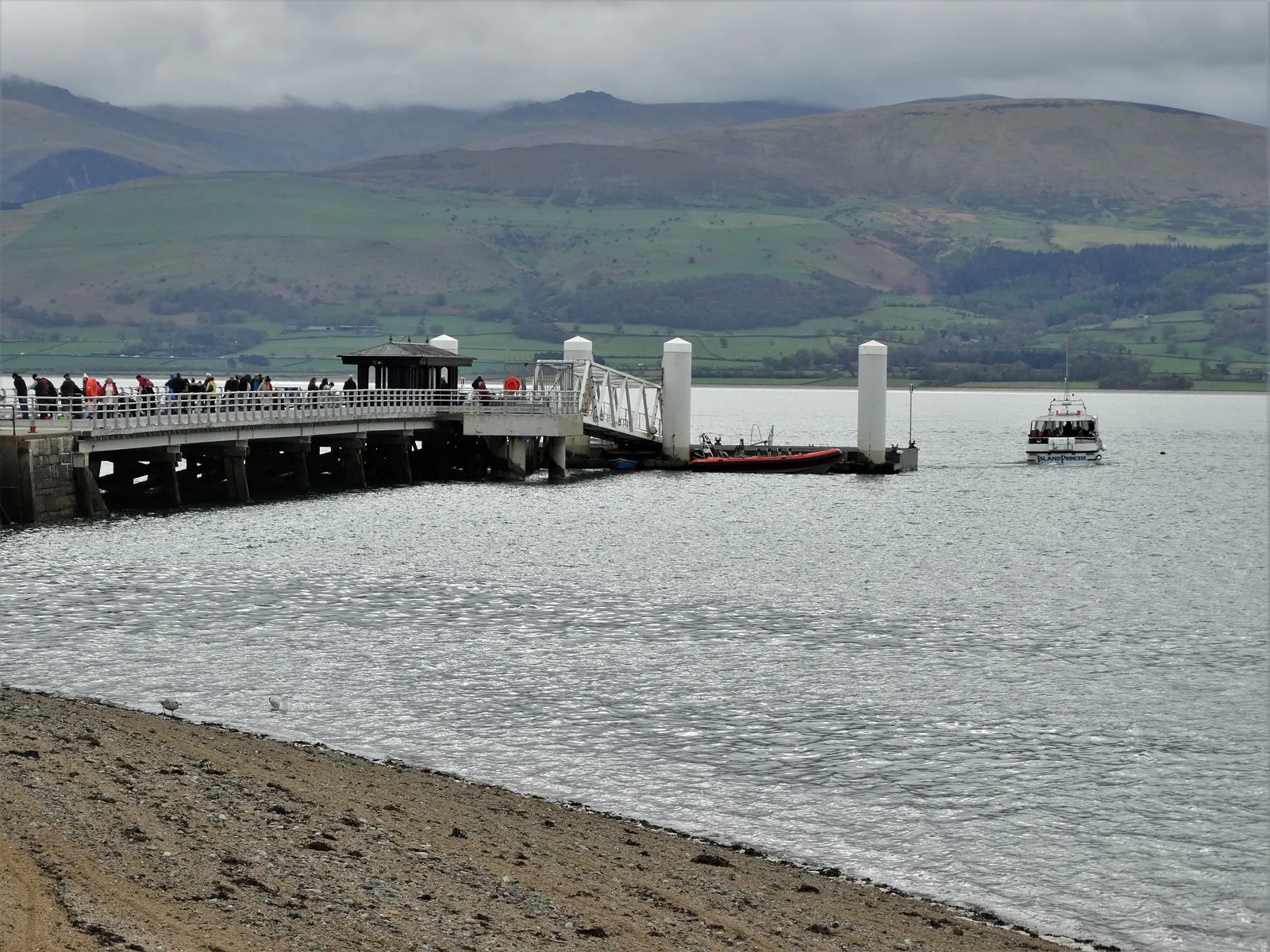
A545 by car · Bangor rail ~9 miles · bus stop 100 m
Toilets, food & facilities
No toilets on site · free public toilets ~50 m · gift shop
Dogs
Welcome on short leads, ground floor only
Plan with confidence.Detailed information on arrival, access, facilities, restrictions and local conditions.
Opening, entry & booking
1 Mar–30 Jun
9:30am–5pm
1 Jul–31 Aug
9:30am–6pm
1 Sep–31 Oct
9:30am–5pm
1 Nov–28 Feb
10am–4pm
Last admission
30 minutes before closing.
Closed
24, 25 and 26 December and 1 January.
Tickets
Buy on arrival, or book online for 5% off. Online bookings are non-refundable. Booking is not required.
Opening hours are set by Cadw and change through the year.
There are no toilets on site. Free public toilets are about 50 metres away and include accessible and baby-changing facilities.
On site
No toilets.
Nearby
Free public toilets about 50 m away, with accessible and baby-change.
At the castle
Gift shop, exhibition and picnic tables.
Connectivity
Wi-Fi.
Hearing
Portable induction loop.
Accessibility & terrain
Cadw rates the site Terrain Level 2, easy for general walking, and ground-level visiting is relatively straightforward. The full experience is not step-free.
Cadw terrain
Level 2: easy for general walking.
Ground level
Relatively straightforward.
Upper levels
Short narrow staircases, internal steps, uneven floor surfaces, narrow doorways, and wall walks with many steps.
Visitor centre
Automatic entrance doors and a low-profile admission desk.
Hearing
Portable induction loop available.
Parking
Two accessible roadside spaces by the monument; larger paid car parks a short flat walk away.
Dogs & restrictions
Dogs are welcome on short leads, on the ground-floor levels only. That ground-floor limit applies to non-assistance dogs.
Safety, weather & local conditions
Normal awareness for a historic monument by water. Cadw flags deep water, falls from height, slippery or uneven surfaces, nesting birds, falling masonry, and steep, uneven steps. None of this makes Beaumaris a difficult day out. Just take normal care, especially with children, near the moat and on the wall walks.
What to bring
Comfortable shoes
A layer for the walls
Water
Card for parking & tickets
Camera
Atlas of Wales Discovery Highlight
The greatest castle never built.
Begun in 1295 as the last of Edward I’s royal strongholds in Wales, Beaumaris was laid out on flat, marshy ground, which let its builders draw an almost perfectly symmetrical castle, walls within walls, ringed by a water-filled moat.
Money ran short and the work was never finished. The squat, low towers you see were meant to rise far higher. Cadw calls it an unfinished masterpiece of near-perfect symmetry: “the greatest castle never built.”
Symmetry planned, never finished.
Atlas of Wales Verdict
Should this shape your day?
Worth building an Anglesey day around, if you come for history and architecture, not a wild walk.
Good fit for
major Welsh castle seekers
medieval military architecture
family-friendly historic exploring
photography: moat, symmetry, towers
a strong anchor for an Anglesey day-route
Think twice if
you want a long, wild walk
you want a free, open-anytime ruin
you need a fully step-free upper-level experience
you dislike managed, paid attractions
you’re travelling over the holidays, because it closes 24–26 December and 1 January
Opening hours & access decide the day
seasonal Cadw hours; last admission 30 minutes before closing
ground level is easy; the towers and wall walks add steps
you can buy tickets on arrival; booking isn’t required
A historic monument by deep water. Take normal care on the walls and near the moat.
Best experience
Unhurried: the moat and gatehouses, the wall walks if you climb, and the harder Llanfaes story behind the symmetry.
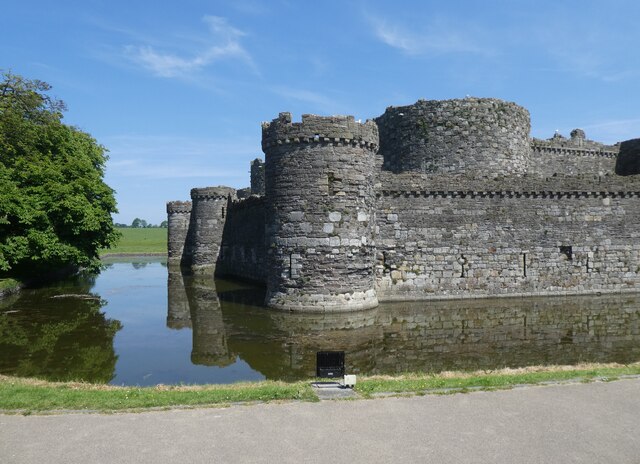
Low walls, wide water: Beaumaris laid out across its moat.
How a visit tends to unfold
Seven moves through the castle.
Not a signposted route, just the order most visits fall into.
01 Moat edge
Arrive from Beaumaris town and read the castle across its water-filled moat.
02 Outer defences
The lower outer curtain and its many arrow loops: defence in depth, before you’re inside.
03 Inner ward
Through the gates into the heart of the castle, walls rising within walls.
04 Climb or stay
Decide here: easy ground-level wandering, or the stairs to the upper levels.
Stairs & uneven floors above
05 Walls & chapel
Wall walks and the chapel and inner rooms, where you can reach them.
06 Dock & sea-gate
Find the old dock in the moat, where supply once came straight off the sea.
07 The incompletion
End on what was never built: towers that stop short of their full height.
Beaumaris, in pictures
Walls, water and gate.
Moat, dock and inner ward: the castle before you walk it.
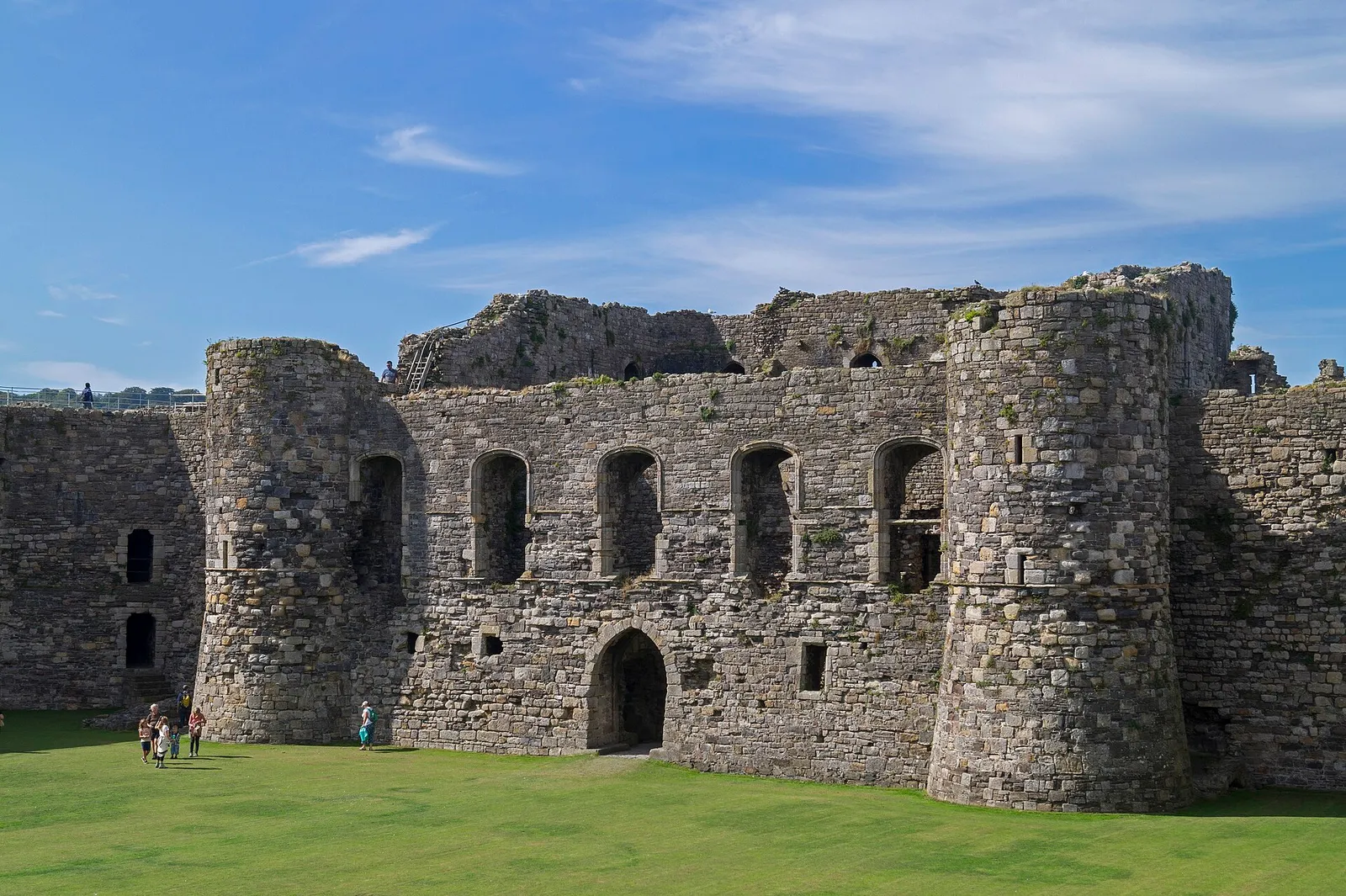
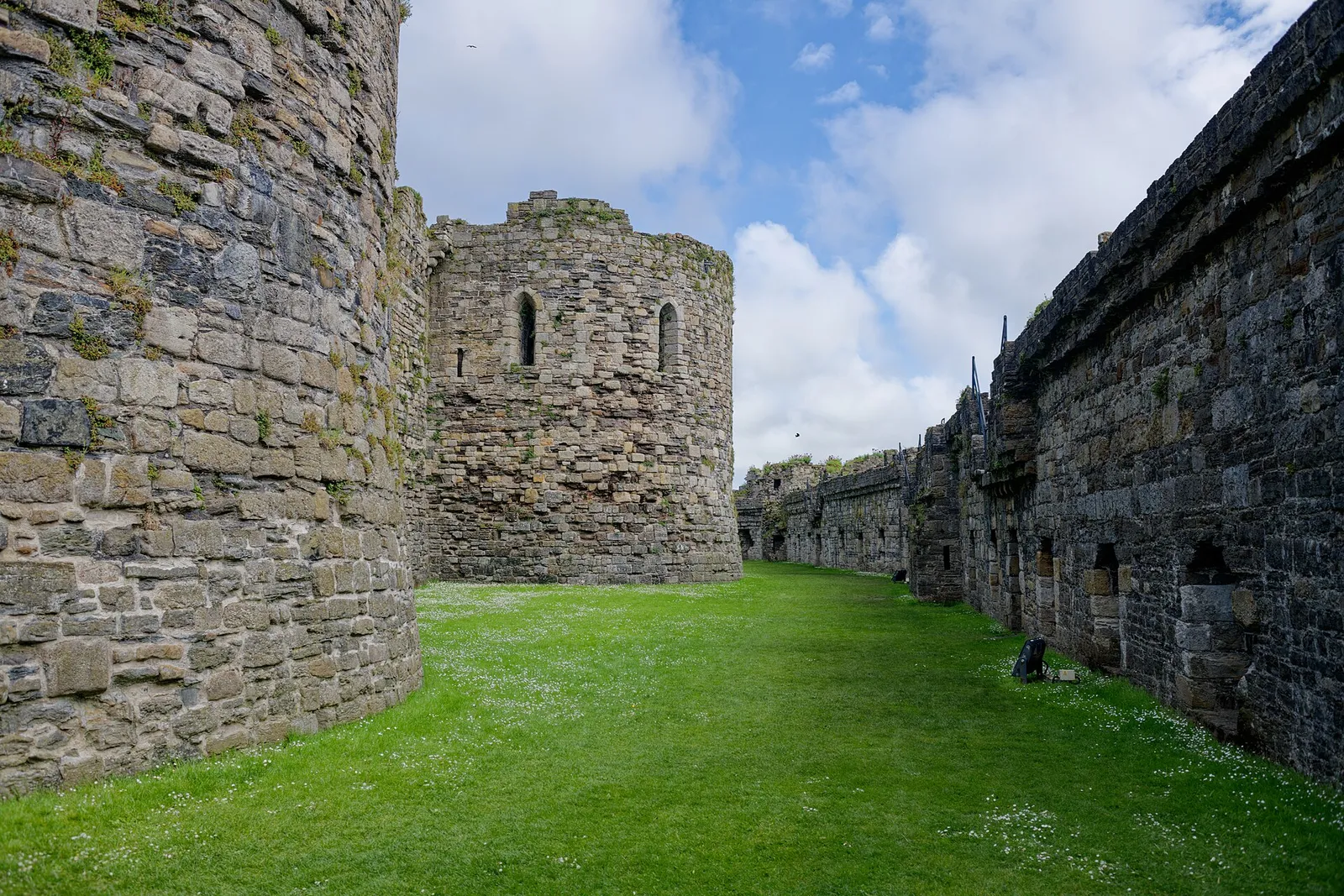
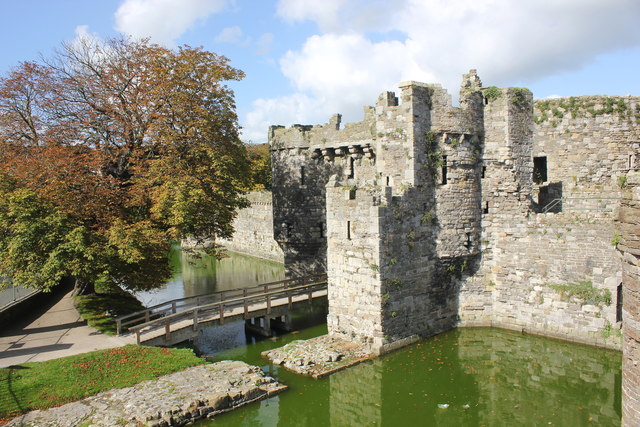
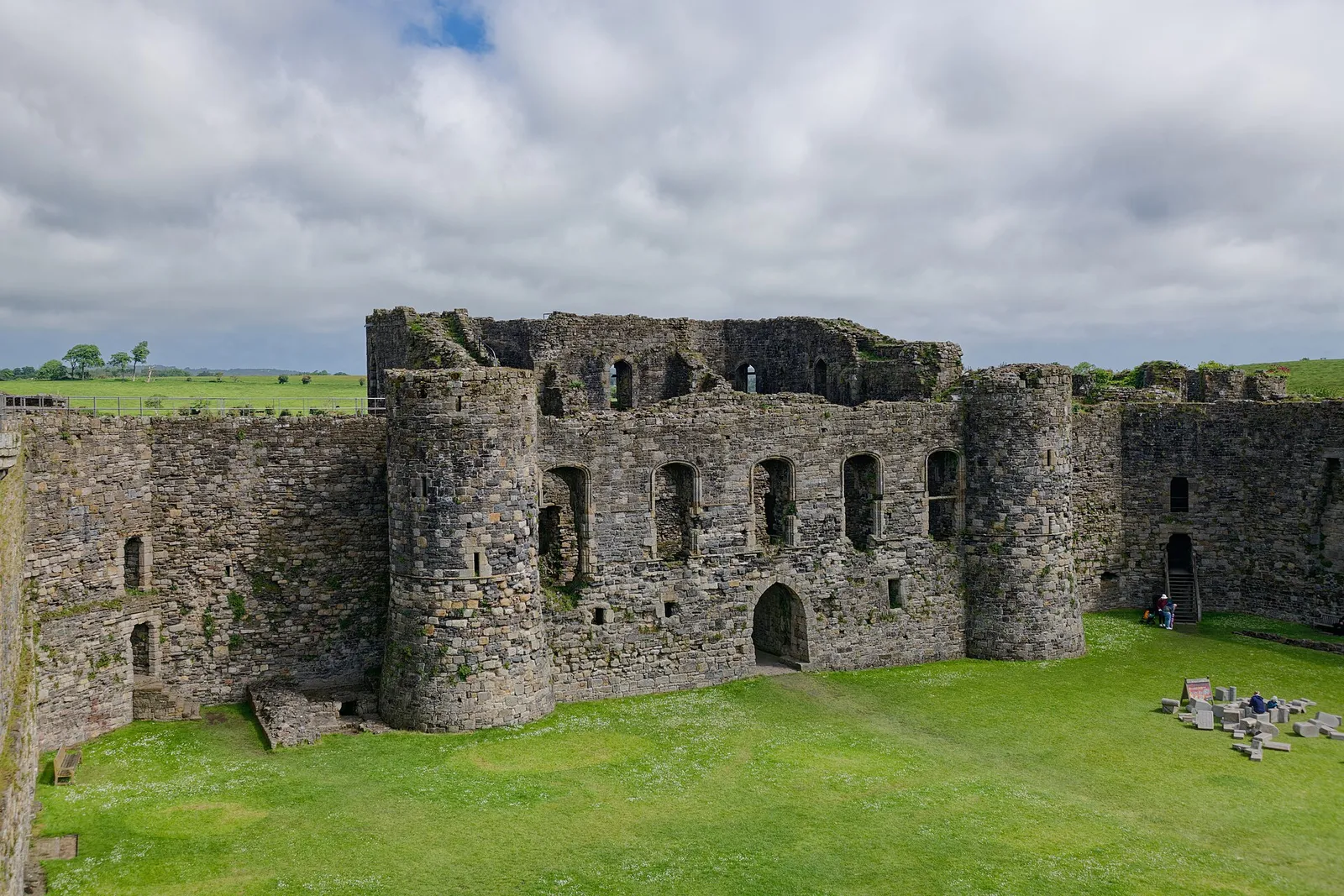
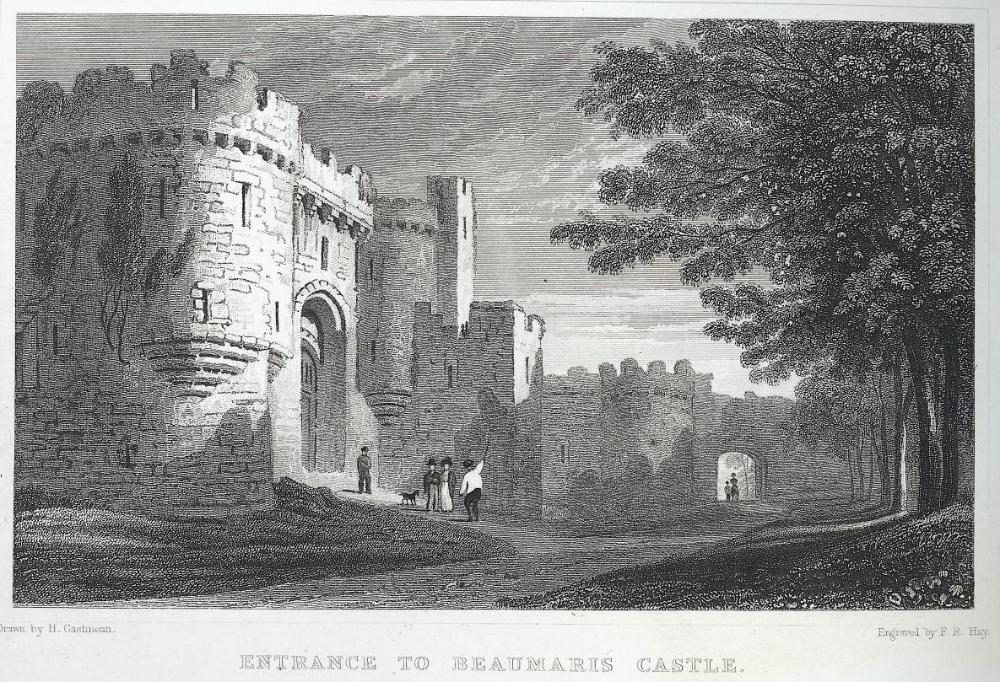
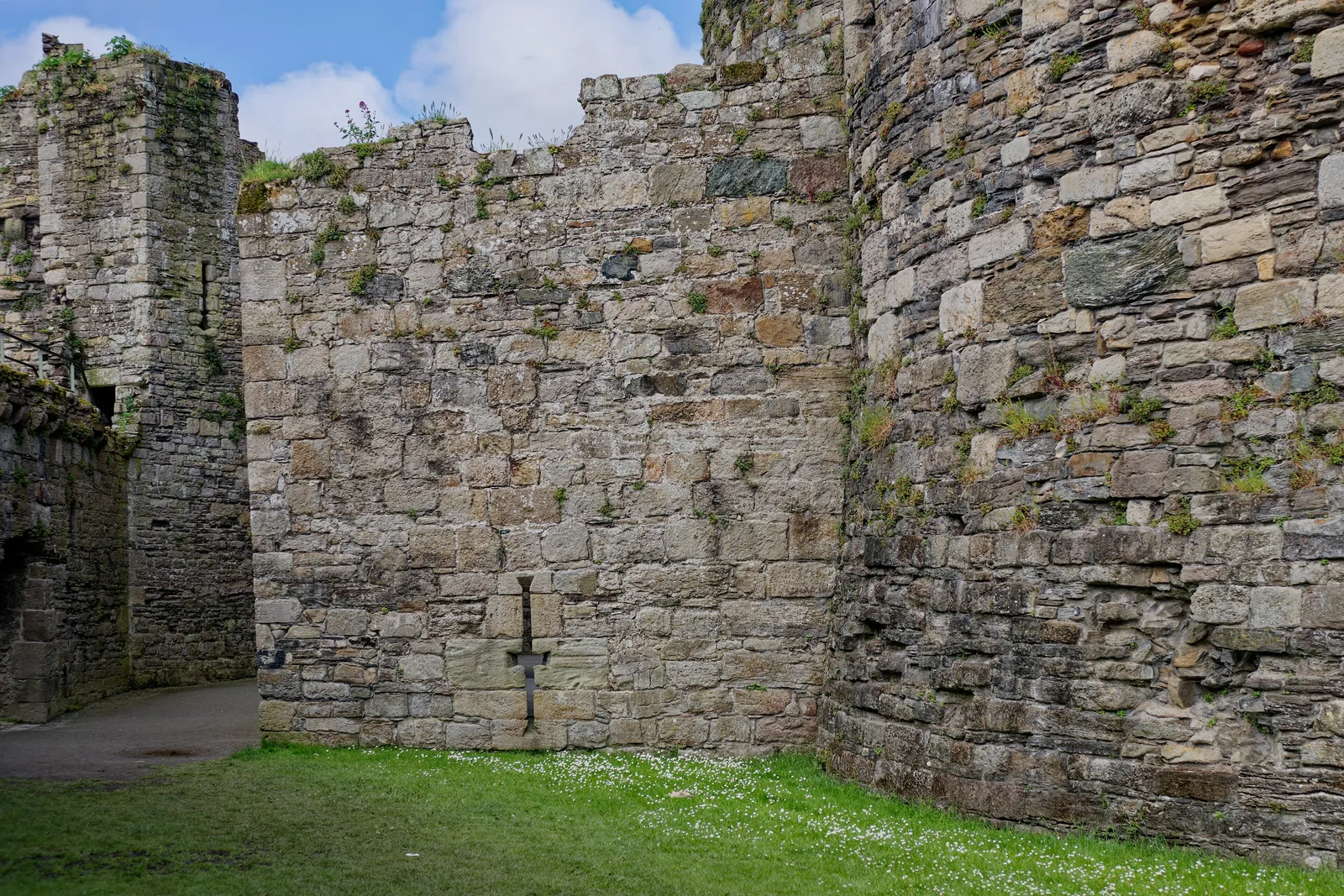
The moat: the water-filled ring that set out the castle’s symmetryThe gate next the sea, and the dock channel cut into the moatThe great gatehouse, the castle’s most complete faceA nineteenth-century view of the same gateInside the walls: the high curtain and a mural tower
What stays with you
The parts people remember
Beaumaris isn’t a ruin you glance at. What stays with people is the geometry, the water, and the sense of a fortress built to control.
01
The first reveal over the moat
You first meet the castle across its water-filled moat: low, wide and deliberate.
02
Walls inside walls
You pass through one curtain wall and find another rising beyond it. The plan keeps drawing you further in.
03
Windows in a fighting wall
High in the inner ward, the great hall’s tall arched windows open straight out of the curtain: a room built for living, set into a wall built for defence.
04
A castle at the end of a street
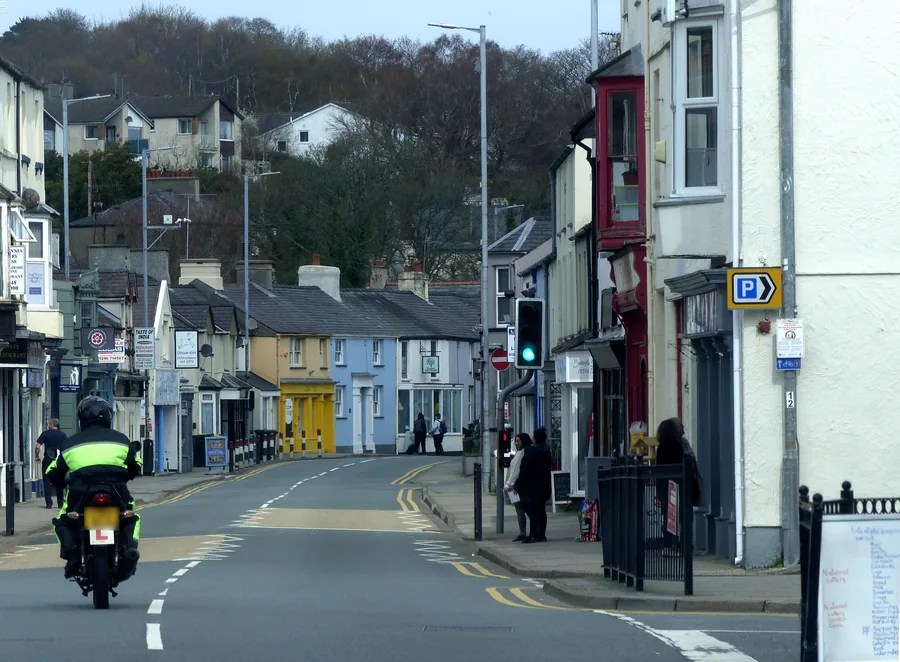
You reach the moat through shops and ordinary streets. Castle and town were planned together, and they still meet here.
05
Architecture as control
Flat, marshy ground let the builders draw the plan they wanted: rings inside rings, each side answering the one opposite. The symmetry is not decoration. It reads as a statement that the crown could put a fortress exactly where, and exactly how, it chose.
Its beauty and its purpose are the same thing.
From the Beaumaris archive
Symmetry, a moved town, and a World Heritage Site.
Four field notes on Beaumaris: why Edward I built it, the planned town beside it, the Welsh community cleared to make room, and the unfinished castle the world now protects. Source-backed; the harder parts are kept in.
Beauty and symmetry are only half of it. The other half is conquest, a displaced town, and a castle never finished.
Field notes
Four entries. Open one to read the note.
The castle Fact
The last of Edward I’s strongholds
Field note I · filed under the conquest
Beaumaris was begun in 1295 as Edward I consolidated his control of Wales. It was the last of his great royal castles.
What is known
Cadw describes Beaumaris as the last of Edward I’s Welsh royal strongholds, begun in 1295 as he tightened his grip after conquest. Its flat, marshy site let the builders lay out an almost perfectly symmetrical, concentric castle, walls within walls, commanding both Anglesey and the Menai Strait.
The design
A lower outer curtain wraps a higher inner one, with a water-filled moat around the outside. Cadw records around 300 arrow loops in the outer walls alone: defence in depth, so a garrison could fire from several lines at once.
What to notice there
From the moat edge the plan reads clearly: everything answers to a centre line. The symmetry isn’t decoration; it’s how the castle was meant to fight.
The town Fact
Beau mareys: the fair marsh
Field note II · filed under the town
Beaumaris wasn’t just a castle. It was a planned castle-and-town, laid out together on the marsh.
What is known
Beaumaris was founded as part of a new castle-and-town project: a fortified borough beside the new royal castle. The name comes from the Norman-French for ‘fair marsh’, the low, level ground that made the symmetry possible.
Why here
The site controlled the Menai Strait and the approach to Anglesey, the island that had long supplied grain to the Welsh princes. A castle and a loyal town here was as much about economy and control as about defence.
What to notice there
The town and castle still sit together. Beaumaris grew into the elegant strait-side town you arrive through. The castle is its founding fact.
The harder story Fact
The town moved to Newborough
Field note III · filed under Llanfaes
To build Beaumaris, the nearby Welsh town of Llanfaes was cleared, and its people moved across the island.
What is known
From 1295 the Welsh settlement of Llanfaes was demolished to make way for Beaumaris. Houses were taken down, the port was closed to shipping, and many residents were forcibly resettled at Newborough (Niwbwrch), on the far side of Anglesey. Cadw records this displacement as part of the castle’s founding.
What the record shows
Llanfaes residents petitioned against the destruction of their town. The move was not voluntary. It was part of the cost of building an English castle and borough on the site.
What to hold in mind
Standing in the symmetry, it’s worth holding both facts at once: a near-perfect piece of medieval design, and a community cleared to make room for it.
Now Fact
Never finished, now protected
Field note IV · filed under the unfinished castle
The castle was never completed, and that unfinished form is now protected as part of a World Heritage Site.
What is known
Work at Beaumaris stopped with the castle only part-built: the towers and gatehouses never reached their planned height. Today the castle is cared for by Cadw and is part of the UNESCO World Heritage Site ‘Castles and Town Walls of King Edward in Gwynedd’.
Why it still matters
Beaumaris is often called the most technically perfect castle in Britain precisely because of its symmetry. Its incompletion is part of the story, not a flaw to apologise for.
What to notice there
Look for where the masonry simply stops. The squat, low profile isn’t how it was meant to end; it’s the work breaking off, frozen.
Continue exploring
Make it an Anglesey heritage day.
Four stops that build a route around the castle, each with its own Atlas guide.