Free, open in daylight hours, and a short climb from a beach car park — with one thing worth knowing before you drive here.
CHECK FIRST · ACCESS
Cadw describes the tomb as “not generally open to the public”. The mound, the headland and the gated entrance are open all year; the chamber and its carved stones are seen on booked guided tours on selected dates between May and August, and on Open Doors days. Check current tour dates on Cadw before you travel.
Time needed
20–40 minutes · longer if you walk on along the coast path
Best time
Daylight hours, year-round · May to August if you want a tour inside
Opening, entry & booking
Free · 10am–4pm · no booking to visit; tours must be booked
Access & difficulty
Moderate (Cadw Level 3) · a short climb onto an open headland
Parking & start point
Porth Trecastell car park, LL63 5TE · no charge is published; arrive ready to pay
Getting there
Just off the A4080 · 2 miles north-west of Aberffraw
Toilets, food & facilities
Nothing at the monument · a snack van is often in the car park
Dogs
Welcome · and no seasonal restriction on the beach below
Plan with confidence.Detailed information on arrival, access, facilities, restrictions and local conditions.
Opening, entry & booking
Open
10am–4pm, all year. Entry is free and a general visit needs no booking.
Inside the chamber
Cadw states the tomb is not generally open to the public. Guided tours run on selected dates between May and August and must be booked; Open Doors days give special access with tours at 11am, 1pm and 3pm. Dates change every year. Check current opening and tour dates on Cadw.
Parking, start point & arrival
Where
Just off the A4080, 2 miles (3.2 km) north-west of Aberffraw. Postcode LL63 5TE.
The Wales Coast Path crosses the headland. Rhosneigr lies north and Aberffraw south, on the same waymarked section.
Toilets, food & facilities
At the monument
Nothing. No toilets, no shelter, no staff, no interpretation beyond the boards at the gate.
Toilets
Porth Trecastell does not appear on Isle of Anglesey County Council’s list of public toilets. The nearest one it lists is at Rhosneigr, in the library car park.
Food
The Wales Coast Path itinerary notes a snack van is often in the car park. Often, not always — carry what you need.
Accessibility & terrain
The walk
A footpath climbs from the north side of the cove onto the headland. It is short, but it narrows where the ground drops away toward the beach.
Grade
Cadw rates the terrain “Level 3 — Moderate” and warns it can be slippery or muddy underfoot, with a risk of stones being dislodged in bad weather. No step-free route is published.
Footwear
Shoes with grip. This is grass, worn earth and rock, not a surfaced path.
Dogs & restrictions
Cadw states that dogs are welcome at the monument, and Porth Trecastell is not on Isle of Anglesey County Council’s list of beaches carrying a seasonal dog restriction. Nothing is published about dogs on guided tours, so ask when you book rather than assume.
Safety, weather & local conditions
Cadw’s standing notice separates two paths: coastal erosion means extra care is needed on the lower coastal path, while the path leading to the monument is currently safe and unaffected. The headland is open and exposed, with drops to the cove on one side. The beach below has no lifeguard service. In an emergency, call 999.
PLACE-SPECIFIC DETAILS
Seeing the carved stones
Not on an ordinary visit
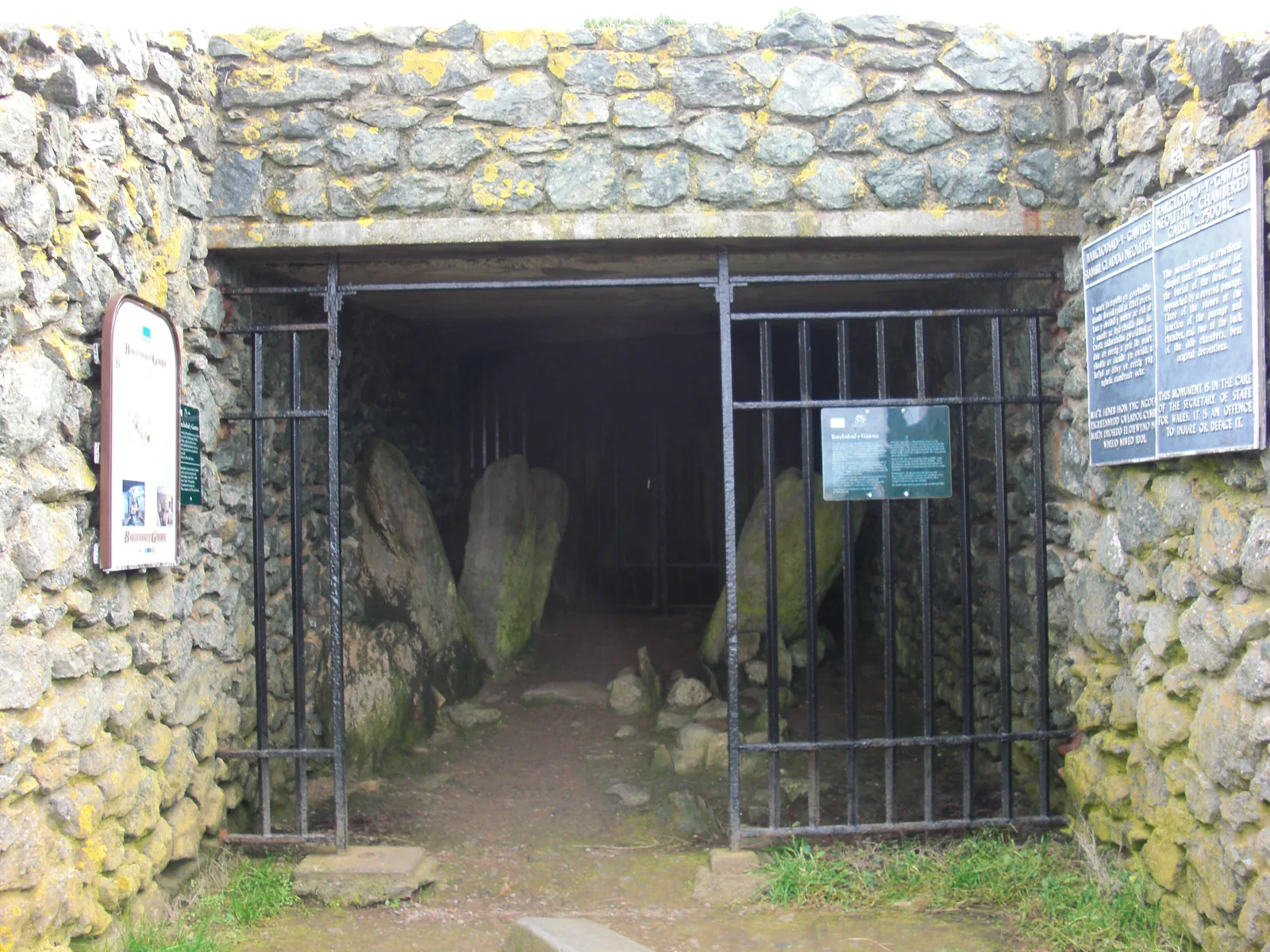
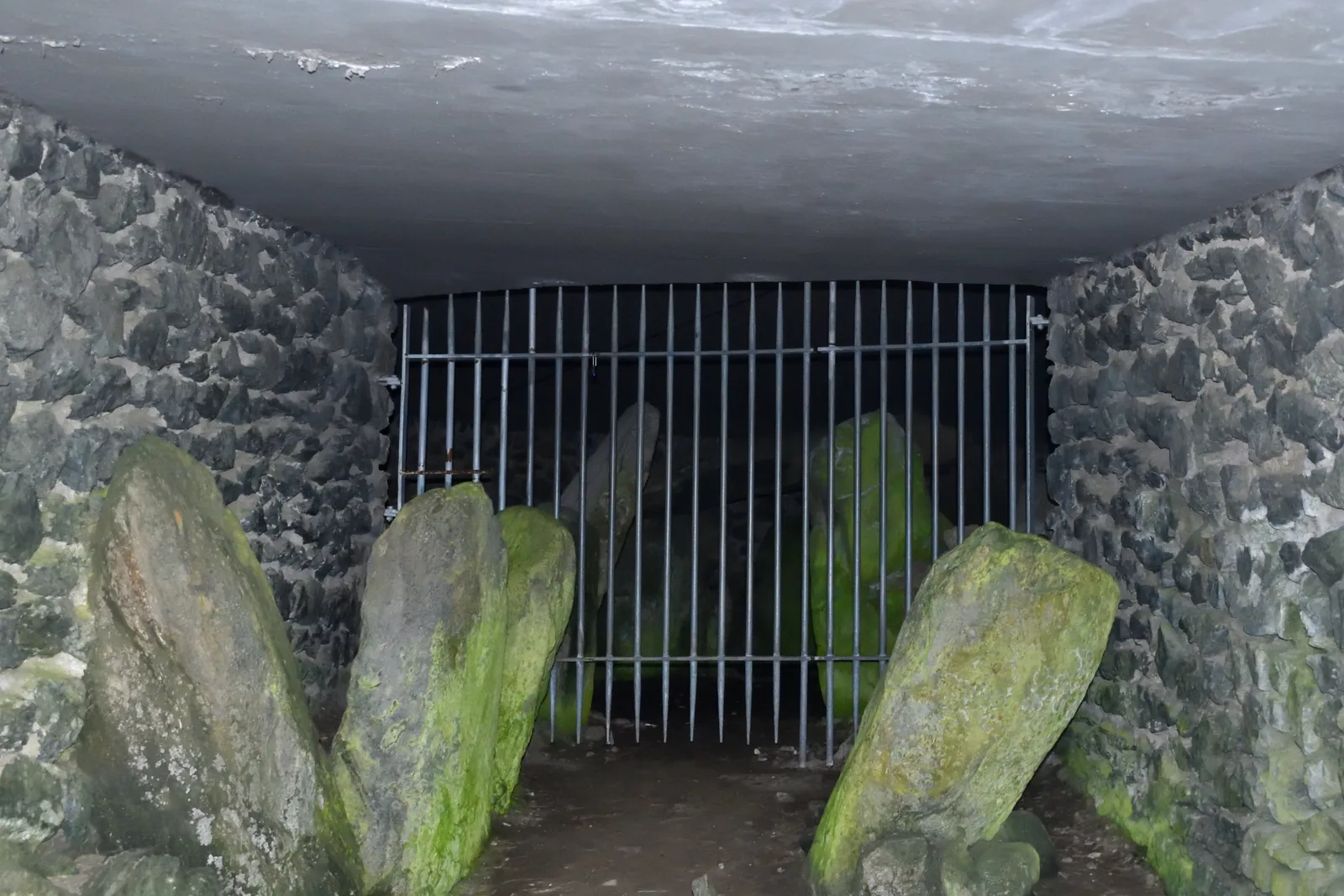
The decorated stones stand inside the chamber, behind a locked gate. You can see down the passage to the bars; you cannot walk past them.
The two ways in
Cadw’s booked guided tours, on selected dates between May and August, and its Open Doors days. Both are published on Cadw’s own pages and both change from year to year.
An old route that no longer works
Tourism listings still describe collecting a key from a shop in Llanfaelog. Cadw’s own position supersedes that. Do not plan a visit around it.
What to bring
Shoes with grip
Windproof layer
Water
Change for parking
The art is real. The gate is too.
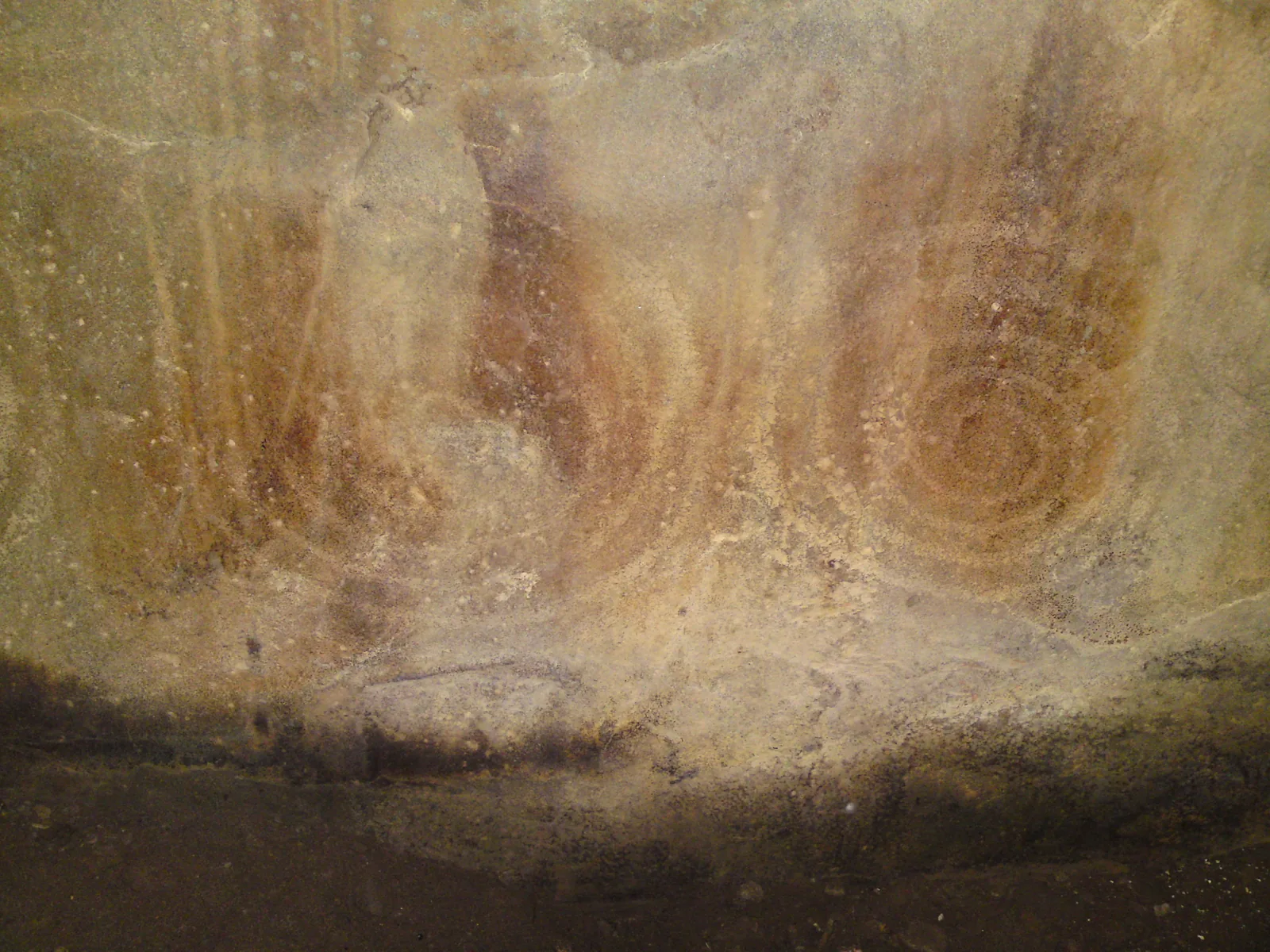
Inside this mound are stones cut with spirals, chevrons, zig-zags and lozenges — the same visual language as the great tombs of Ireland’s Boyne valley, on the other side of the water. Wales has two decorated passage tombs. This is one of them.
It is also closed. Cadw looks after the monument and says plainly that it is not generally open to the public. What an ordinary visit gives you is the mound, the headland, the passage running into the dark, and a barred gate a few paces in.
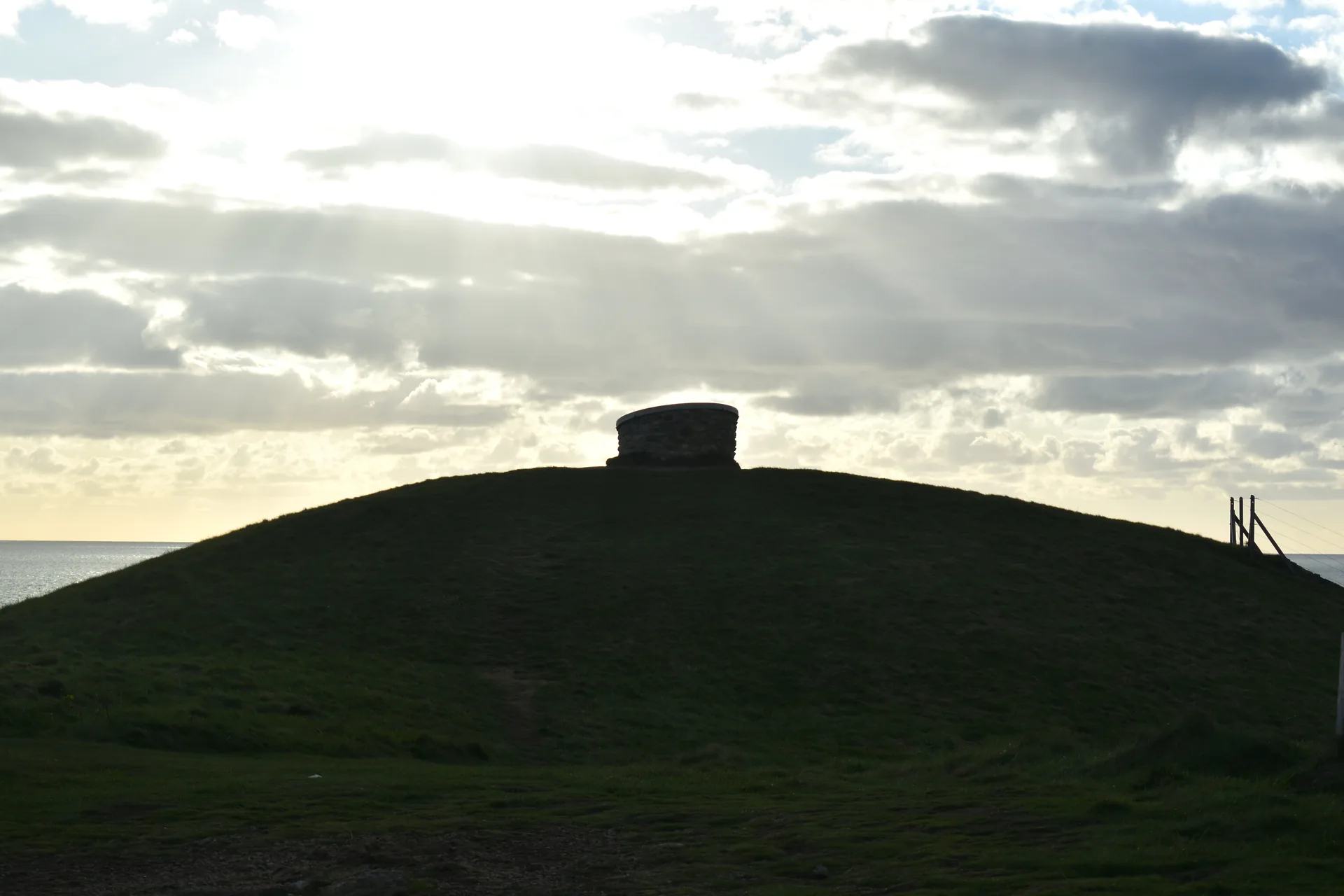
A rebuilt dome on a headland, with a passage you can look down.
Should this shape your day?
A short, strange, worthwhile stop — provided you know what is behind the bars.
Good fit for
anyone drawn to deep prehistory
walkers already on the coast path
a twenty-minute detour from a beach day
anyone who reads before they arrive
Think twice if
you have come to see the carvings
you need step-free ground
you want facilities on site
you expect a staffed heritage attraction
Access decides the visit
Cadw states the tomb is not generally open to the public
the mound, the headland and the gated entrance are open 10am–4pm, free, all year
the chamber is reached on booked tours between May and August, or on Open Doors days
A booked tour date, a clear afternoon, and the walk in along the coast path rather than the fifty metres from the car.
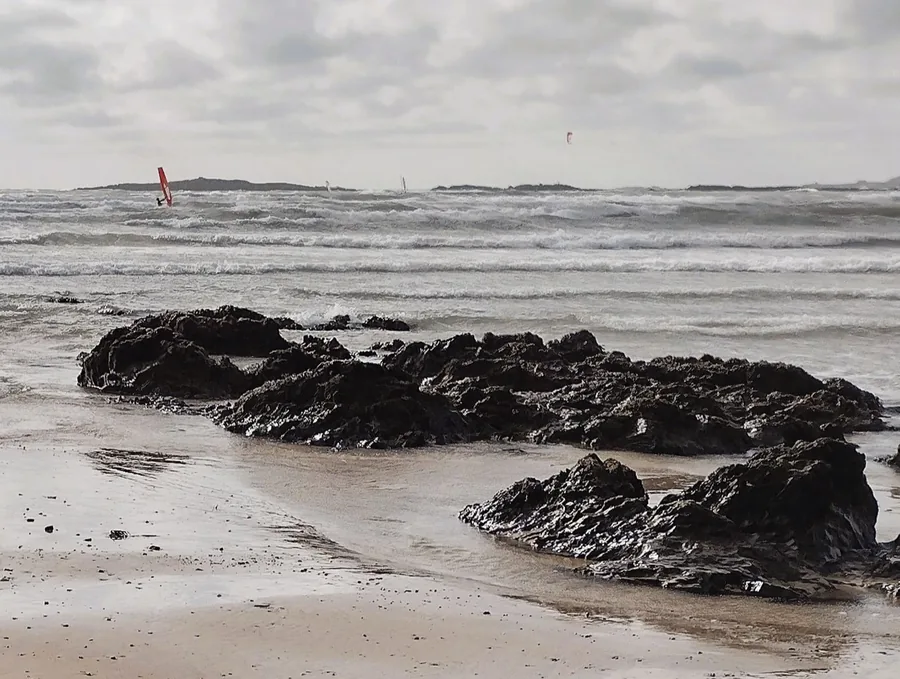
From the mound, the cove everyone else came for.
Turn away from the beach.
See the shape of the visit before you make it.
01 The car park
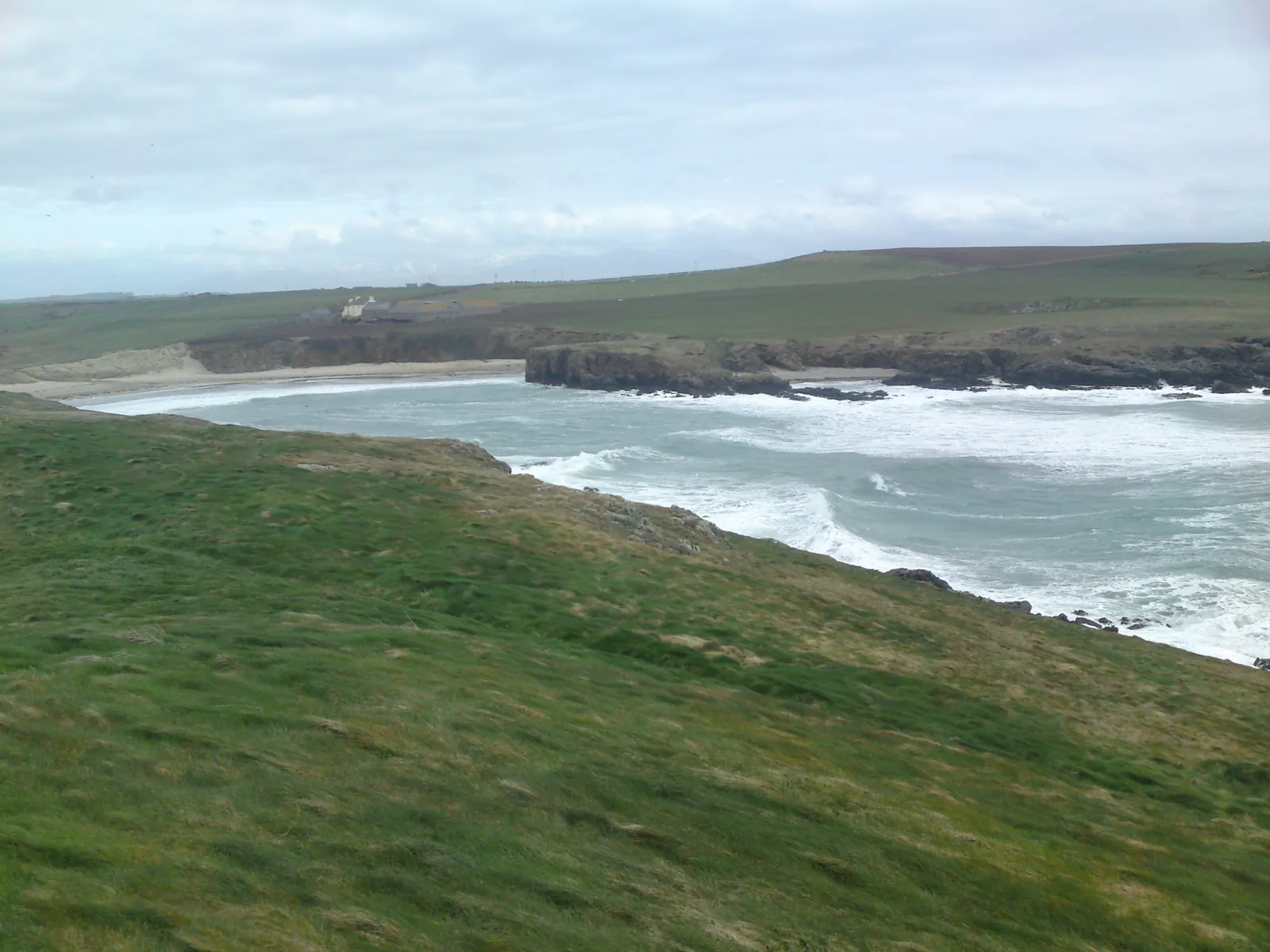
A surf cove behind the dunes. Most people go down.
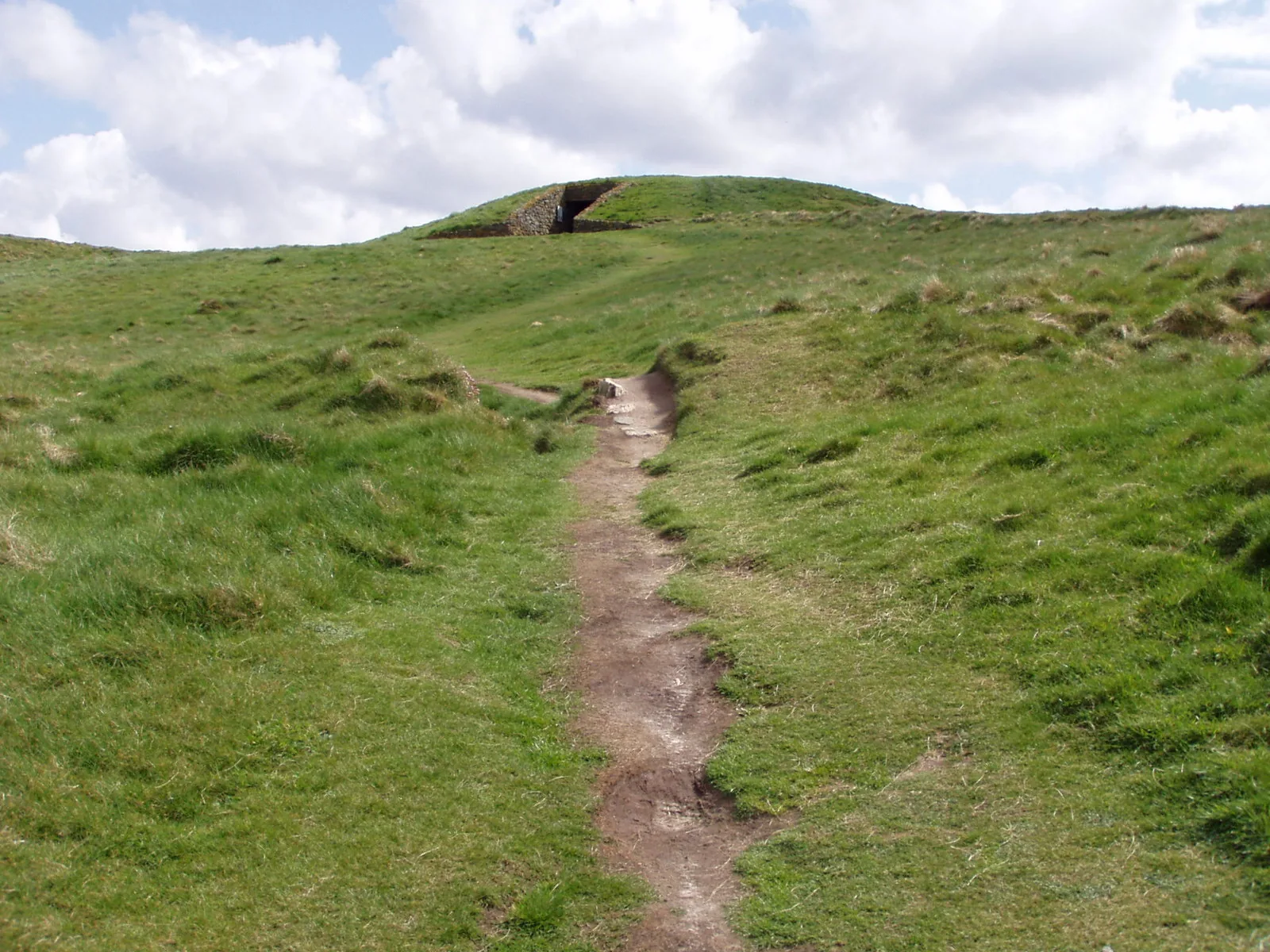
02 The path up
North side of the bay, climbing away from the sand.
03 The narrow bit
The ground falls to the beach on your left.
04 The mound
Grass opens out, and the dome is simply there.
05 The forecourt
Stone walls funnel you in to the entrance.
06 The gate
Seven metres of passage, then bars.
07 The turn
Look back out: sea one way, Rhosneigr the other.
Seen along the way.
Headland, path, gate, passage and carving: the visit, and the thing behind it.
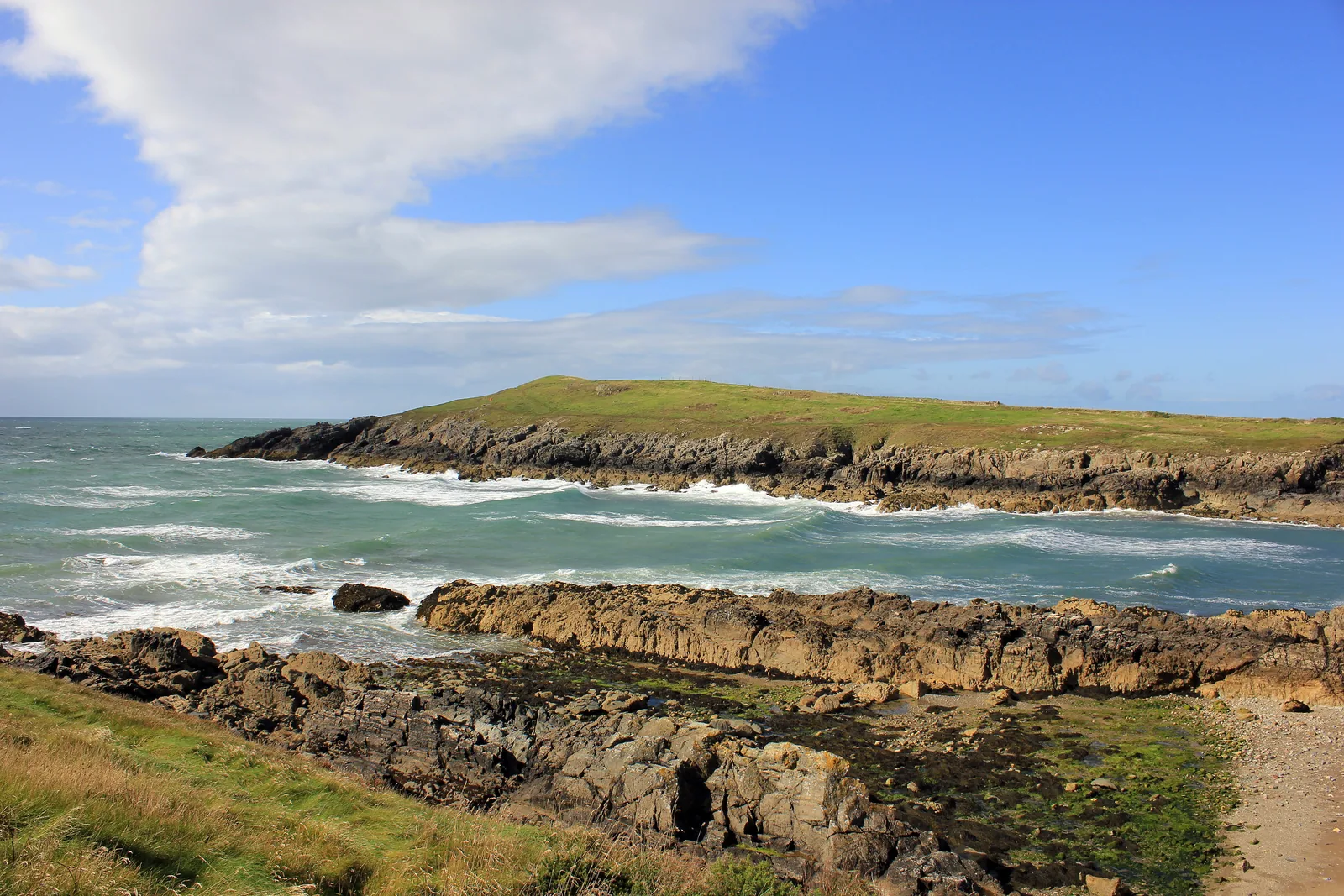
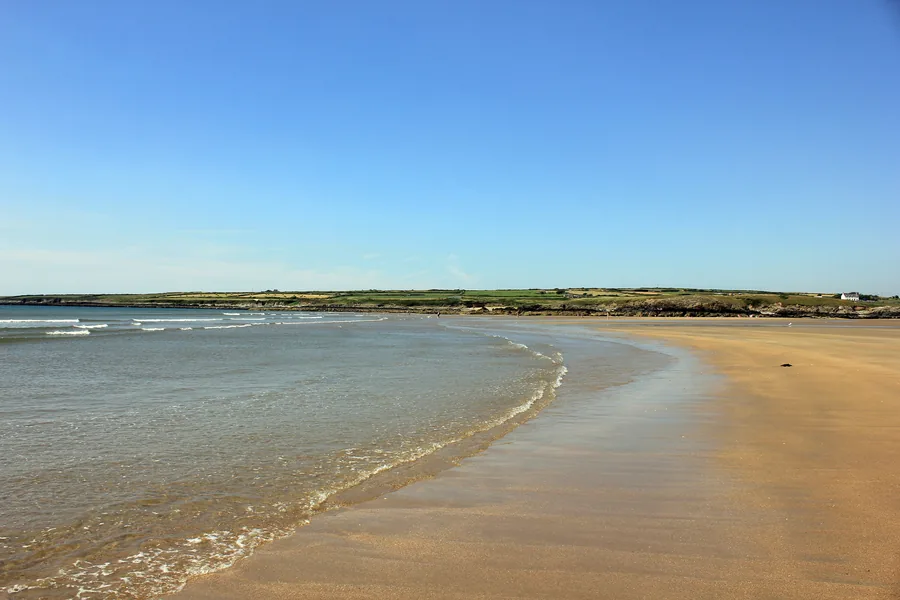
The headland from the shore: the tomb sits on the far end of itThe path up, with the entrance already showing in the flankThe gate, the boards, and as far as an ordinary visit goesBeyond the public gate: the passage stones, the modern roof, and the inner barsSpirals on a chamber stone — inside, and not on the ordinary route
The parts people remember
Almost nobody remembers the carvings, because almost nobody sees them. They remember the walk up and the bars.
01
Going the other way
The car park empties downhill toward the sand. This visit starts by turning your back on a beach.
02
Where the path narrows
A stretch where the ground falls away toward the cove and the footpath thins, before the headland opens into grass.
03
The dome that is too neat
The mound reads as smooth and deliberate, and it is: most of what you are looking at is a modern rebuild. Realising that is the moment the site stops being a curiosity and becomes a question.
04
The gate
Stone forecourt, seven metres of dark passage, and iron bars across it. You know exactly what is a few paces further in, and that is as far as you go.
05
The view back
From the entrance the headland gives you open water one way and Rhosneigr the other, and the reason someone chose this exact spot stops being a mystery.
A twenty-minute stop that mostly consists of being told no, and still worth making.
The record
What we know, carefully told.
Four field notes: the carvings and their Irish relatives, the gate and why it is there, what is original and what is rebuilt, and the strangest thing the excavation turned up.
Cadw is the authority for everything practical here. The archaeology comes from secondary accounts, and it is flagged where it does.
Field notes
Four entries. Open one to read the note.
Carving Fact
Stones cut with spirals
Field note I · filed under megalithic art
Cadw calls this “an atmospheric tomb with rare examples of prehistoric art”. The rarity is the point: Wales has two decorated passage tombs, and this is one.
What is known
Stones in the passage and the side chambers carry lightly pecked and incised designs — spirals, chevrons, zig-zags and lozenges. The official Wales Coast Path itinerary records that they resemble the carvings in Ireland’s Boyne valley, across the water.
What the record adds
Cadw’s visit page names five stones etched with patterns; secondary accounts add a sixth, noticed decades after the excavation.Count · five, then six
What to notice there
Nothing, from the gate. That is the honest answer, and it is why the tour dates matter more here than at any other free monument on the island.
Access Fact
Why there is a gate
Field note II · filed under protection
Cadw’s own words: this is a passage tomb “which is not generally open to the public”.
What is known
The site is free and open in daylight hours, but the chamber is closed by a locked gate. Cadw runs booked guided tours on selected dates between May and August, and Open Doors days with timed tours, and those are the published ways in.
What the record adds
Local accounts say the chamber was once opened with a key kept at a nearby shop, and that arrangement ended after the decorated stones were sprayed with paint.Reason · local account
What to notice there
The interpretation boards either side of the gate are doing the work the chamber cannot. Read them; they are the closest thing to a guide on an ordinary day.
Restoration Fact
What is actually old
Field note III · filed under reconstruction
The Wales Coast Path itinerary says it plainly: much of what you see is the result of restoration in the nineteen-fifties.
What is known
After excavation the chamber was re-roofed and the mound rebuilt and turfed, to suggest the shape the tomb once had. The scheduling description records a reconstructed mound about 27 metres across, with a cross-shaped chamber and three smaller side chambers opening east, west and south.
What the record adds
Secondary accounts describe the new roof as concrete, which is what the photographs from inside the passage show.Material · secondary account
What to notice there
The stone drum on the crown of the mound. It is not prehistoric — it lights the chamber underneath, and it is the clearest sign on the outside that this is a rebuild around a real thing.
Excavation Record
The fire in the chamber
Field note IV · filed under finds
The tomb was excavated in the early nineteen-fifties. The oddest thing the diggers found was not a burial.
What is known
Cremated remains of two young people were recorded in a side chamber. Sources disagree about which chamber, so this record does not name one.
What the record adds
In the central chamber a fire had burned a long time, and mixed into the remains were unburnt bones of wrasse, eel, frog, toad, snake, mouse and hare. What that means is not recorded, and this Atlas will not invent it.Meaning · not established
What to notice there
Standing at the gate, the passage runs straight into the hill. Everything above was found a few metres from where you are standing, in the dark you are looking into.
Don’t let the day end at one gate.
Four stops that turn a twenty-minute monument into a west-coast day.