A paid, single-entrance village: get the hours right, and the rest is a slow half-day.
CHECK FIRST · OPENING
Portmeirion keeps seasonal hours — 9:30am–6:30pm in the main season, shorter from November to March — and closes to day visitors on 25–26 December. Check current opening hours before you set off.
Time needed
Half a day
Best time
Longer hours Mar–Nov · always shorter in winter
Opening, entry & booking
Adult £20 (main season) · shorter hours in winter
Access & difficulty
Many slopes and steps · not level access throughout
Parking & start point
Free, at the village entrance
Getting there
Postcode LL48 6ER · Minffordd station ~1 mile
Toilets, food & facilities
Welcome Centre toilets · several seasonal cafés
Dogs
Guide/assistance dogs only
Plan with confidence.Detailed information on arrival, access, facilities, restrictions and local conditions.
Opening, entry & booking
Main season
23 March–1 November: 9:30am–6:30pm, last entry 5pm.
Off season
2 November–15 March: 9:30am–5:30pm, last entry 4:30pm.
Closed
To day visitors on 25 and 26 December.
Tickets
Adult £20, concession £18, child (5–15) £14, under 5 free (main season 2026). Disabled adult £10, disabled child £7, adult carer £15.50, child carer £11 with valid proof (Blue Badge/PIP/DLA).
Booking
Not required: same-day tickets at the toll booth; online booking recommended in peak season.
Lloyds Coaches’ service G23 (Barmouth–Harlech–Porthmadog) lists Portmeirion among its stops. Frequency is not published here. Check the current service before travelling.
Nearest town
Porthmadog, about 2 miles away.
Toilets, food & facilities
Toilets
At the Welcome Centre.
Cafés
Several seasonal cafés on site (Caffi Glas, Caffi 6, Caffi’r Angel, Caffi’r Ddraig).
Sit-down dining
Hotel Portmeirion (Sunday lunch & afternoon tea) and Castell Deudraeth’s brasserie: both need booking.
This is a fixed, ticketed village on firm ground: no tide or swimming safety notice applies here.
Underfoot
The main caution is the terrain itself: slopes and steps throughout, and woodland paths that can be uneven after rain.
PLACE-SPECIFIC DETAILS
Portmeirion vs. Portmeirion Pottery
Not the same place
The tableware brand seen in shops nationwide is a separate Stoke-on-Trent company, founded by Clough Williams-Ellis’s daughter, Susan Williams-Ellis: it isn’t made at, or connected to the site of, the village itself.
The site
Extent
120 acres of private land, including 70 acres of woodland (Y Gwyllt).
Managed by
A charitable trust.
What to bring
Comfortable shoes for slopes and steps
Charged phone or camera
A picnic or plan for a booked table
Cash-free payment for tickets
Layers for a woodland-and-estuary walk
Don’t come here for one photo.
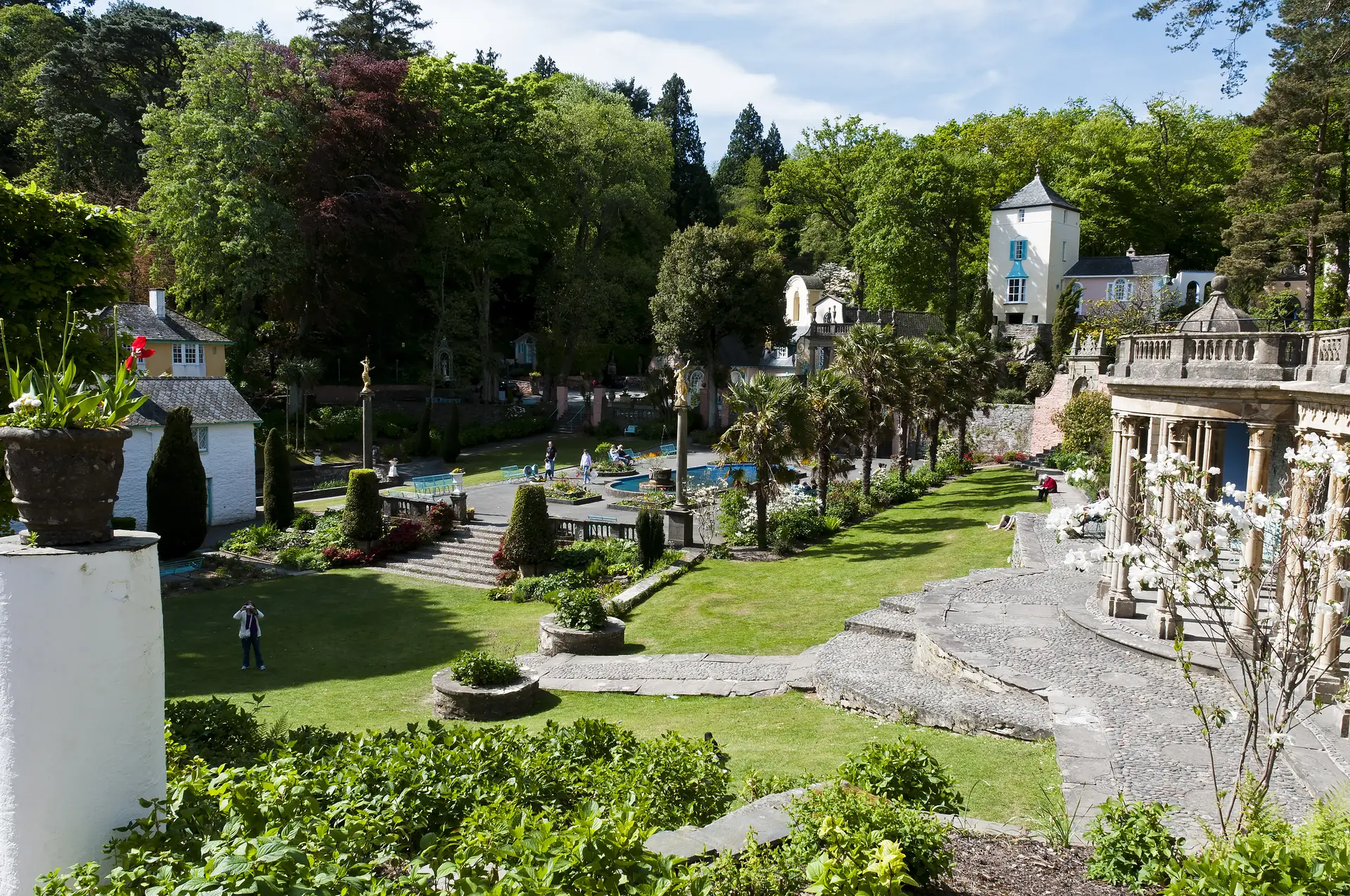
Come for the gate that opens onto a village built to look like it drifted in from the Mediterranean, then the streets that give way, almost immediately, to seventy acres of subtropical woodland.
Nothing here was rushed. Sir Clough Williams-Ellis kept building and adjusting Portmeirion for fifty years, from 1925 to 1975.
The village gives way to the woodland.
Should this shape your day?
Pay at the gate, then spend a half-day among pastel terraces, subtropical woodland and estuary views.
Good fit for
architecture and design enthusiasts
The Prisoner fans
photographers
a distinctive half-day away from castles and beaches
A slow, self-directed wander from the piazza-like village core down through Y Gwyllt woodland to the estuary edge, without rushing.
The built village steps straight down into its own gardens.
One visit, seven scenes.
See the shape of the visit before you commit to it.
01 The gate
Free car park, then the toll booth.
02 The piazza
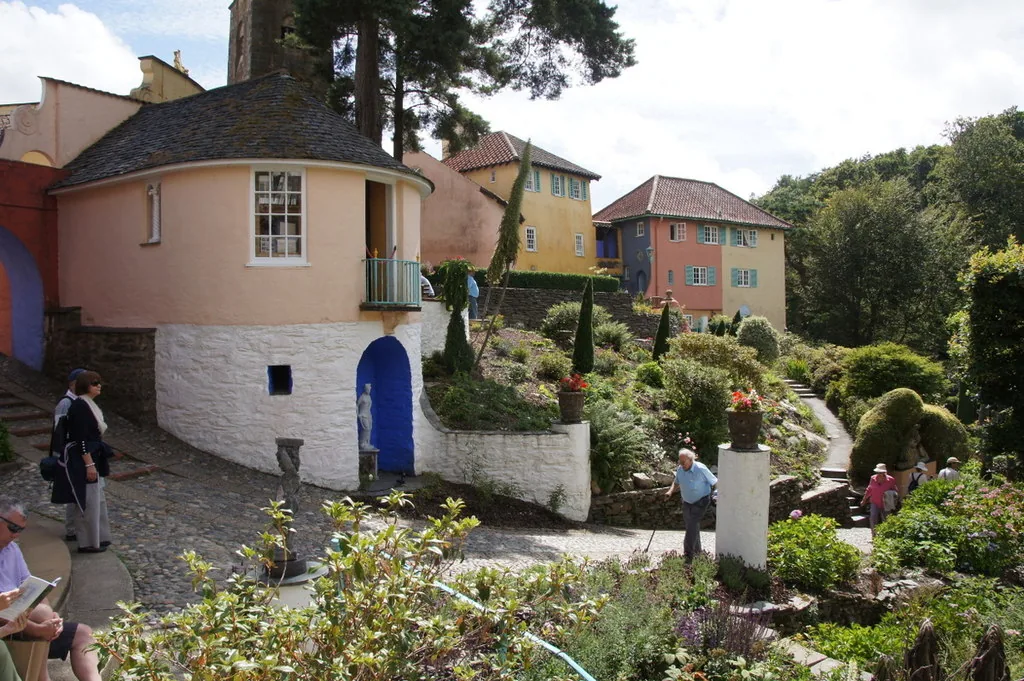
Pastel terraces open around you.
03 The streets
Salvaged fragments, the Grade I Town Hall.
04 Y Gwyllt
Seventy acres of woodland garden.
05 The estuary
Where the village opens onto the Dwyryd.
06 Shops & cafés
The Prisoner shop, and a seasonal café.
07 The return
Back through the one gate you came in by.
Seen along the way.
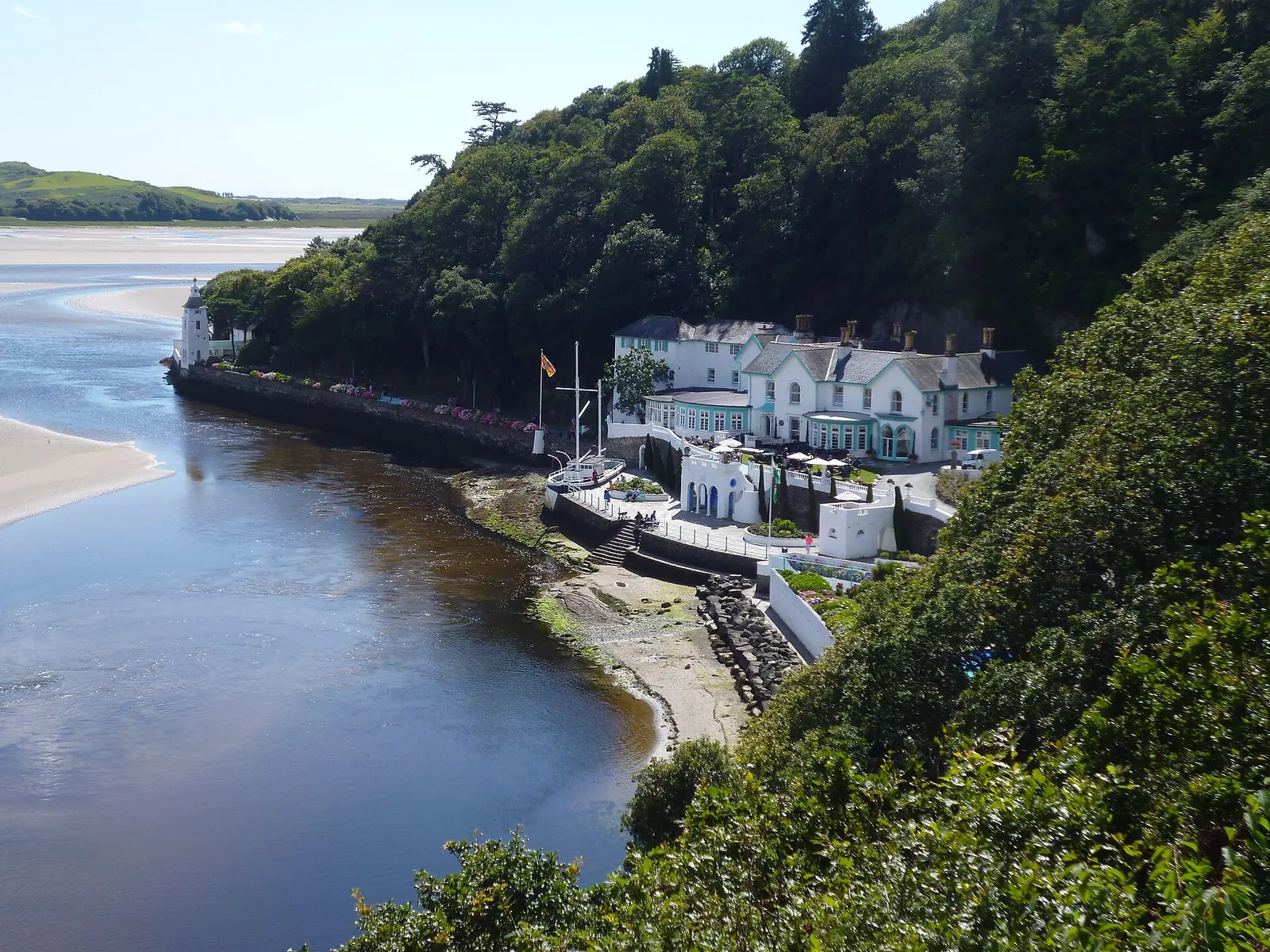
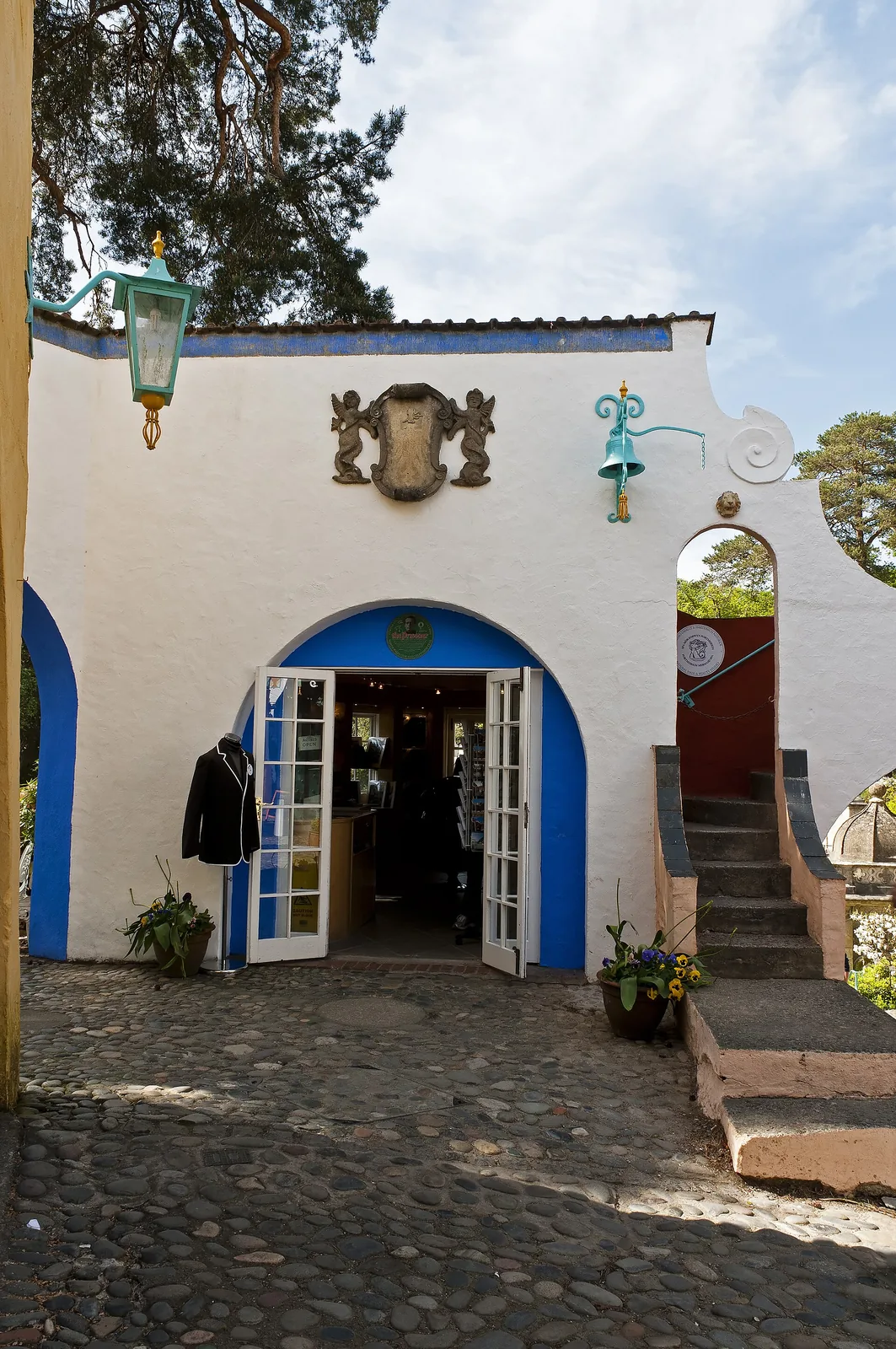
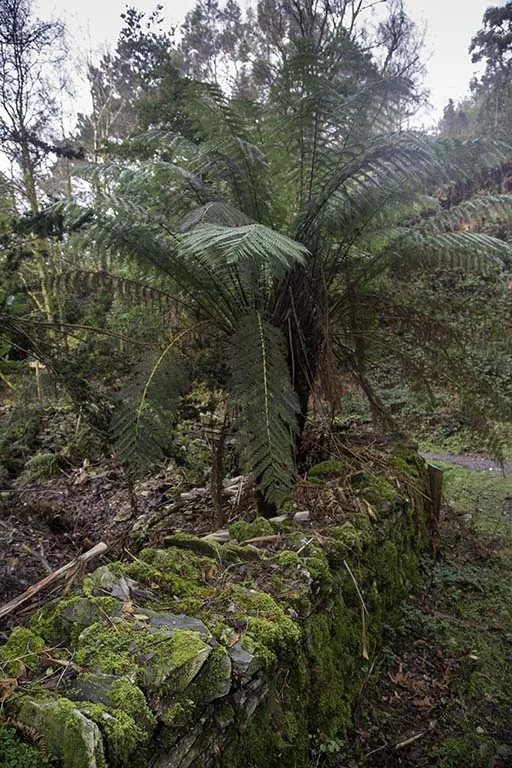
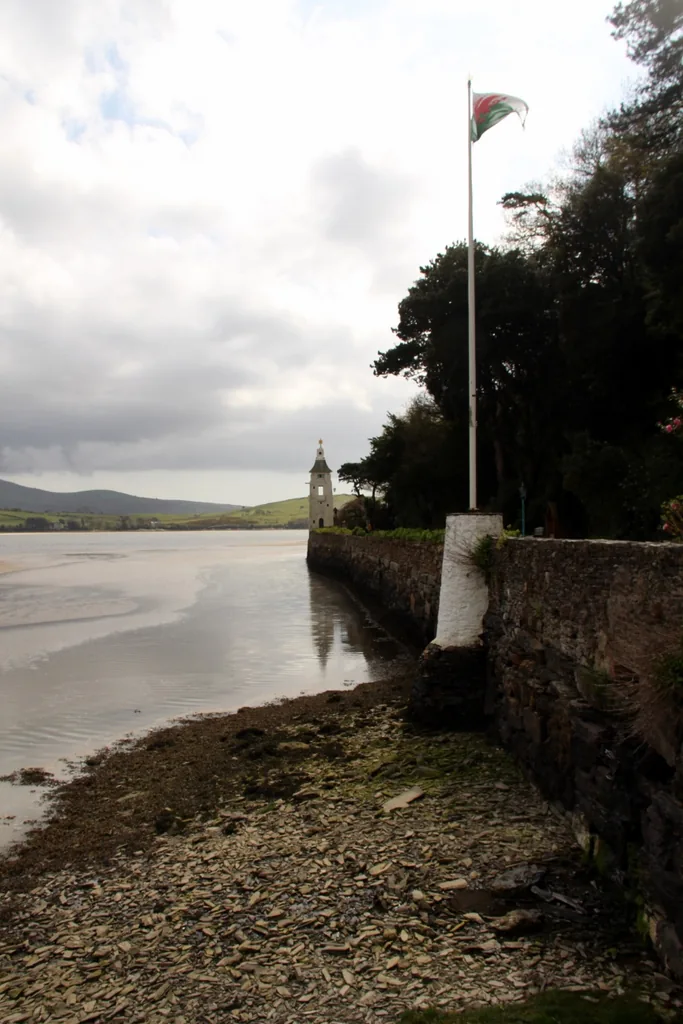
Pastel terraces, woodland and estuary: the visit before you make it.
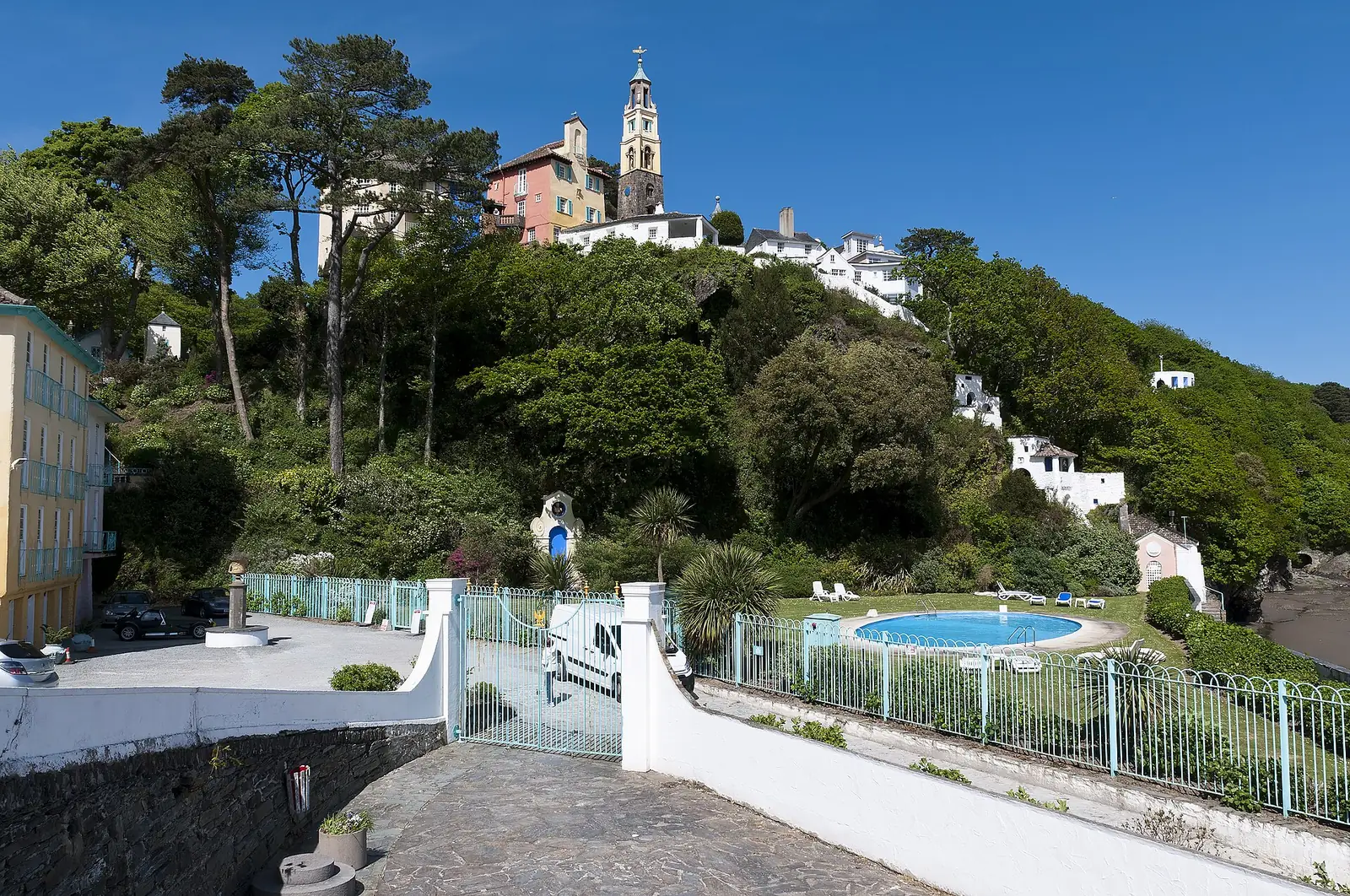
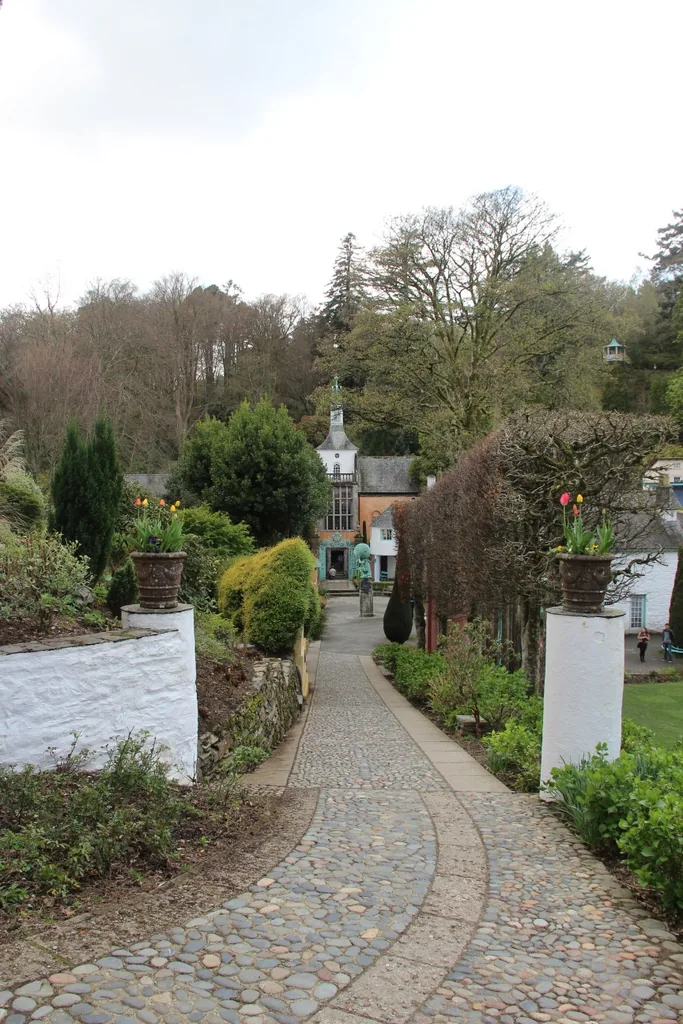
Looking up towards the village from the Hotel: the whole site in one viewThe paths that lace the village togetherThe Hotel Portmeirion: where Noël Coward once stayed, right on the estuaryOne of the village shops, including the dedicated Prisoner shopY Gwyllt: seventy acres of subtropical woodland gardenWhere the village gives way to the Dwyryd’s open sands
The parts people remember
Portmeirion is not one photo. It is a sequence of small changes.
01
The gate, then somewhere else entirely
One paid gate separates an ordinary Welsh road from a village built to look like it drifted in from the Mediterranean.
02
Recognising the Village from television
For anyone who knows The Prisoner, this is the real place: the same terraces, the same piazza.
03
Built village to wild woodland in a few steps
The formal streets give way almost immediately to seventy acres of subtropical woodland garden.
04
The estuary at the edge of the village
Walk far enough and the pastel buildings stop and the Dwyryd’s open water and sands begin.
05
Nothing here was rushed
One architect kept adjusting this place for half a century, and it shows in how deliberately every corner is composed.
Portmeirion stays with people because nothing about it looks like the rest of Wales.
Village Archive
Old stories, carefully told.
Four field notes on what this village means: the architect, the building, the television series, and what came before.
Some of this is confirmed history. Some of it is documented but single-sourced. Both shape the feeling of the place.
Field notes
Four entries. Open one to read the note.
Fifty years’ work Fact
Clough Williams-Ellis
Field note I · filed under the architect
Nothing here was rushed. One architect kept building and adjusting this place for fifty years.
What is known
Sir Clough Williams-Ellis purchased the estate in 1926 and designed and built Portmeirion in stages from 1925 to 1975, to show that a beautiful site could be developed without spoiling it.
What tradition says
The estate was previously known as Aber Iâ, developed in the 1850s on the site of an 18th-century foundry, before Williams-Ellis renamed it “Portmeirion”: “Port” for its coastal setting, “-meirion” for the historic county of Merioneth.Single-sourced
What to notice there
Salvaged architectural fragments recur throughout the village. Look for pieces that clearly belong to an older building than the one they now sit in.
Stone & salvage Fact
The Town Hall
Field note II · filed under listed buildings
The village’s grandest room was built from a house that no longer exists.
What is known
Portmeirion Town Hall was built 1937–38 and Grade I listed on 28 April 1952: confirmed directly from Cadw’s own listed-building record.
What tradition says
Its interior, the Hercules Hall, is built around a large quantity of dressed and carved stonework salvaged from Emral Hall, a demolished house in Flintshire.
What to notice there
It sits at the western edge of the village, facing the Angel Gates: used today as an events venue rather than any kind of civic government building.
On screen Fact
The Prisoner
Field note III · filed under the Village
For a generation of viewers, this village was never in Wales at all: it was simply “the Village.”
What is known
Portmeirion was filmed as the surreal setting of the 1960s spy drama The Prisoner in 1966–67, where the captive Number Six was held. The site still hosts an annual Prisoner fan weekend.
What tradition says
The location was reportedly kept secret until the closing credits of the final episode: a detail repeated often but confirmed only by a single source.Single-sourced
What to notice there
A dedicated Prisoner shop trades on the connection today, and the outdoor chess set installed in 2016 nods to one of the series’ own recurring images.
Before Portmeirion Documented, single-sourced
Castell Deudraeth
Field note IV · filed under what came before
Long before Williams-Ellis arrived, this ground already had its own ruin in the woods.
What is known
Medieval castle ruins in the nearby woods — Castell Deudraeth — were recorded by the chronicler Gerald of Wales during his 1188 journey through Wales.
What tradition says
This detail rests on a single source rather than independent corroboration, so it is presented here as documented, not confirmed beyond doubt.Single-sourced
What to notice there
The name Castell Deudraeth now also belongs to the estate’s second hotel, a reminder that this ground had a history long before the pastel village arrived.
Don’t let the day end at one gate.
Four stops that turn one village into a full Meirionnydd & Eryri day. Distances are approximate straight-line distances.