Get the hours right and Penrhyn rewards a slow half-day: state rooms, a decade-built staircase, and sixty acres of garden.
CHECK FIRST · OPENING
The castle keeps shorter hours than the garden, and both change with the season. See today’s opening hours on the National Trust’s page before you travel: last admission to the castle comes well ahead of the garden and café closing.
Time needed
Half a day · castle, garden and the wider grounds
Best time
Main season 1 Mar–3 Nov · winter opening reduced and variable
Opening, entry & booking
Castle 10:30–16:00 · garden 10:00–17:00 · free to NT members
Access & difficulty
Level access to the Walled Garden · baby-changing on site
Parking & start point
Free, on-site, about 500 yards from the entrance
Getting there
Bangor station ~3 miles · buses stop ~1 mile from the Welcome Centre
Toilets, food & facilities
Accessible toilets on site
Dogs
On leads in garden & café · assistance dogs only in the castle
Plan with confidence.Detailed information on arrival, access, facilities, restrictions and local conditions.
Opening, entry & booking
Castle
10:30–16:00, last admission 15:00, in the main season (1 Mar–3 Nov)
Winter
Reduced and variable opening outside the main season
Garden
10:00–17:00 in the main season
Café
10:00–16:00 in the main season
Admission
Adult £18.00 (£19.80 with Gift Aid), Child £9.00 (£9.90), Family £45.00 (£49.50), under-5s free: as at 14 July 2026Verify near publication
From Bangor and Caernarfon, stopping near the site: about a mile’s walk to the Welcome Centre
Train
Nearest station is Bangor, about 3 miles away
Journey planner
No route number is confirmed for this guide. Plan door to door with the Traveline Cymru journey planner, and check the current service before travelling
The castle shuts at 16:00 with last admission at 15:00, while the garden runs to 17:00 and the café to 16:00. Arriving mid-afternoon can mean grounds only.
Winter
Opening outside 1 March–3 November is reduced and variable. Check the day you travel rather than the month.
Underfoot
A large estate with lawns, gravel and woodland paths; the walk from the Welcome Centre to the castle is about 500 yards.
Exposure
The grounds look out to the Menai Strait and Eryri and are open to the weather. Take a layer even on a bright day.
PLACE-SPECIFIC DETAILS
Other place details
Built
1820–1837, Neo-Norman, for the Pennant family
Managed by
National Trust, since 1951
Grounds
60 acres of garden and woodland, views toward Eryri
Collection
State rooms with works by Canaletto and Palma Vecchio
What to bring
Comfortable walking shoes
Waterproof layer
Water
Cash or card for entry
Dog lead for the garden
Atlas of Wales Discovery Highlight
This isn’t a ruin. It’s a finished fantasy.
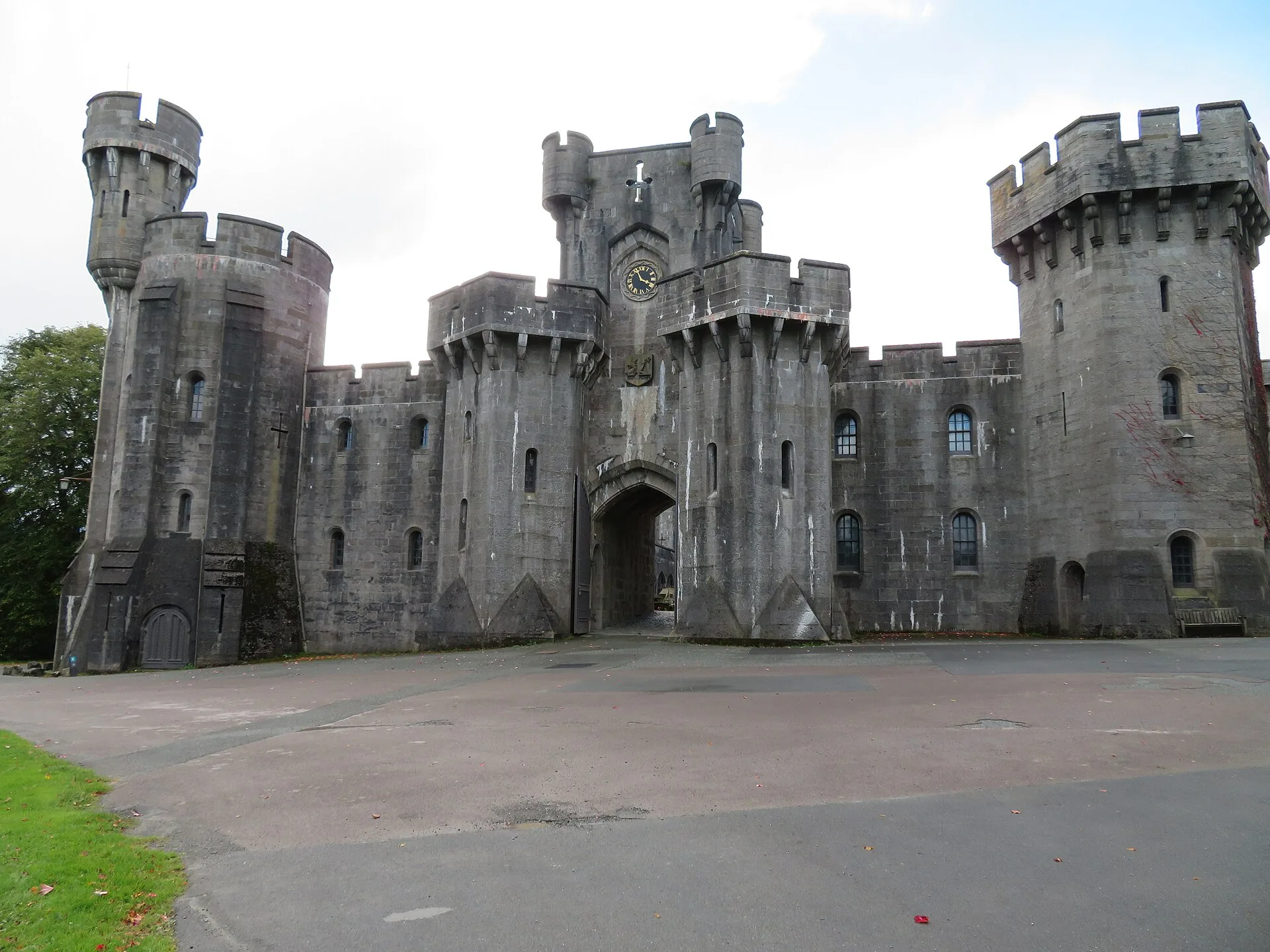
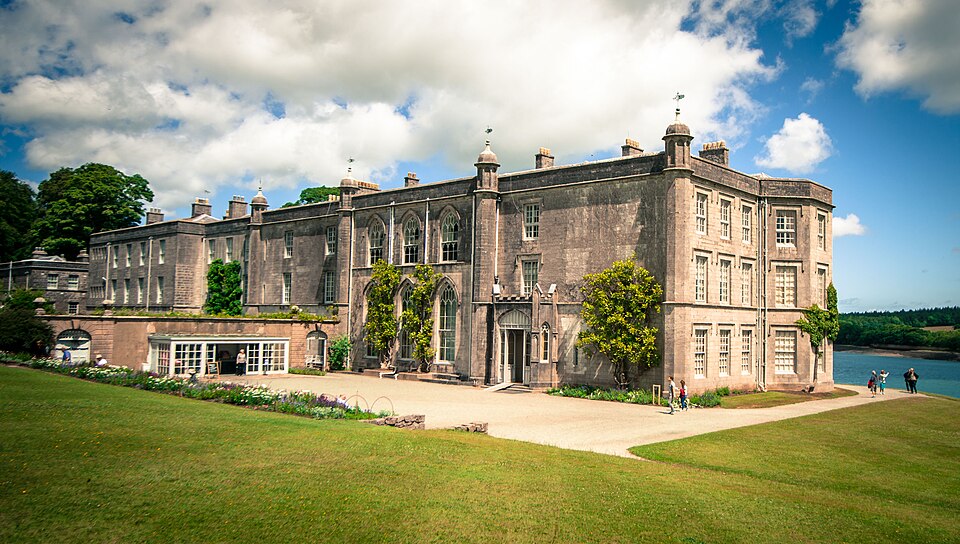
Penrhyn Castle wasn’t excavated or restored. It was built, whole, across the 1820s and 30s: a complete Neo-Norman house with state rooms, a decade-built staircase, and sixty acres of garden and woodland behind it.
The National Trust doesn’t soften where the money came from either: Jamaican sugar, then North Wales slate. Both halves of the story are part of the visit, not a footnote to it.
A finished house, not a found ruin.
Is Penrhyn worth the half-day?
Come for the Grand Staircase and the art collection. Stay for the story behind the money.
Good fit for
heritage and architecture visitors
families wanting a full National Trust day, with free on-site parking
anyone building a Bangor/Menai-area day around Caernarfon or Beaumaris castles too
visitors who want the money behind the building explained plainly
Think twice if
you only want a quick stop: this rewards half a day or more
you’re counting on full castle hours in winter without checking first
you expect a bare ruin to wander freely
you want free entry: parking is free, but castle and garden admission is paid
Opening hours decide the day
castle hours are shorter than the garden’s, and change with the season
main season (1 Mar–3 Nov) is daily; winter is reduced
last admission to the castle comes well before the garden and café close
No specific hazard is documented: the usual care on garden paths and any interior steps applies.
Best experience
Arrive earlier in the day: the castle’s last admission comes well before the garden and café close.
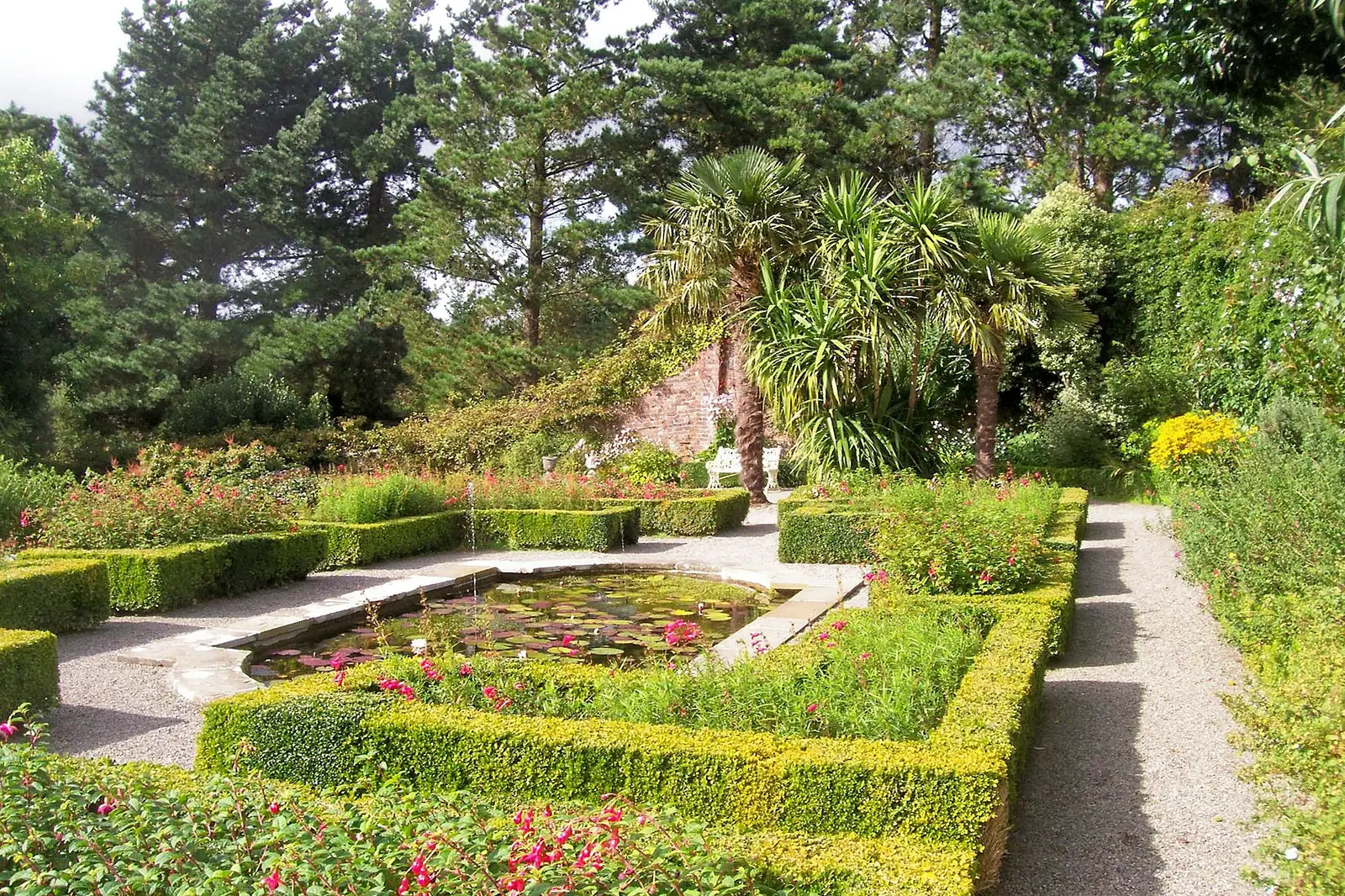
60 acres of garden and woodland surround the castle.
Arrival to grounds, in seven scenes.
See the shape of a National Trust day before you commit to it.
01 Arrival
Free parking, a short walk, and the Welcome Centre behind you.
02 Approach
Around ten minutes across open grounds toward the castle.
03 First sight
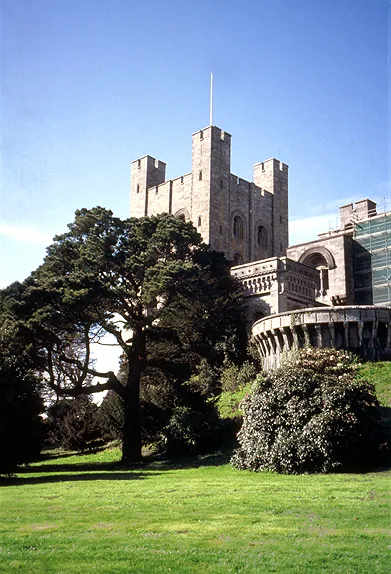
Neo-Norman towers rise above the trees, Eryri in the distance.
04 The keep
Modelled on a Norman fortress: this is where the state rooms begin.
05 The staircase
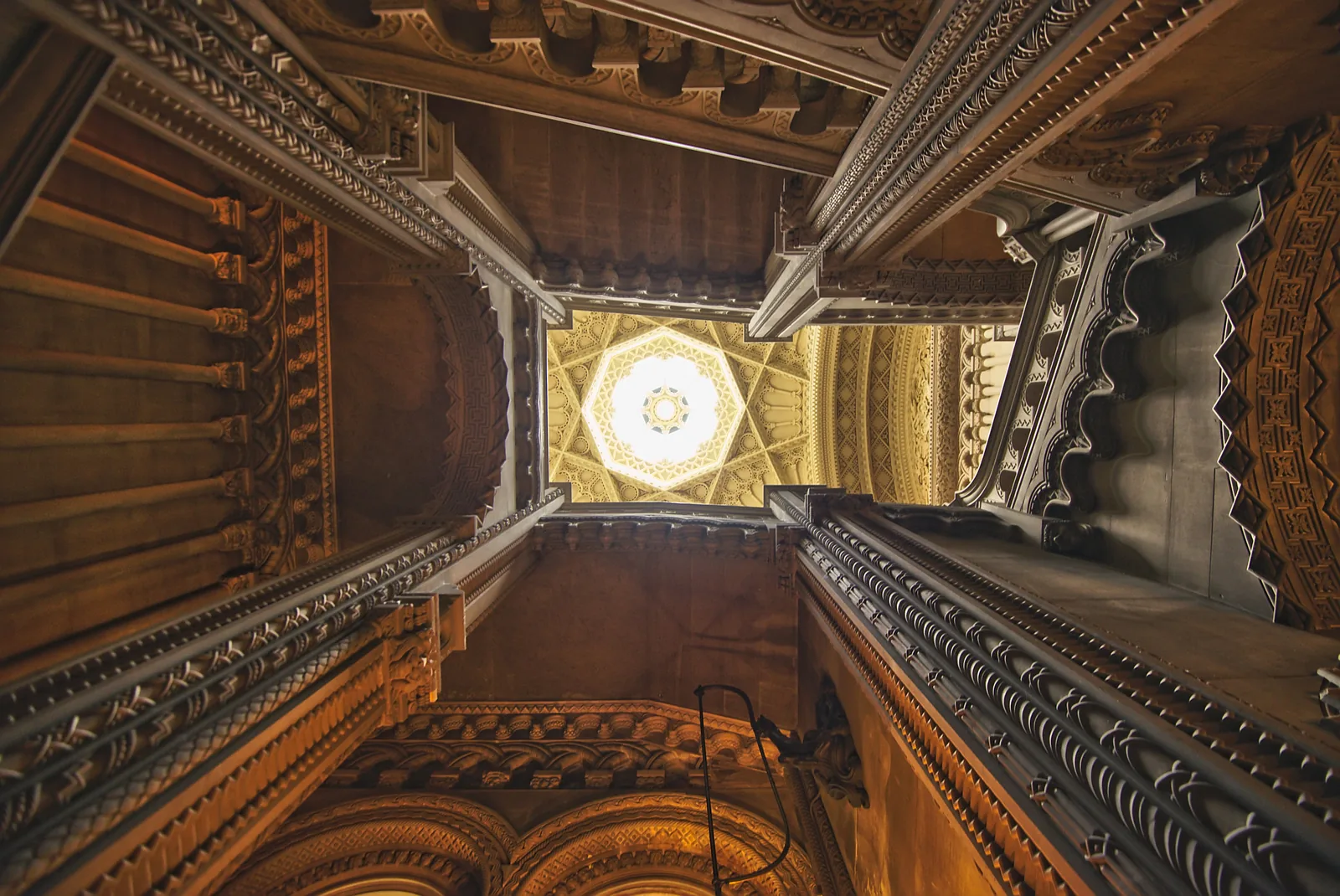
Built over roughly a decade from a sequence of different grey stones.
06 State rooms
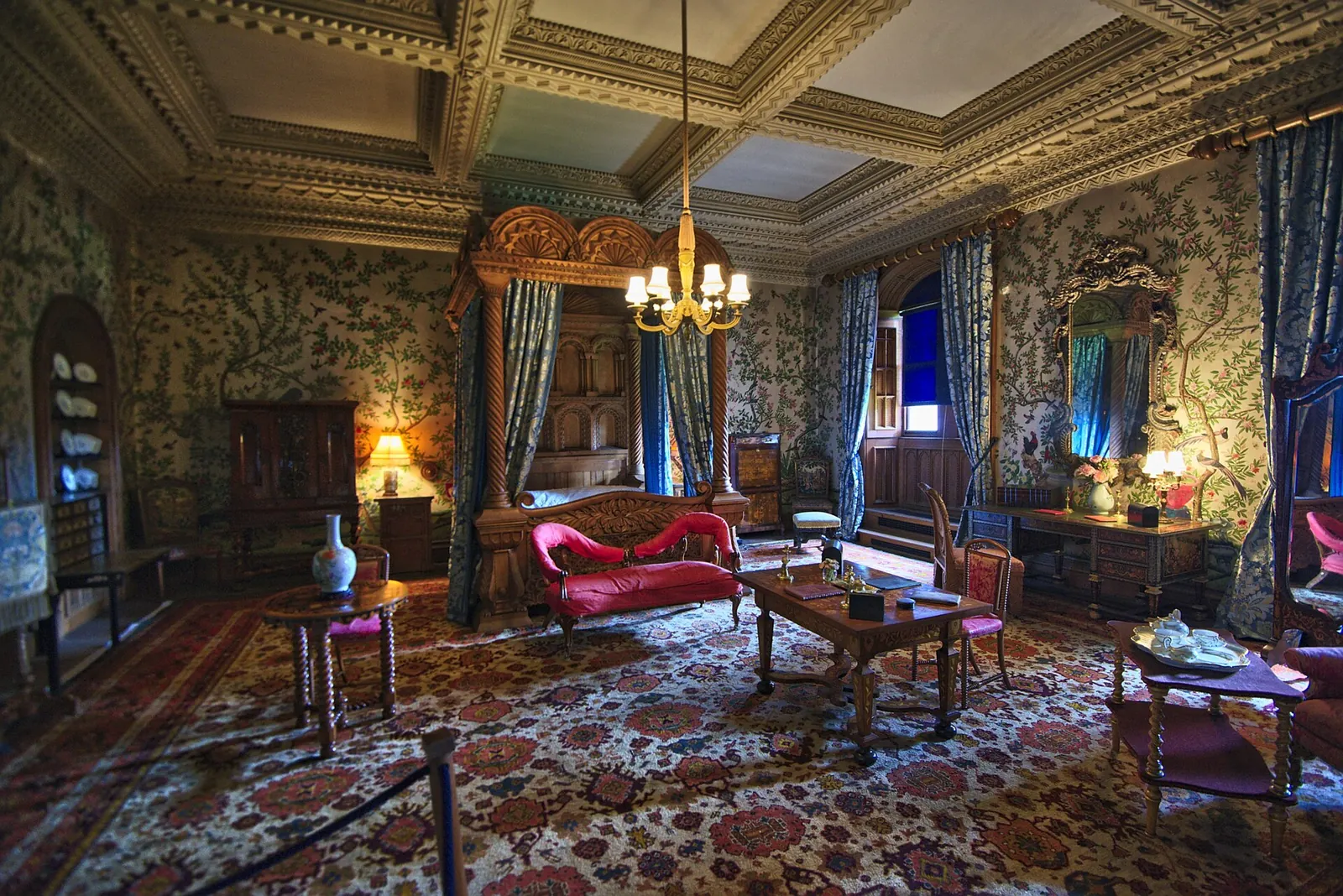
An international art collection, and the Victorian kitchens beyond.
07 The grounds
Sixty acres of garden and woodland close the visit.
Seen along the way.
The visit before you make it.
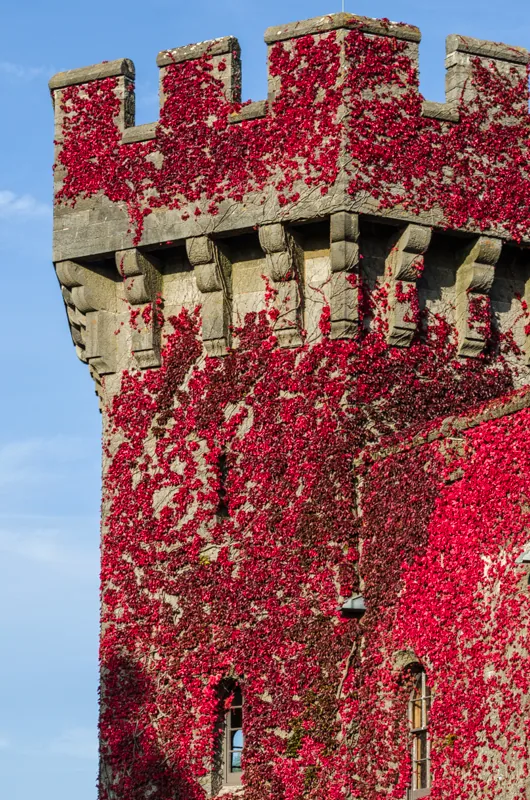
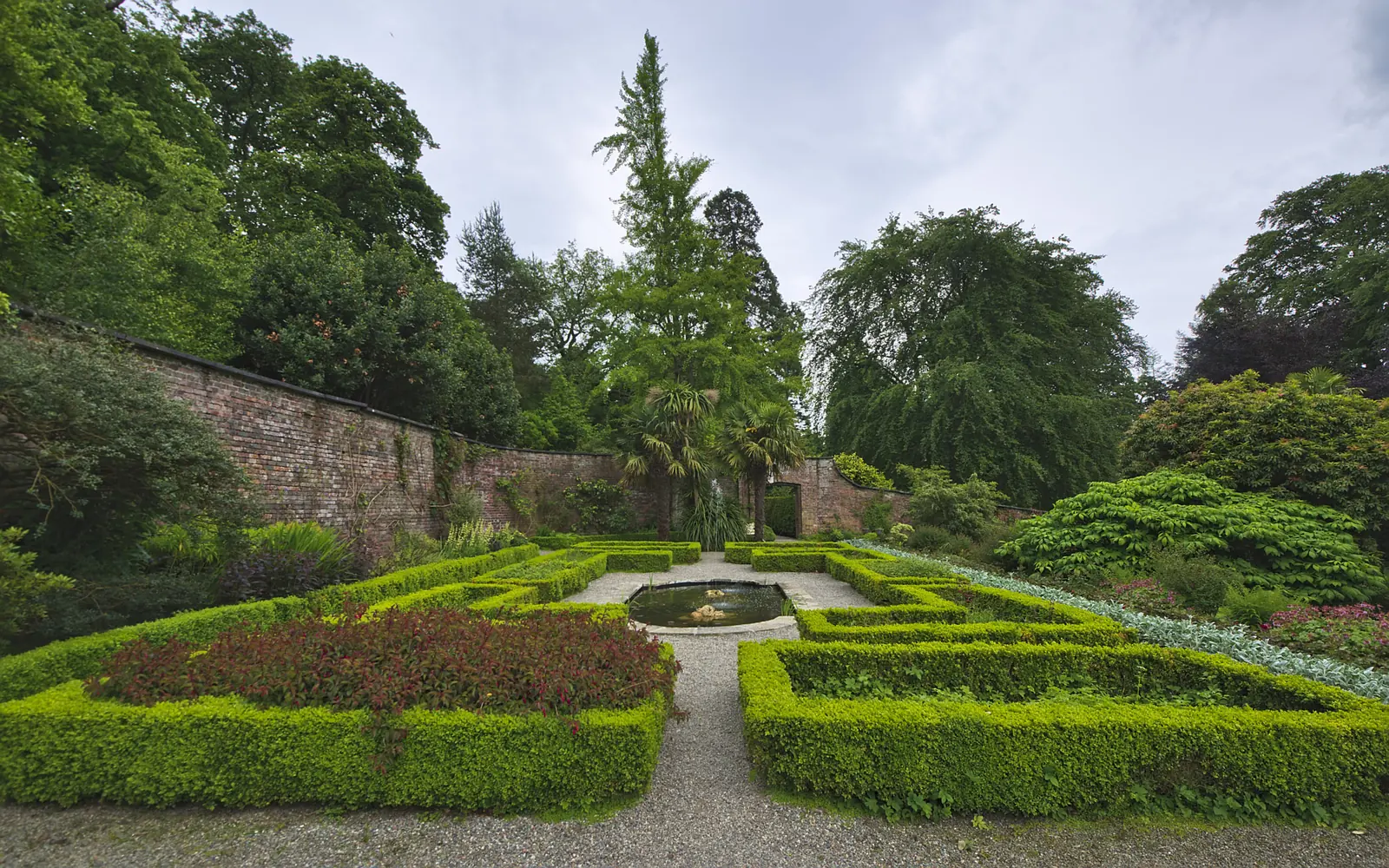
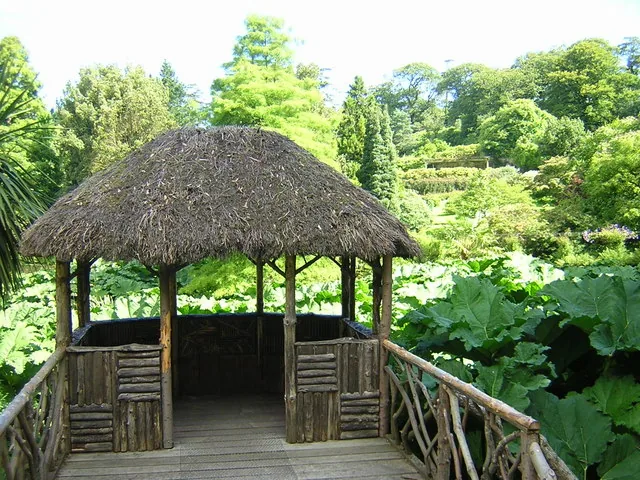
Towers above the trees: the first view from the grounds walkThe castle’s ivy-clad towerThe Grand Staircase, built stone by stone over a decadeOne of the state rooms: the scale continues indoorsThe Walled GardenThe Bog Garden
The parts people remember
Penrhyn isn’t a ruin you glance at either. What stays with people is the scale of the rooms, and the honesty about where it all came from.
01
Towers above the trees
You’re still walking through parkland when the towers appear above the treeline: long before the scale of the place actually reaches you.
02
A staircase built over a decade
The stone underfoot keeps almost-but-not-quite matching itself, all the way up: a decade of quarrying settled into one staircase.
03
One piece of furniture nobody used
A one-ton slate bed sits in the state rooms, carved for a single royal visit, and it’s still exactly as unused as the day it was finished.
04
Eryri behind the walls that slate paid for
Look out from the grounds and the mountains are right there: the same slate country that helped build the walls at your back.
05
The Walled Garden after the state rooms
After room after room of scale, the Walled Garden is just growing things, quietly, at ground level.
Penrhyn doesn’t let you forget where the money came from, and it doesn’t try to.
Castle Archive
Slate, sugar, and a staircase a decade in the making.
Four field notes on how this castle got here, and what it cost.
All of this is documented history, at varying confidence: the dossier behind this page found no folklore to tell alongside it.
Field notes
Four entries. Open one to read the note.
Architecture Fact
Hopper’s Neo-Norman rebuild
Field note I · filed under architecture
The castle standing today isn’t the first building on this site: it’s a wholesale rebuild, and easily the boldest.
What is known
Across the 1820s and 30s, architect Thomas Hopper rebuilt the house wholesale in the Neo-Norman style for George Hay Dawkins-Pennant: the version that stands today, complete rather than ruined.
What is less certain
An earlier house is recorded on this site from at least the 15th century, and sources give Hopper’s start date as somewhere across the 1820s: both 1820 and 1822 appear, so this guide treats it as “the 1820s” rather than one exact year.Start year: sources vary
What to notice there
Look for the three sections working together: a keep modelled on a Norman fortress, a central block of state rooms, and the service wings behind, close to 440 feet of building under some 70 roofs.
Wealth & reckoning Fact
The Pennant fortune
Field note II · filed under where the money came from
The National Trust doesn’t soften this one: the castle was built on Jamaican sugar money, then kept going by Welsh slate.
What is known
The Pennant family’s wealth came from Jamaican sugar plantations and, later, the North Wales slate industry: the National Trust’s own framing of the castle, not an outside claim. When slavery was abolished, George Hay Dawkins-Pennant was compensated under the 1833 settlement.
What is less certain
Records reviewed for this guide put the compensation at 764 enslaved people, though the exact figure is drawn from an academic slavery-ownership database rather than a document viewed directly for this pass, so treat it as indicative rather than final.Verify near publication
What to notice there
There’s no plaque in the state rooms that spells this out: the connection lives in the National Trust’s own framing of the visit, not on the walls themselves.
Royal visit Fact
The Victoria slate bed
Field note III · filed under a visit that didn’t go to plan
A one-ton slate bed was carved for a royal visit that never quite delivered what it promised.
What is known
A one-ton slate bed was made for Queen Victoria’s visit to the castle in 1859.
What is less certain
She is recorded as having declined to use it: a detail that has stuck in the telling of the castle’s history, though it rests on a single secondary account rather than an official record.Single source
What to notice there
Look for it among the state rooms: a piece of furniture built for one visit, more famous now for what didn’t happen than for what did.
Recent change Fact
The Railway Museum’s 2024 closure
Field note IV · filed under what’s changed recently
Part of the Penrhyn story ended recently: the estate’s Railway Museum closed in 2024.
What is known
Penrhyn Castle’s Railway Museum, which held historic locomotives connected to the slate industry, closed in 2024, with its locomotives dispersed to other institutions.
What is less certain
This is a recent change reported in secondary sources rather than an official Trust announcement viewed directly for this guide, so it is worth re-checking closer to any visit.Verify near publication
What to notice there
If you remember an earlier visit with the railway museum, expect that part of the estate to look different now: the state rooms, staircase and garden remain the core of the visit.
Don’t stop at one castle.
Four stops that turn Penrhyn into a Bangor and Menai Strait day.