Free car park; arrive before 11am on sunny spring weekends during Laburnum season. Open Bodnant Garden in Google Maps; the car park is at the visitor entrance.
Accessible bays
Around 20 accessible spaces, roughly 100 yards from the garden entrance, on a gradient.
Bodnant Road, Tal-y-Cafn, near Colwyn Bay, Conwy, LL28 5RE.
By car
Via the A470, signposted from A55 junction 19.
By bus
Route 25 (Eglwysbach–Llandudno, Arriva) stops outside the garden gate, by the National Trust’s own account. Check the current service before travelling.
By train
Nearest station is Tal-y-Cafn, around a 22-minute walk.
This is an inland garden; no tide, lifeguard or coastal-safety consideration applies.
Underfoot
The care point is terrain, not weather: steep paths and steps drop into the Dell and can be slippery after rain. The step-free Rose Walk avoids them entirely.
Shelter
The valley planting gives some cover in a shower, but the terraces are open; bring a layer rather than relying on it.
PLACE-SPECIFIC DETAILS
Other place details
Garden
Grade I registered, National Trust
Layout
Formal terraces down to a wooded valley
What to bring
Waterproof layer
Comfortable walking shoes
Water
Cash or card for entry
Camera
Terrace above, gorge below.
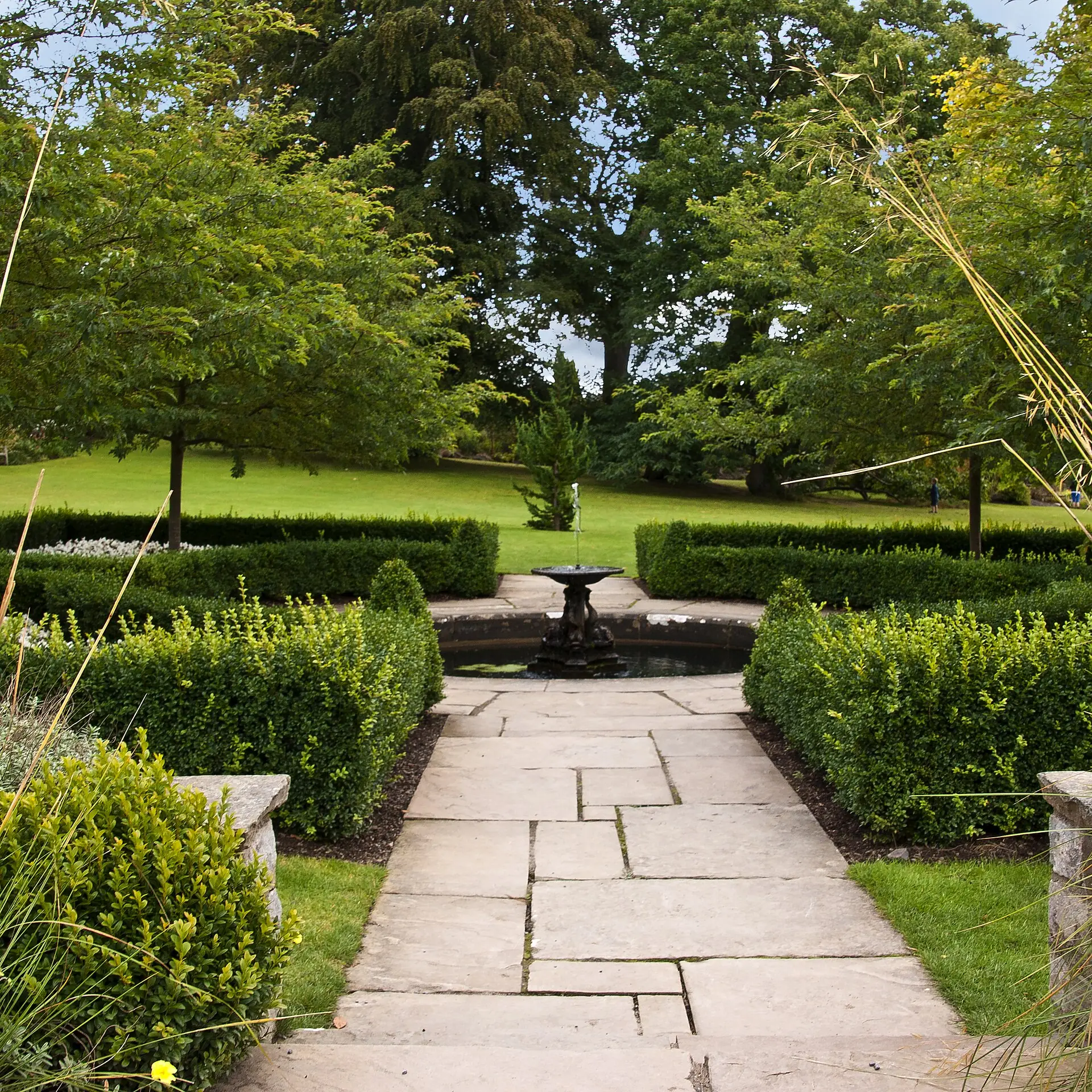
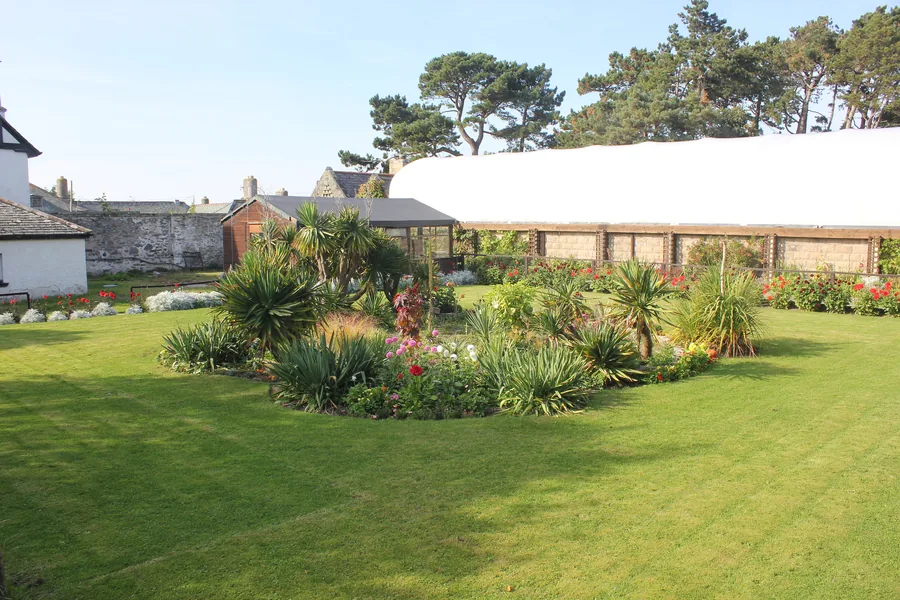
Bodnant changes register on the way down. Near the entrance, clipped Italianate stonework and formal borders were laid out between 1905 and 1914. A few minutes' walk further in, the ground drops into the Dell, a wooded river gorge where some of the garden's oldest conifers have had a century and a half to grow.
Five generations of one family shaped this place before it passed to the National Trust in 1949. It was never a rescued ruin; it was always looked after.
Terraces at the top, the Dell below.
Should this shape your day?
Paid and gated, on a seasonal clock, not a walk-up open-access site.
Good fit for
garden and plant enthusiasts
families with a half-day to spare
anyone timing a trip to the Laburnum Arch
visitors already touring the Conwy valley or Snowdonia coast
Think twice if
you want a quick or free stop
you need a fully step-free route beyond the Rose Walk
you're arriving outside late May–early June expecting the Arch in bloom
Time it for the Laburnum Arch in late May or early June, and leave enough time to also walk down into the Dell.
Terrace stonework gives way to woodland within a few minutes’ walk.
One garden, seven scenes.
From the formal terraces down to the wooded Dell.
01 Arrival
Free car park, visitor centre, and the ticket entrance.
02 The formal terraces
Italianate stonework and borders, laid out 1905–1914.
03 The Laburnum Arch
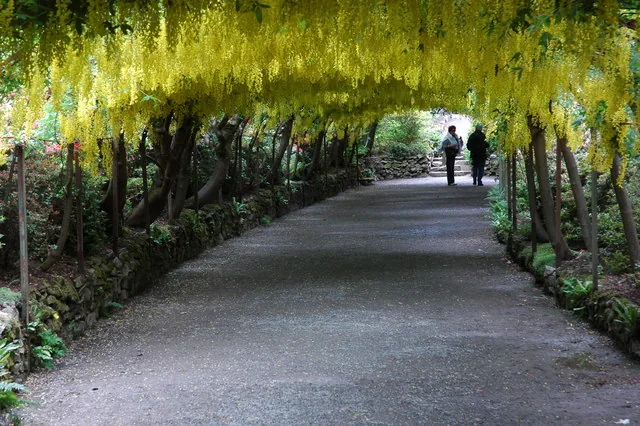
Fifty-five metres of gold, late May into early June.
04 Into the valley
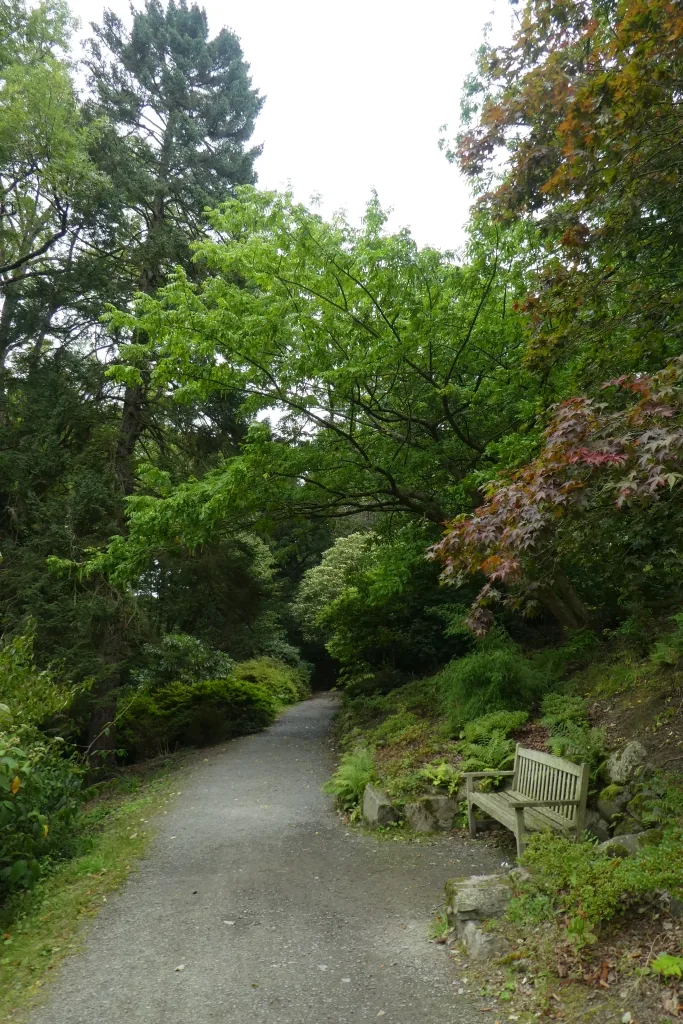
The path drops from the formal garden toward the Dell.
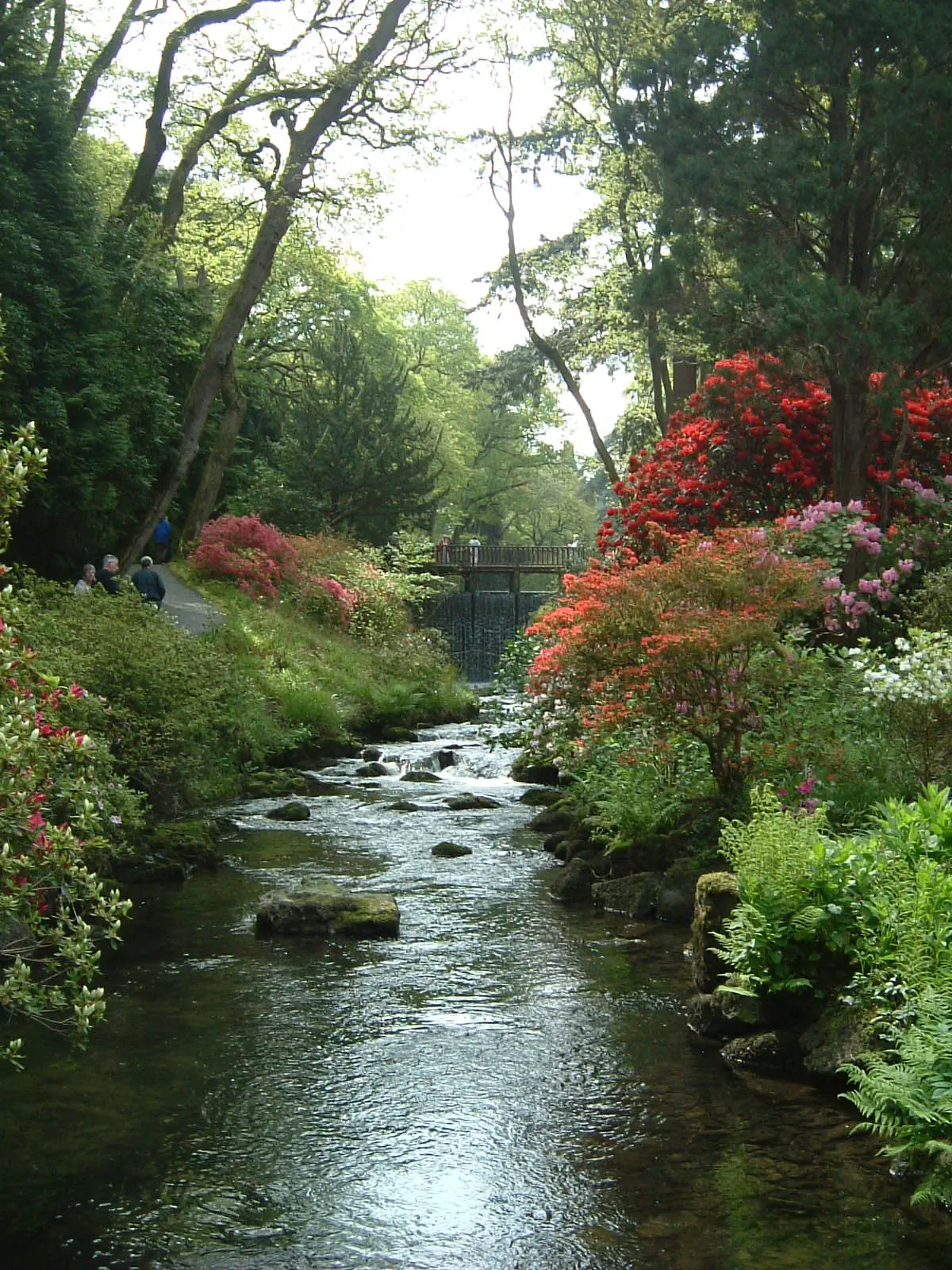
05 The Dell
Champion Trees, a waterfall, and the River Hiraethlyn.
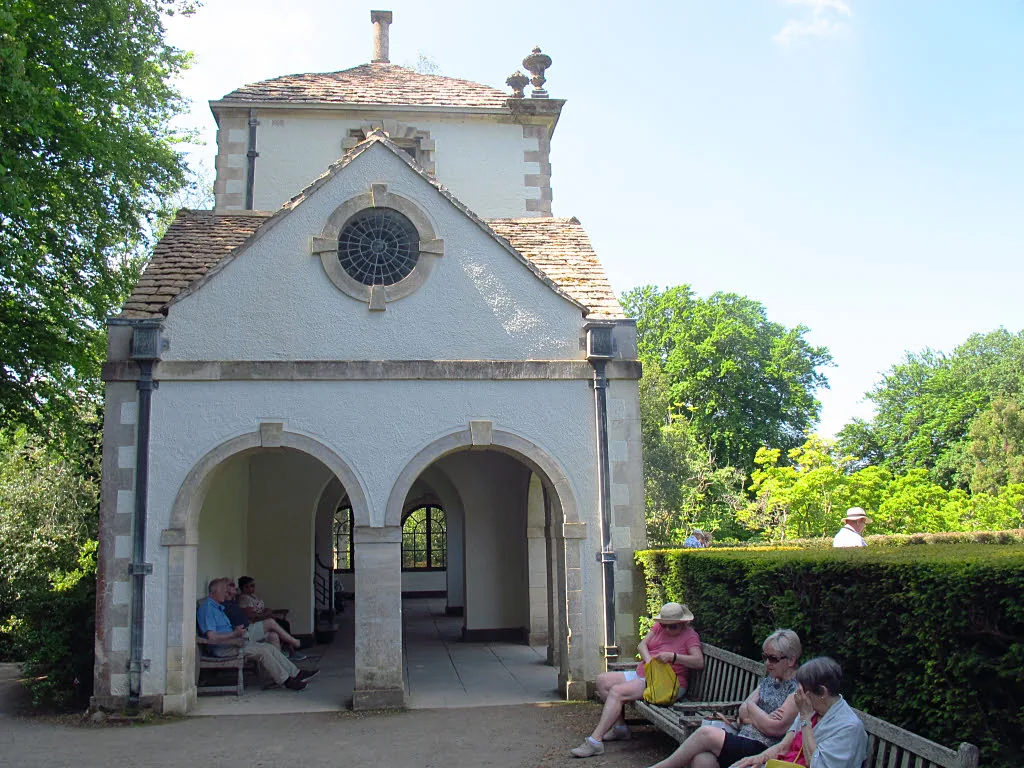
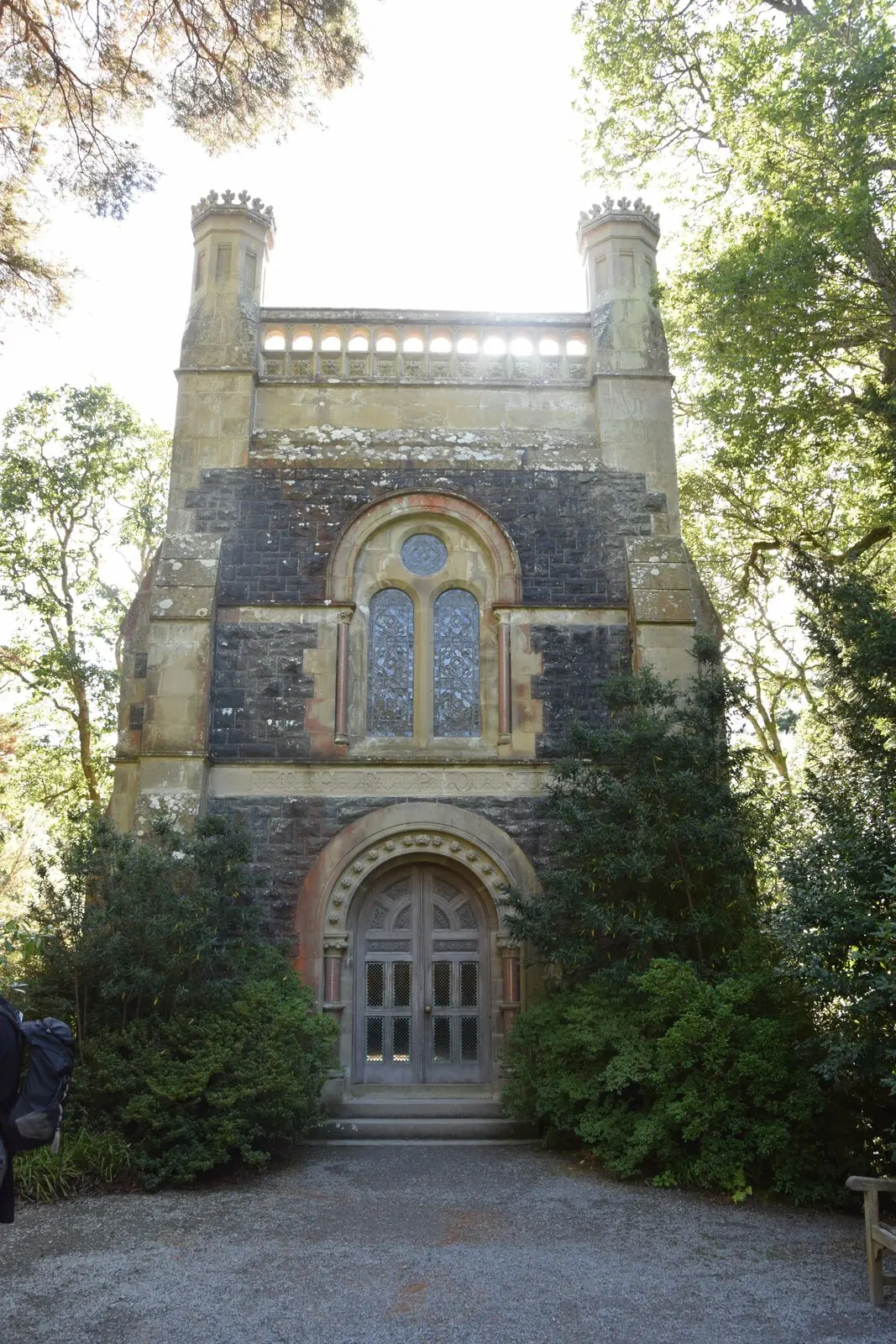
06 The Pin Mill
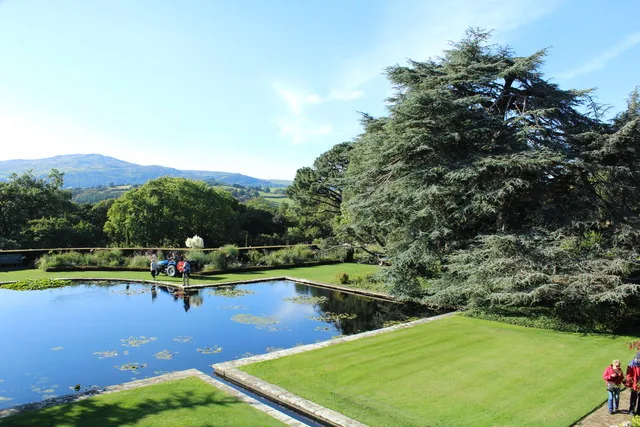
A 1730s building, re-erected here beside the water garden in 1938.
07 Return & refreshment
Tea room or café, the shop, and back out through the visitor centre.
Seen along the way.
The visit before you make it.
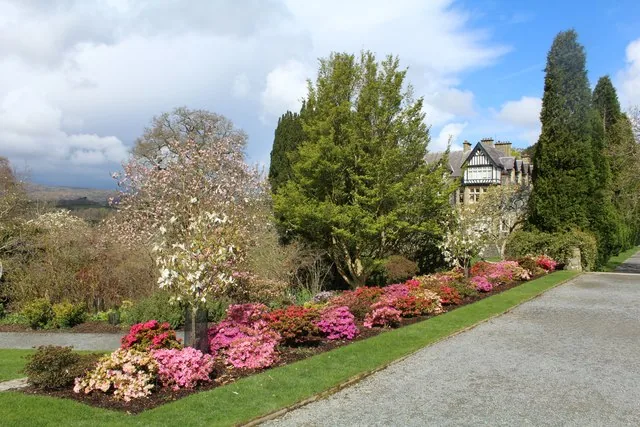
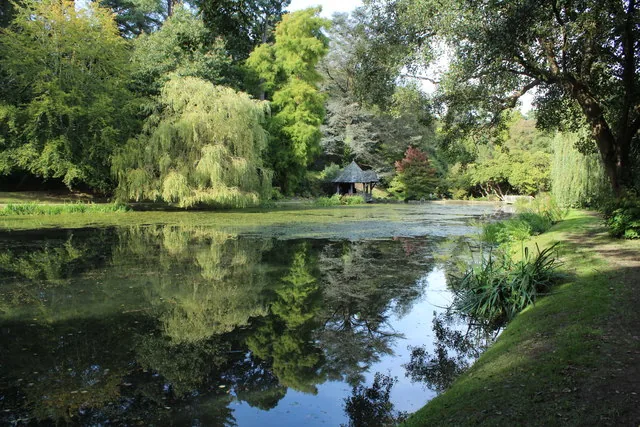
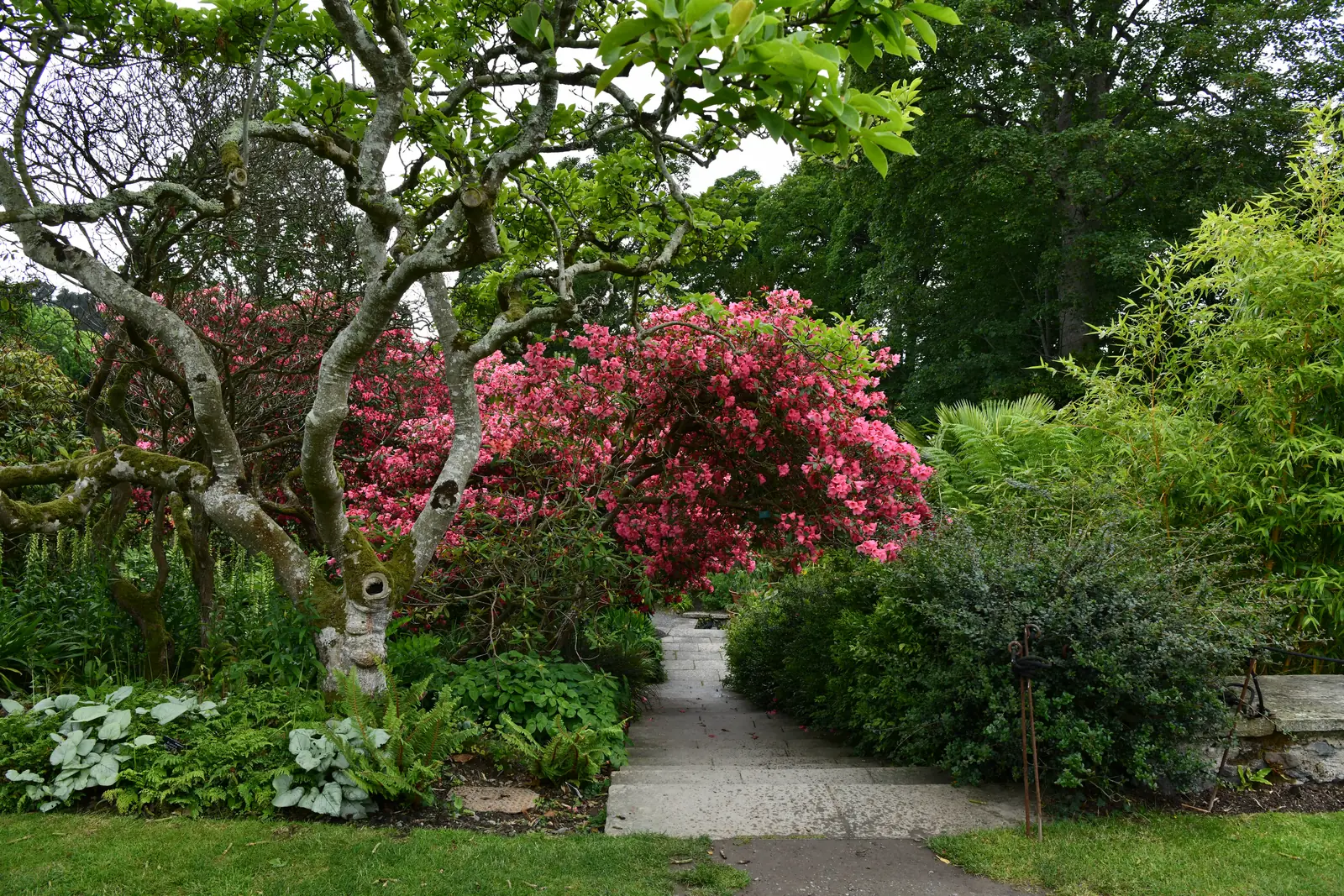
The Laburnum Arch, in flowerChampion Trees beside the Lily PondThe Pin Mill · moved here in 1938An azalea border, close to the hallThe River Hiraethlyn, through the DellThe water garden, in the DellThe Poem, a garden mausoleumA rhododendron in flower over the path
The parts people remember
One garden that changes its mind on the way downhill.
01
Formal ground first
The garden starts clipped and deliberate: box hedges, stone steps and a fountain on the axis, all of it laid flat across the top of the slope.
02
A ceiling of laburnum
For a few weeks the arch stops being a path and becomes a roof: fifty-five metres of hanging gold, flowering overhead the whole length of the tunnel.
03
The ground drops to the Dell
A few minutes further in, the terraces give out and the path falls into a wooded river gorge. Stonework gives way to trunks, and the Hiraethlyn takes over below.
04
An arched building by the water
The Pin Mill stands at the water's edge, its arched stone front doubled in still water: a piece of architecture set where you expect only trees.
05
Back up to the skyline
Climbing out of the valley returns you to clipped stone, and the view lifts past the borders to the Carneddau standing along the horizon.
No single part of Bodnant explains the rest of it.
Bodnant Archive
Old stories, carefully told.
Three field notes on what this garden has been: designation, family, and one building's journey.
No legend attaches to Bodnant. What follows is documented history, each note sourced.
Field notes
Three entries. Open one to read the note.
Designation Fact
Grade I, the highest grade
Field note I · filed under heritage status
Bodnant carries the highest grade Cadw awards a designed landscape: the same tier as Wales’s most significant historic gardens.
What is known
Bodnant is designated Grade I on the Cadw/ICOMOS Register of Parks and Gardens of Special Historic Interest in Wales, the highest of the register's grades. It covers 80 acres of formal gardens, woodland, and valley ground.
What isn’t exact
The precise year the National Trust took ownership (1949) and the founding year (1874) rest on a single secondary source (Wikipedia) this session, not yet cross-checked against a second independent record.
What to notice there
The granite buttress walls of the terraces and the scale of the Pinetum in the Dell; both are what a Grade I registration is actually recognising.
Family history Fact
Five generations, one garden
Field note II · filed under who built this
Not a rescued ruin: five generations of one family shaped Bodnant before handing it on.
What is known
Henry Davis Pochin, a Victorian industrial chemist, founded the garden in 1874, working with landscape designer Edward Milner. The 2nd Lord Aberconway laid out the formal Italianate terraces between 1905 and 1914. The family gave the garden to the National Trust in 1949.
What isn’t exact
The exact sequence of decisions across all five generations is not detailed in the sources checked this session; the founding and the 1905–1914 terraces are the two firmly documented milestones.
What to notice there
Pochin's own conifer planting still stands in the Dell and on the Lily Terrace: the oldest living part of his original design.
Working history Fact
The Pin Mill’s journey
Field note III · filed under the Dell landmarks
The building beside the water garden started life two hundred years earlier, and two hundred miles away.
What is known
The Pin Mill was originally built in Gloucestershire in the 1730s. It was dismantled and re-erected at Bodnant, beside the water garden, in 1938.
What isn’t exact
The building's original working purpose and its exact original Gloucestershire location are not detailed in the sources checked this session.
What to notice there
It now sits as a landmark at the valley floor, at the far end of the visit arc from the formal terraces where the day began.
Don’t let the day end at one pin.
Four more places within a short run of the valley.