A free, open monument off the A4080, with nothing to book and no gate to time.
CHECK FIRST · TERRAIN
Cadw rates the ground Level 3 — Moderate: a short walk across uneven, sometimes slippery farmland, then a low, dark passage you have to stoop through. It is not step-free. Check terrain and access details on Cadw before you set off.
Time needed
30–45 minutes · longer to linger in the chamber
Best time
Daylight hours, year-round · early on bright weekends and at midsummer
Opening, entry & booking
Free · no booking · optional Cadw guided tours
Access & difficulty
Moderate (Cadw Level 3) · uneven farmland, low dark passage
Parking & start point
Roadside layby off the A4080 · no car park, limited space
Getting there
Off the A4080 · ~1 mile east-south-east of Llanddaniel Fab
Toilets, food & facilities
None on site · nearest in Llanfairpwllgwyngyll
Dogs
Allowed on site
Plan with confidence.Detailed information on arrival, access, facilities, restrictions and local conditions.
Opening, entry & booking
Open
All year, during reasonable daylight hours. Free, and no booking for a general visit.
Guided tours
Cadw lists selected guided tours on bookable dates. Check current opening details and tour dates before travelling. Opening details and tour dates on Cadw.
Parking, start point & arrival
Where
North of the A4080, about 1 mile (1.6 km) east-south-east of Llanddaniel Fab, Anglesey.
Find the path
Park in the roadside layby opposite the footpath entrance: what3words ///skill.climbing.overheat, the layby itself. Postcode LL61 6EQ only covers a wide area.
Space
There is no car park, only the layby, and space is limited. Arrive early on bright weekends and around midsummer. Open the access point in Google Maps: the monument and its footpath entrance, not a car park.
Cost
Roadside layby rather than a managed car park. Check any signage on arrival.
Public transport & car-free access
Public transport
There is no dedicated stop at the site. The nearest railway station is Llanfairpwll, about 1½ miles away.
Plan as if there are no toilets, café or visitor centre at the monument: it is an open field site with nothing on it but the tomb.
Nearest
The nearest shops and facilities are in Llanfairpwllgwyngyll, a couple of miles away. Bring water and anything you’ll want for the walk.
Accessibility & terrain
The walk
A footpath leads from the layby across farmland to the monument. It is a short walk, but the ground is uneven and can be slippery.
Footwear
Cadw rates the terrain “Level 3 — Moderate.” Wear sturdy shoes; it is not step-free.
Dogs & restrictions
No specific dog restriction is published for Bryn Celli Ddu. Keep dogs under close control on the approach, and bring water because there is none on site.
Safety, weather & local conditions
This is a quiet, unstaffed site on open farmland. Take normal care on the approach path, especially after rain, and mind your head entering the low passage. In an emergency, call 999.
PLACE-SPECIFIC DETAILS
Inside the chamber
Low ceiling
You stoop to enter the passage, and the chamber ceiling is low, so mind your head, and keep children close to the stones.
Bring a light
The chamber is dark. A torch or phone light helps you see the standing pillar and the replica pattern stone.
What to bring
Water
Torch or phone light
Sturdy shoes
Windproof layer
Don’t come for the size. Come for the age.
Bryn Celli Ddu is a modest green mound in a field. What makes it extraordinary is time: it was raised around five thousand years ago, over an older henge, and set so that midsummer dawn light reaches the chamber inside.
Cadw looks after the monument. The reward here is understanding what you’re standing on, not the scale of it.
A mound over a chamber, aligned to the sun.
Should this shape your day?
A short stop into deep time, worth it if you know what you’re looking at.
Good fit for
anyone drawn to deep prehistory
photographers of stone and light
solstice-minded visitors
families happy to stoop into a dark chamber
Think twice if
you need step-free access
you want facilities on site
you expect a large staffed attraction
you’re hoping for the solstice beam on an ordinary day
Terrain decides the visit
Cadw rates the ground Moderate: uneven farmland, then a low, dark passage
free, open in daylight hours, all year, with no ticket needed
A bright, dry day, a torch in your pocket, and time to stand in the chamber rather than glance in.
The passage runs east, built to hold one morning of the year.
One short walk, deep time.
See the shape of the visit before you make it.
01 The layby
Pull in off the A4080. Space is tight.
02 The footpath
Leave the road; fields open out.
03 The mound
Low against the farmland, then there.
04 The stones
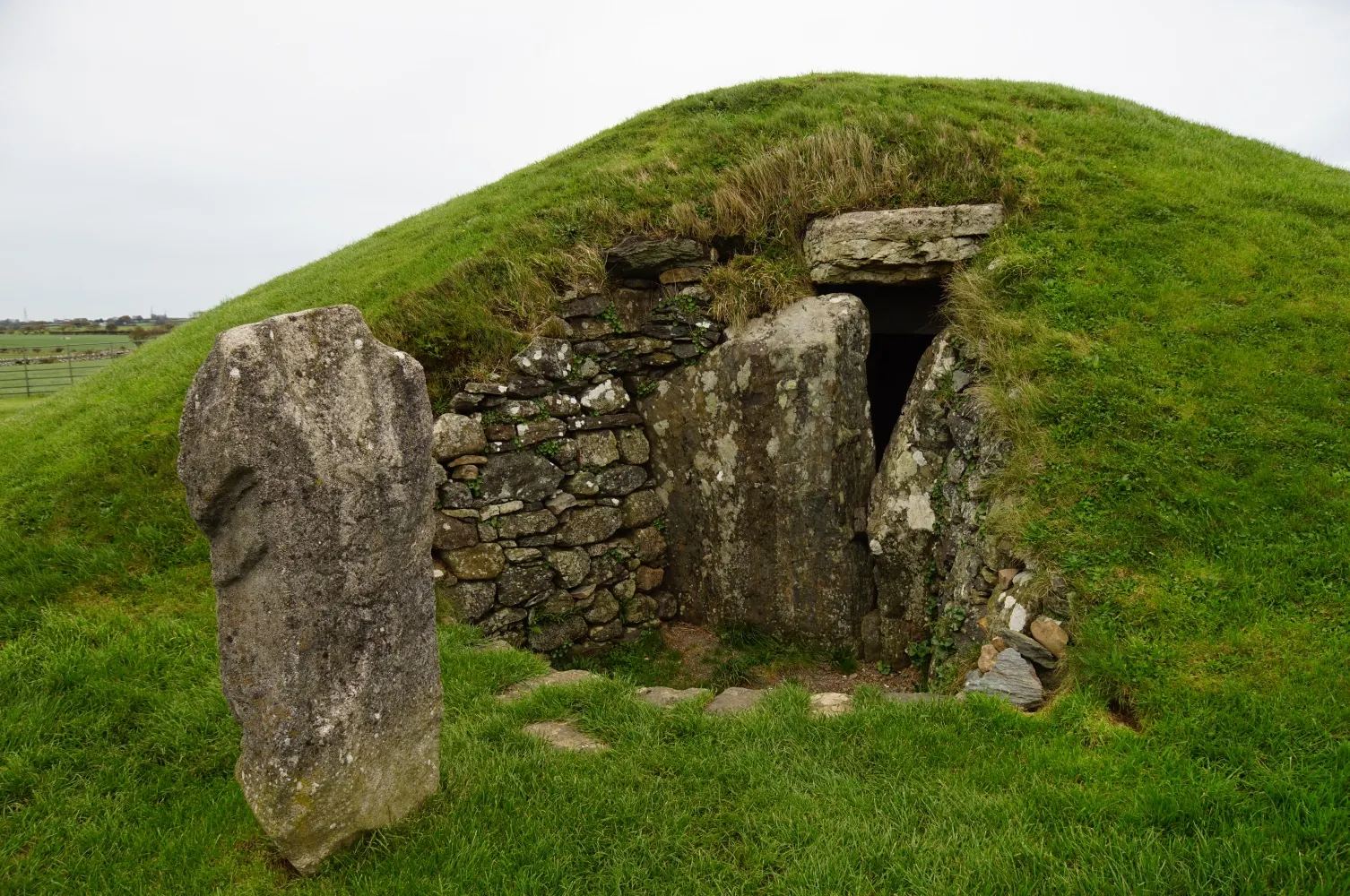
Standing stones and the passage mouth.
05 The passage
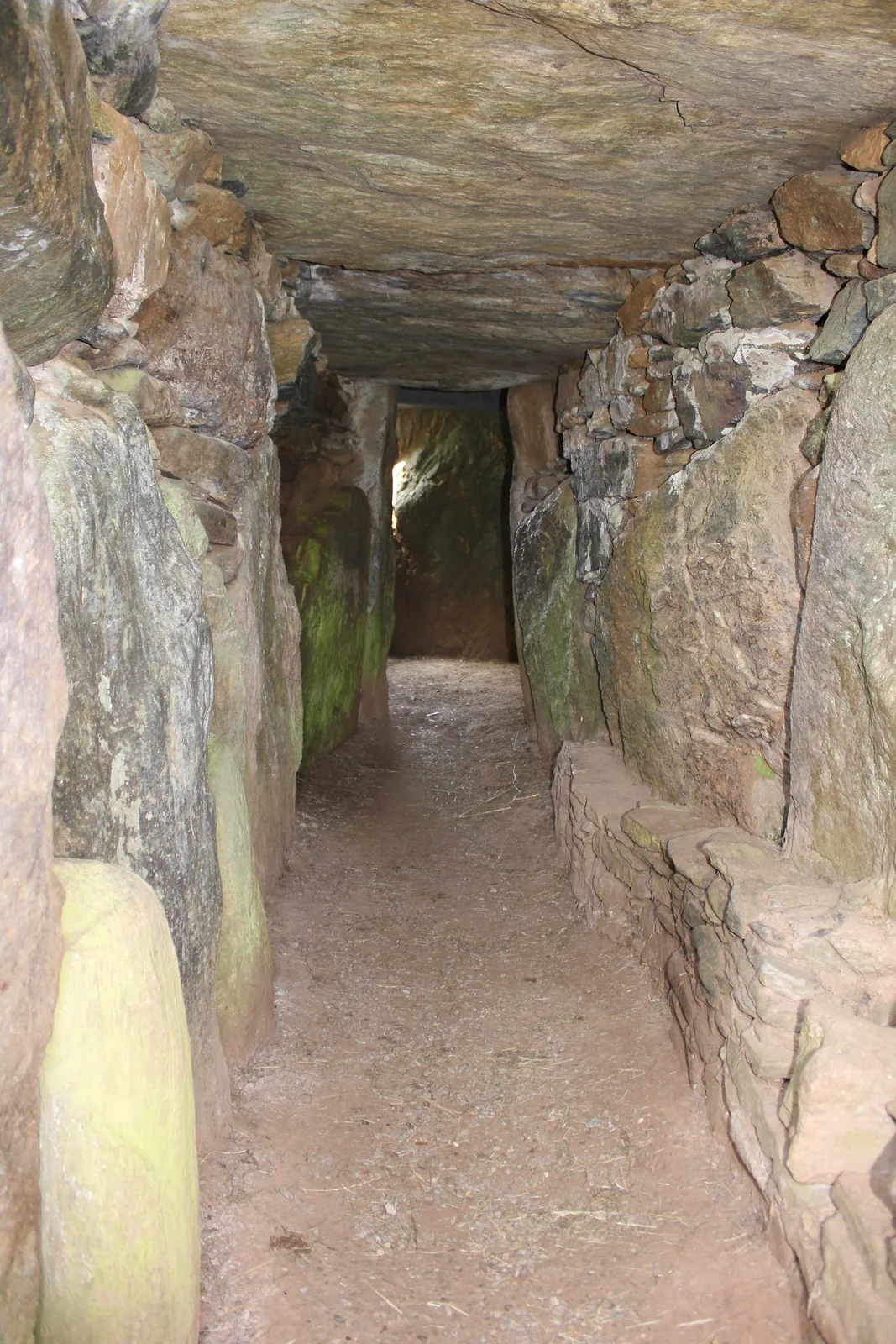
Stoop into the low, dark corridor.
06 The chamber
The pillar and the carved stone.
07 Back out
Daylight, fields, and the age of it.
Seen along the way.
Stone, field, and the low door into the mound: the visit before you make it.
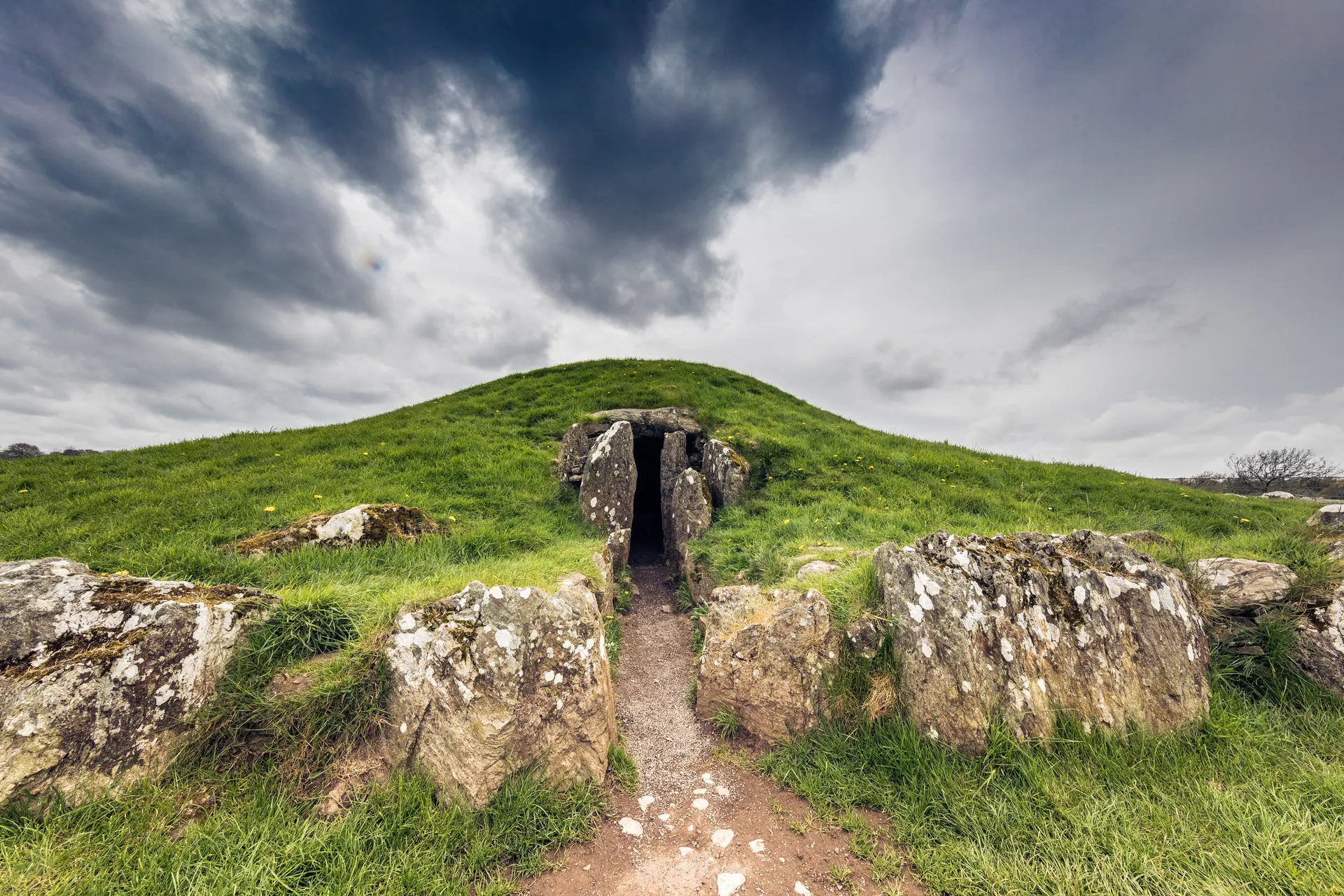
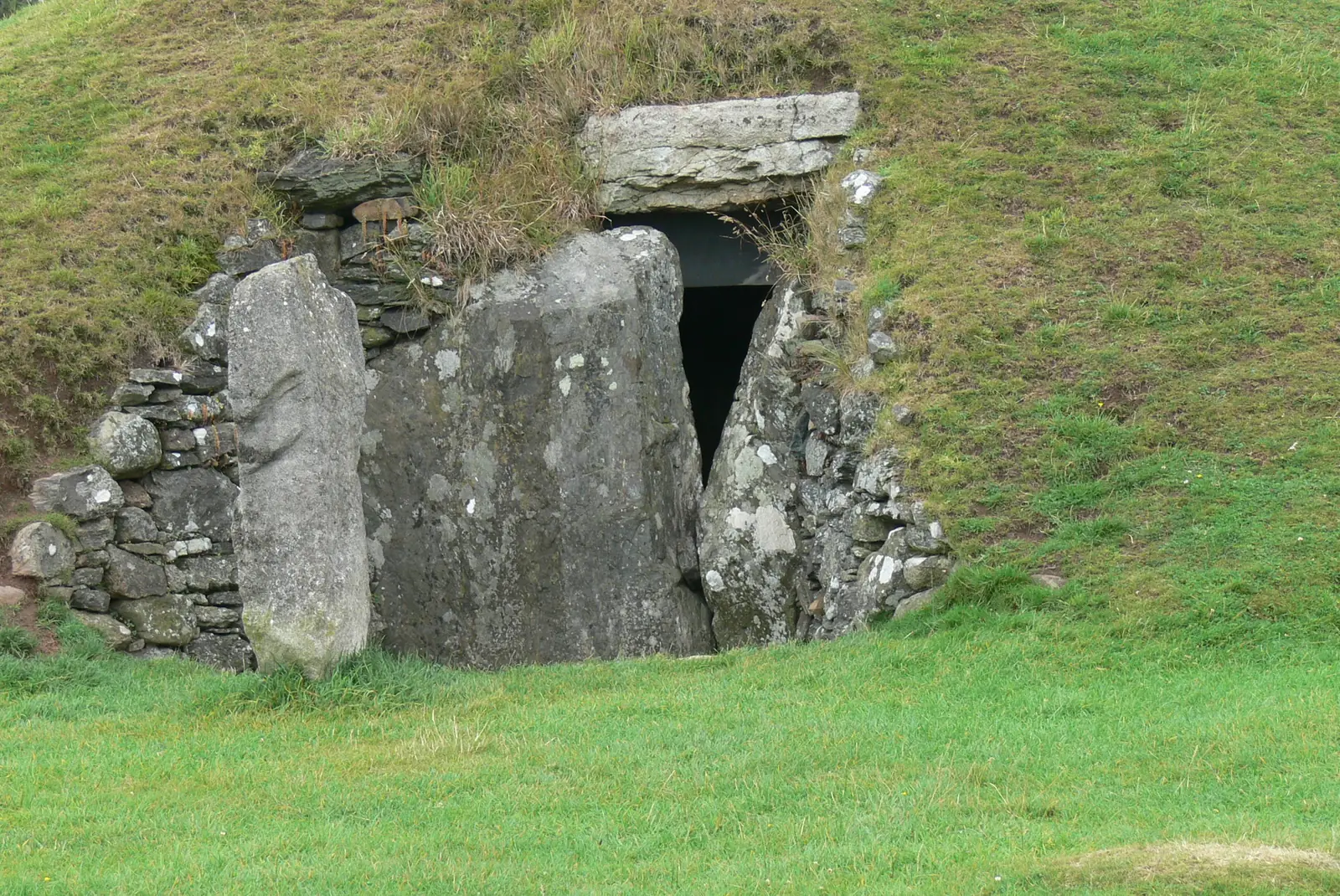
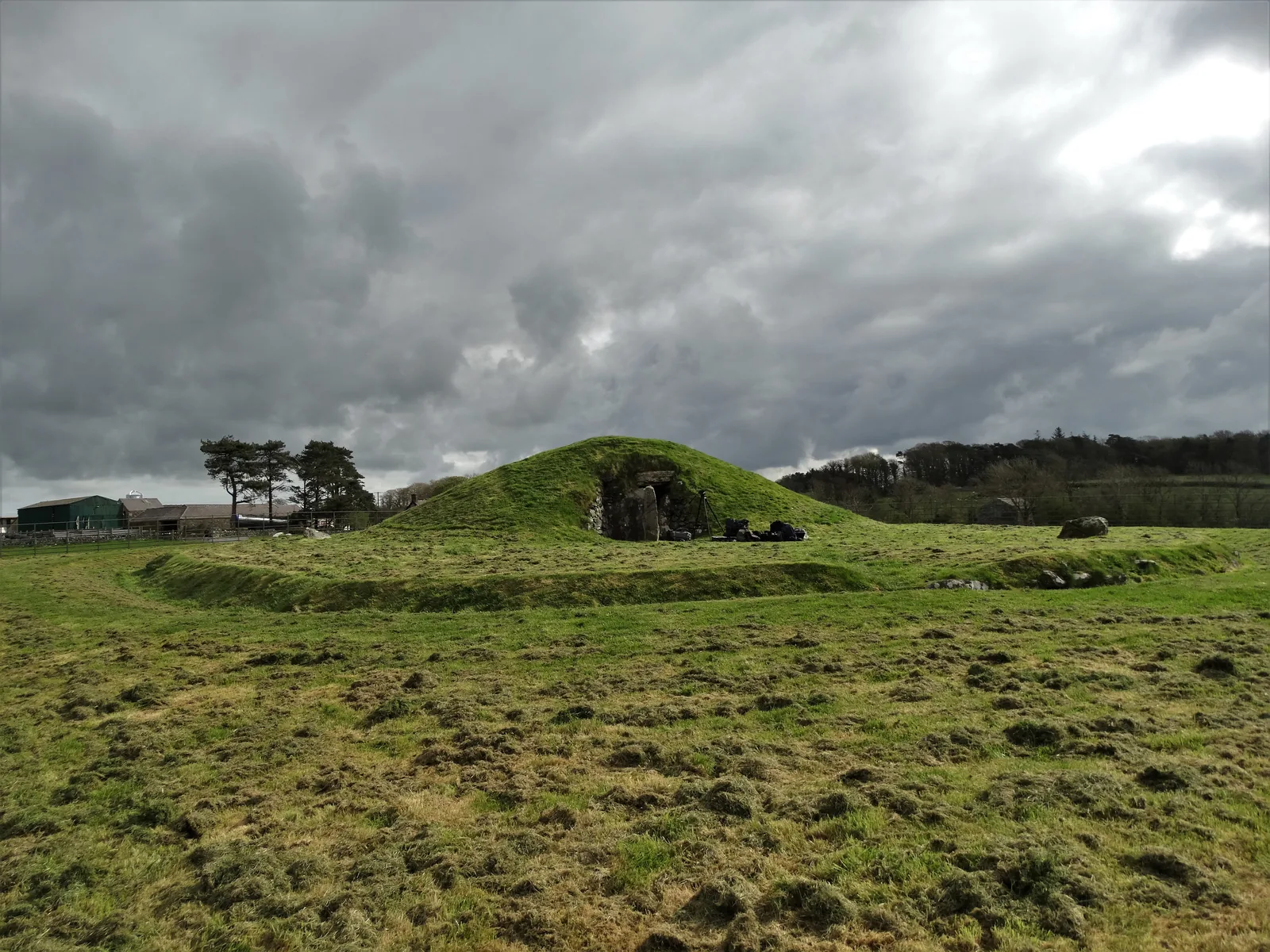
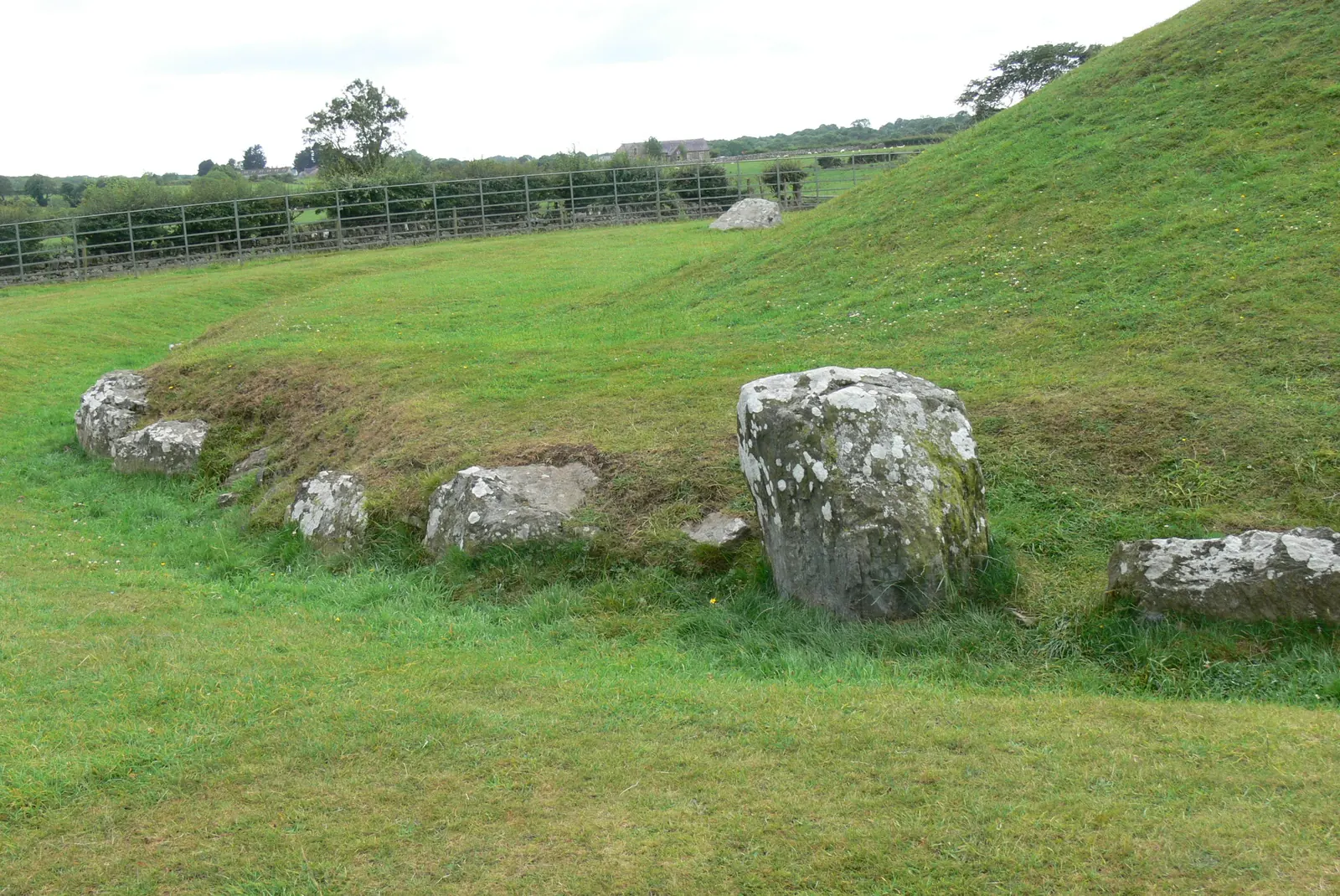
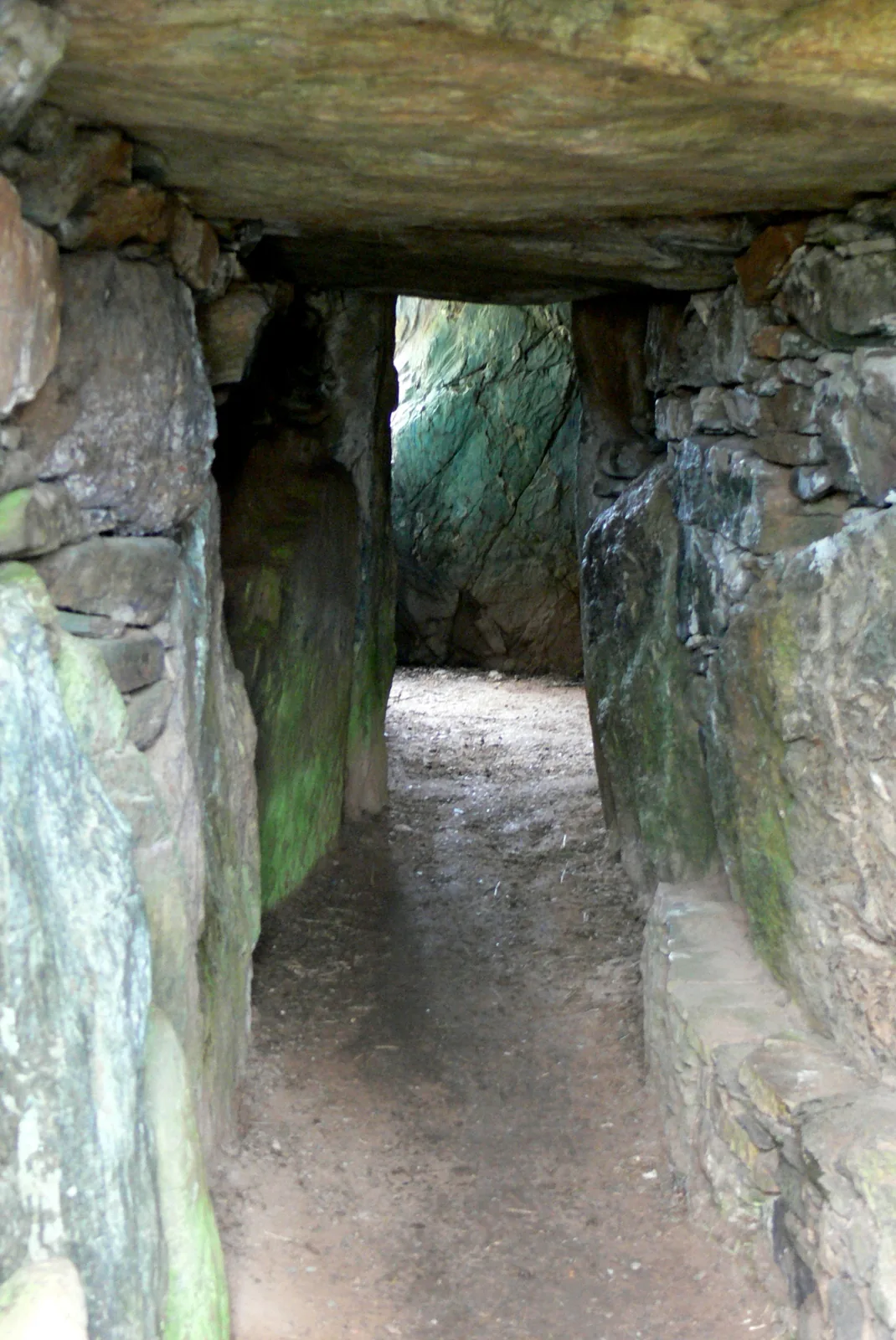
The mound across the field: low and green, easy to miss from the laneStanding stones of the henge, outside the moundThe low passage in: you stoop to reach the chamberThe chamber and its standing pillar, deep in the moundThe replica pattern stone, on the mound’s west side
The parts people remember
Bryn Celli Ddu is small. What stays with people is the age of it.
01
The mound in the field
Low and easy to miss from the road, then suddenly you’re standing on five thousand years.
02
The low doorway
You stoop to enter the passage. The monument makes you slow down and bow to get in.
03
The standing pillar
You need the torch here. The chamber is dark and the ceiling is low, so the pillar only resolves once you put a light on it: a smooth upright stone standing in the middle of a space you have just stooped to enter. It is the part worth waiting in the dark for.
04
The carved stone
The replica ‘pattern stone’ carries the decoration of an original now kept in a museum.
05
The way back out
You come back into daylight and ordinary farmland, and the age of the place stays with you.
A short visit that sits with you far longer than it takes.
The record
What we know, carefully told.
Four field notes on a five-thousand-year-old monument: two phases, a solar alignment, a carved stone, and what the diggers found.
Some of this is settled by excavation. Some is recorded in a single source, and it’s flagged where it is.
Field notes
Four entries. Open one to read the note.
Two monuments Fact
Henge, then tomb
Field note I · filed under phases
Bryn Celli Ddu is really two monuments, built one after the other on the same ground.
What is known
In the later Neolithic a henge came first: a bank around an inner ditch about 21 metres across, enclosing a circle of upright stones. The outer edge and several of those stones still survive. Later, a passage tomb was raised over the site: a long passage leading to a polygonal stone chamber beneath a mound.
What the record adds
One account puts the henge at roughly 3,000 BC and the tomb about a thousand years later.Dates · approximate
What to notice there
Look for the surviving circle stones set around the mound, the older monument, still holding its ground beneath the newer one.
Sun & stone Fact
Aligned to the sunrise
Field note II · filed under alignment
Cadw describes it as the only monument on Anglesey accurately aligned to the rising sun on the longest day.
What is known
The passage is set so that, at dawn on the midsummer solstice, light from the rising sun travels down it to reach the inner chamber.
What the record adds
Whether the beam still reaches cleanly today — after restoration, and depending on the weather — is debated, so it isn’t something to promise yourself.Effect · not guaranteed
What to notice there
The passage mouth faces east. Even outside midsummer, standing at the entrance you can read the line the builders chose.
Carving Record
The pattern stone
Field note III · filed under finds
A decorated stone found here is one of Bryn Celli Ddu’s most distinctive finds, the carved ‘pattern stone’.
What is known
A carved ‘pattern stone’ was found at Bryn Celli Ddu, and a replica has been set up at the site so visitors can see the design in place.
What the record adds
The original is recorded as having been moved to the National Museum of Wales, and a stone pillar about two metres high is recorded standing inside the chamber.Details · single source
What to notice there
Find the replica by the monument, and the pillar inside the chamber: two very different stones, both worth a slow look.
Excavation Record
What the diggers found
Field note IV · filed under excavation
The tomb was opened, recorded and partly rebuilt within living memory.
What is known
First explored in 1865, the tomb was thoroughly excavated in 1928–29. In the passage the diggers found burnt and unburnt human bone, quartz, two flint arrowheads, a stone bead, and limpet and mussel shells.
What the record adds
The 1928–29 work is recorded as directed by Wilfrid Hemp, and a pit from the henge phase is recorded as holding a single human ear-bone under a flat slab.Names & detail · single source
What to notice there
Stand in the passage where the bone was found. The finds were small and human, not grand.
Don’t let the day end at one pin.
Four stops that turn one monument into an Anglesey day.