A town-centre castle where ground level is easy and the towers are not.
CHECK FIRST · OPENING
Caernarfon keeps seasonal Cadw hours — as late as 6pm in summer, as early as 4pm close in winter — with last admission 30 minutes before closing, and it’s closed on 24–26 December and 1 January. Check current Cadw opening hours before you set off.
From £15.60 adult (summer) · book online for a discount
Access & difficulty
Strenuous interior · steep, uneven stairs
Parking & start point
No dedicated car park · public waterfront car park next door
Getting there
Bus stop ~200m (Arriva route 5 services) · Bangor station ~16 miles
Toilets, food & facilities
At the car park and inside the castle · baby change
Dogs
Assistance dogs only Apr–Oct · leads, ground floor only, Nov–Mar
Plan with confidence.Detailed information on arrival, access, facilities, restrictions and local conditions.
Opening, entry & booking
1 Mar–30 Jun
9:30am–5pm
1 Jul–31 Aug
9:30am–6pm
1 Sep–31 Oct
9:30am–5pm
1 Nov–28 Feb
10am–4pm
Last admission
30 minutes before closing.
Closed
24, 25 and 26 December and 1 January.
Tickets
Adult £15.60, Senior £14.00, Junior/Student £10.90 (2026 summer rate). Buy on arrival, or book online for 5% off: online bookings are non-refundable. Booking is not required. Disabled visitors and one companion go free.
Included
The Royal Welch Fusiliers Museum, inside the castle.
Opening hours and prices are set by Cadw and change through the year.
There is no dedicated castle car park. A long-stay public car park sits at the waterfront immediately next to the castle, with further car parks around Caernarfon town centre.
Parking
Public waterfront car park adjacent to the castle; price and operator not confirmed for this guide. Open Slate Quay in Google Maps: the nearest public car park, not castle parking.
Address
Castell Caernarfon, Castle Ditch, Caernarfon LL55 2AY.
Bus
A stop about 200m away, on the Arriva route 5 services (Llandudno–Bangor–Caernarfon). Check the current service before travelling.
At the car park and within the castle, with baby-changing facilities.
Café
A small pop-up café operates on site; hours vary through the year: don’t rely on it being open.
Shop
Gift shop and guidebooks in the visitor centre; audio guide available to buy.
Accessibility & terrain
Cadw rates the interior “Level 4 — Strenuous.” Ground-level paths are level and grassy, but most towers are reached by steep, narrow, sometimes uneven spiral stairs.
Terrain
Level 4: Strenuous.
Ramp
From the pavement through the gate into the admissions area.
Lift
Reaches the upper levels of King’s Gate only: most towers remain stair-only.
King’s Gate can assist only a limited number of people during an emergency evacuation; call 01286 677 617 in advance if you’ll need help.
Dogs & restrictions
Assistance dogs only, April to October. From November to March, dogs are permitted on short leads, ground floor only.
Safety, weather & local conditions
Normal awareness for a historic monument with towers and steps. Take care on the spiral staircases and wall walks, especially with children, and allow extra time if anyone in your group needs the King’s Gate lift.
PLACE-SPECIFIC DETAILS
Other place details
Heritage status
UNESCO World Heritage Site since 1986
Museum
Royal Welch Fusiliers Museum included in the castle ticket
What to bring
Comfortable shoes
A layer for the towers
Card for parking & tickets
Water
Camera
Castell Caernarfon
Not a ruin. A fortress that never stopped standing.
Begun in 1283 by Edward I, Caernarfon is one of the four great castles — with Beaumaris, Conwy and Harlech — that make up the “Castles and Town Walls of King Edward in Gwynedd” World Heritage Site. Its polygonal towers and banded stonework were built to echo the walls of Constantinople.
This is a castle you climb through, not one you view from behind a rope.
Twin towers, a gate between them.
Should this shape your day?
A UNESCO World Heritage castle you can genuinely climb through. Budget real time and good footwear.
Good fit for
history & architecture visitors
families who can manage stairs
anyone pairing Caernarfon with Yr Wyddfa
Royal Welch Fusiliers Museum visitors
Think twice if
you need step-free access to the upper towers
you’re short on time
you’re visiting with a pet dog, April–October
you’re arriving late: Cadw hours are seasonal and last admission is before closing
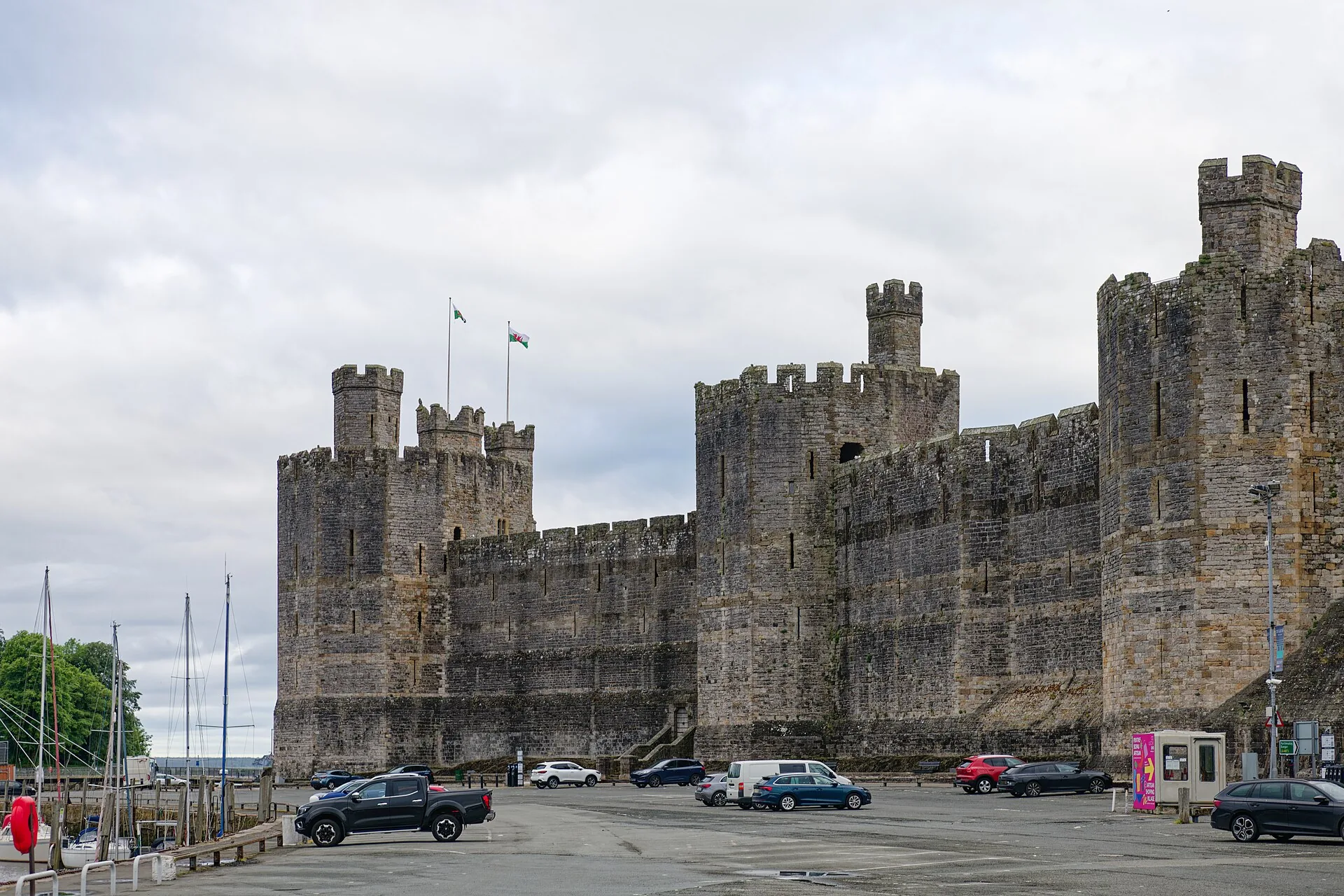
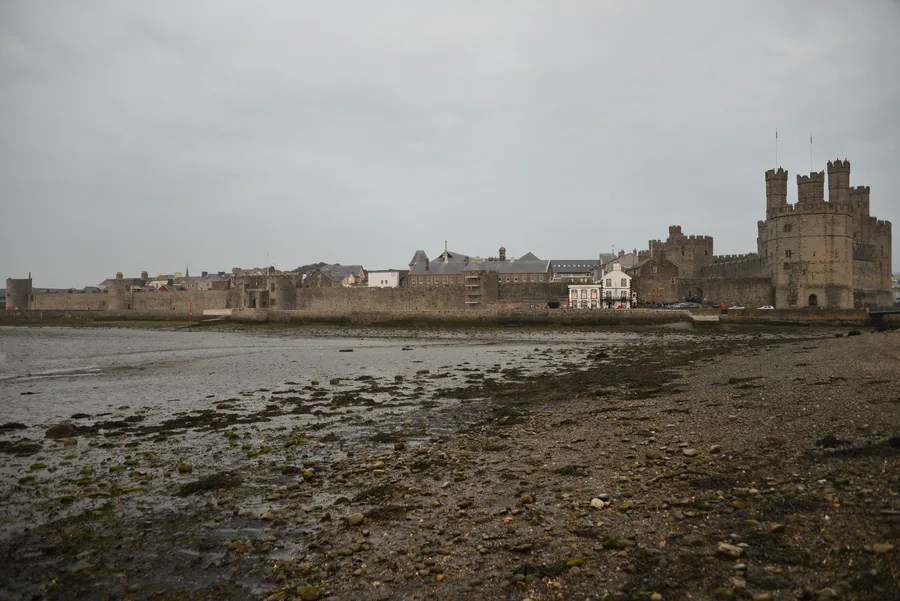
Allow a proper couple of hours, and see the castle from the waterfront before you go in: the classic view across the water.
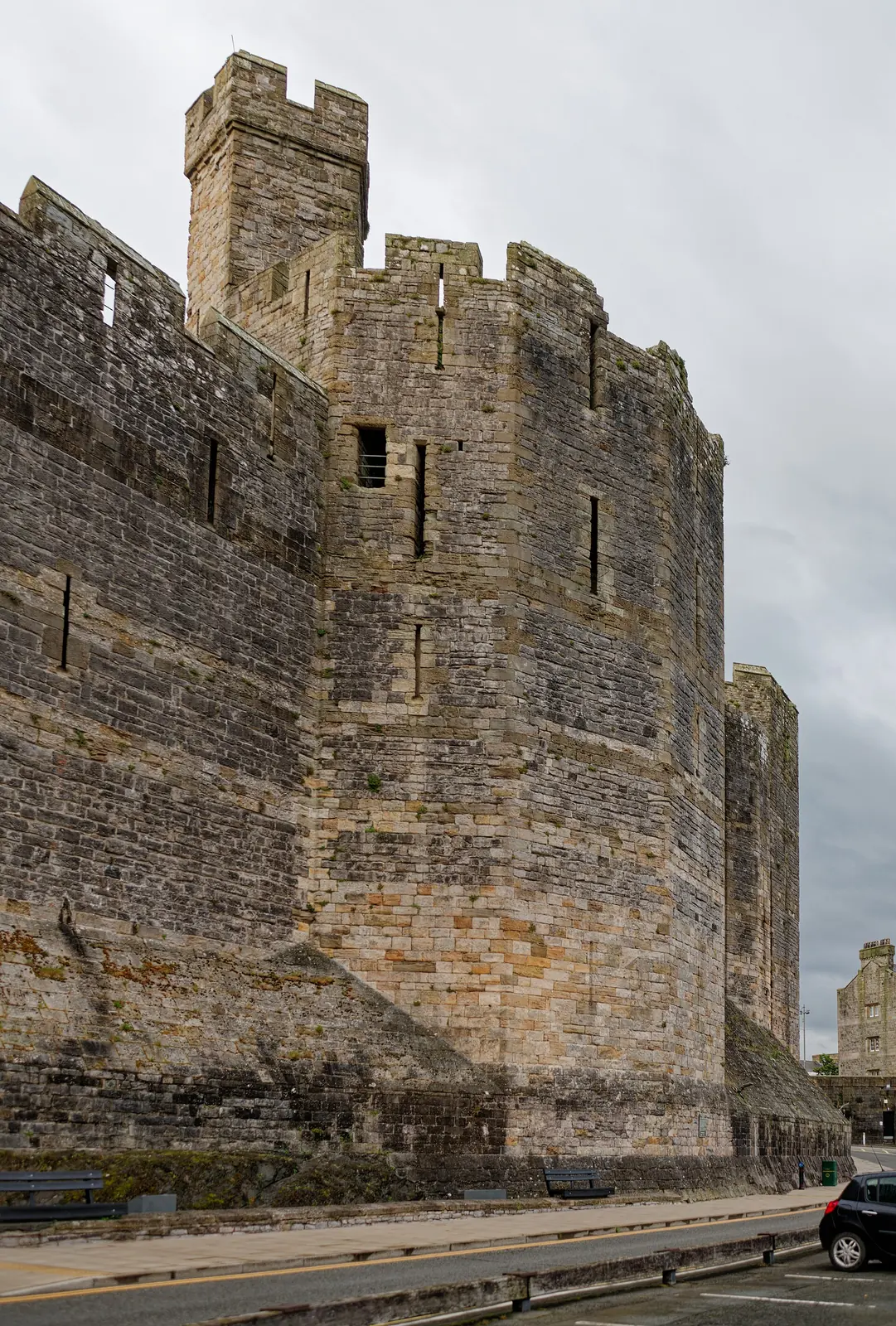
Banded stone, built to echo Constantinople.
One castle, seven scenes.
A suggested order. See the shape of the visit before you commit to it.
01 Waterfront
The towers rise straight over the water.
02 King’s Gate
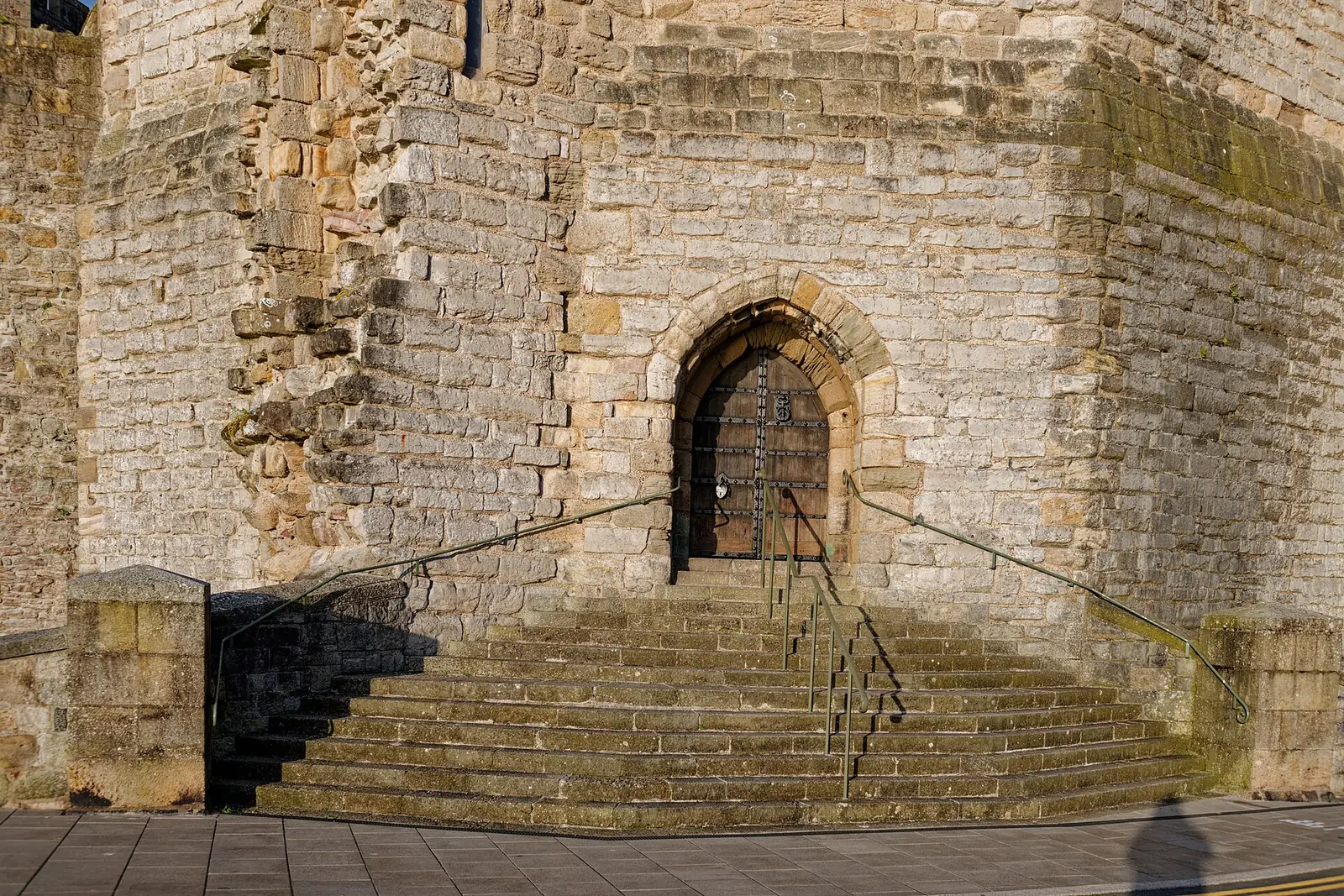
The main threshold into the castle.
03 The wards
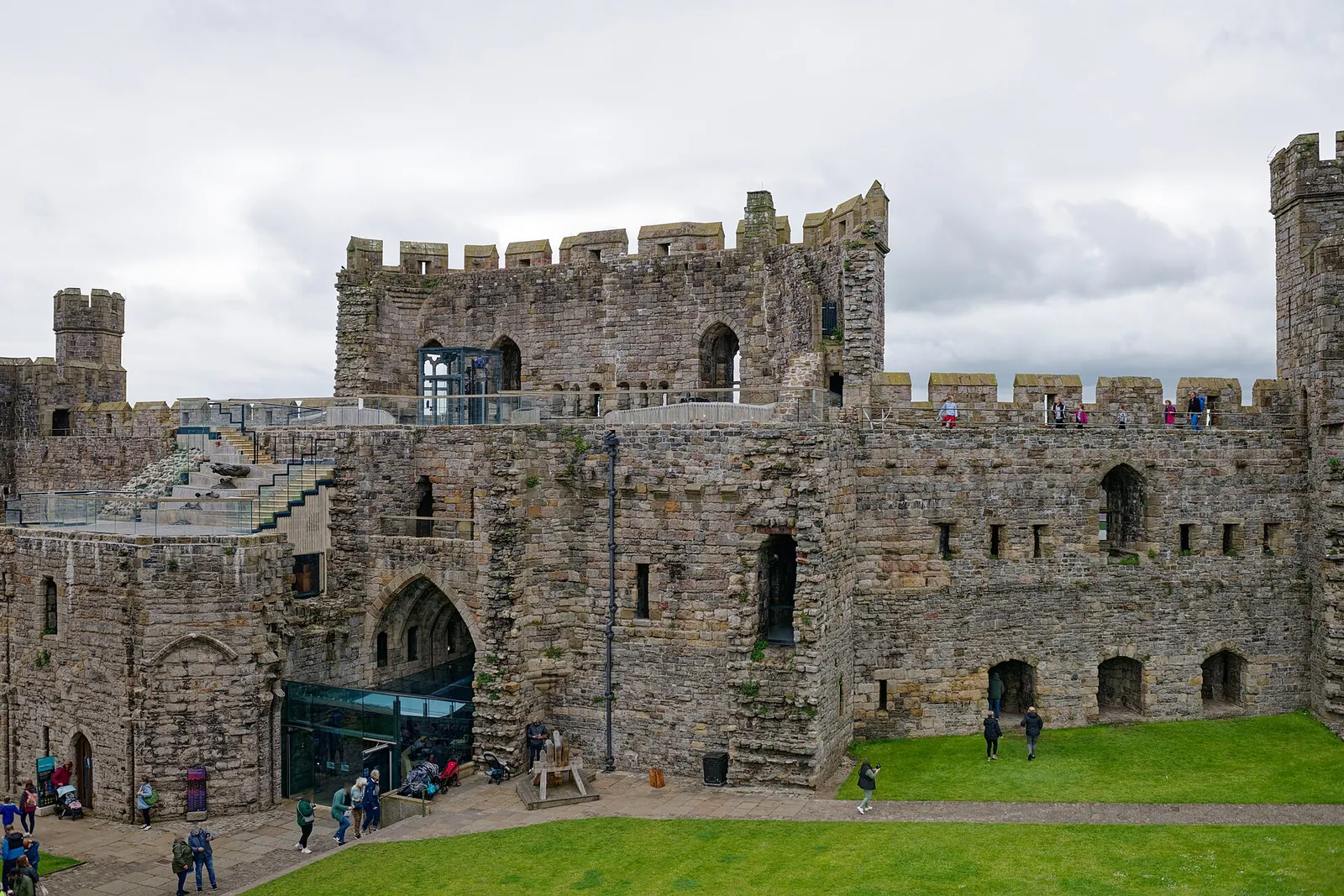
Open, level ground inside the walls.
04 The towers
Steep spiral stairs to the Eagle Tower.
05 The museum
Royal Welch Fusiliers, inside the ticket.
06 The lift
Step-free to King’s Gate’s upper levels.
07 The wall-walk
The battlements, and the view over the water.
Seen along the way.
Towers, walls and water: the castle before you walk it.
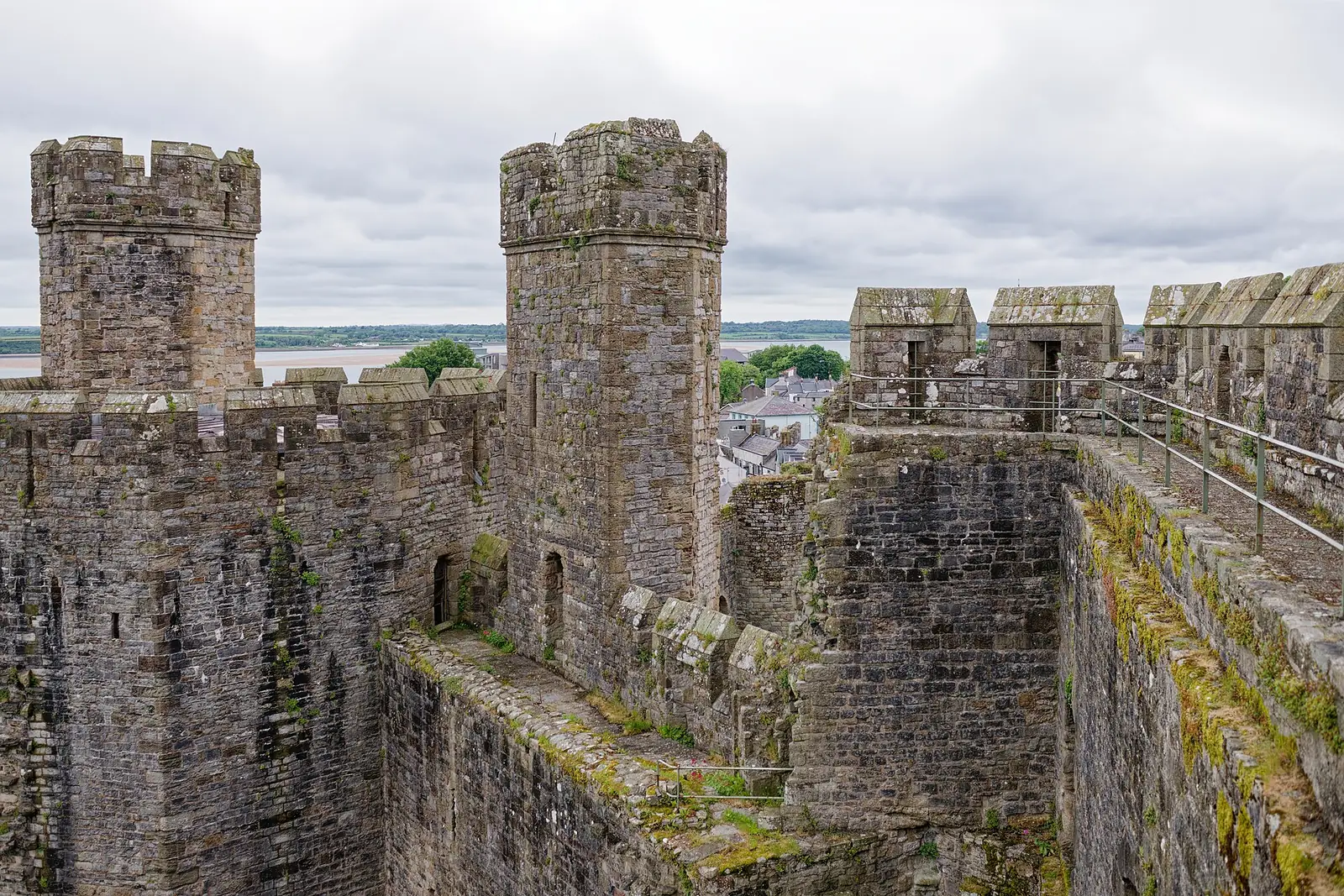
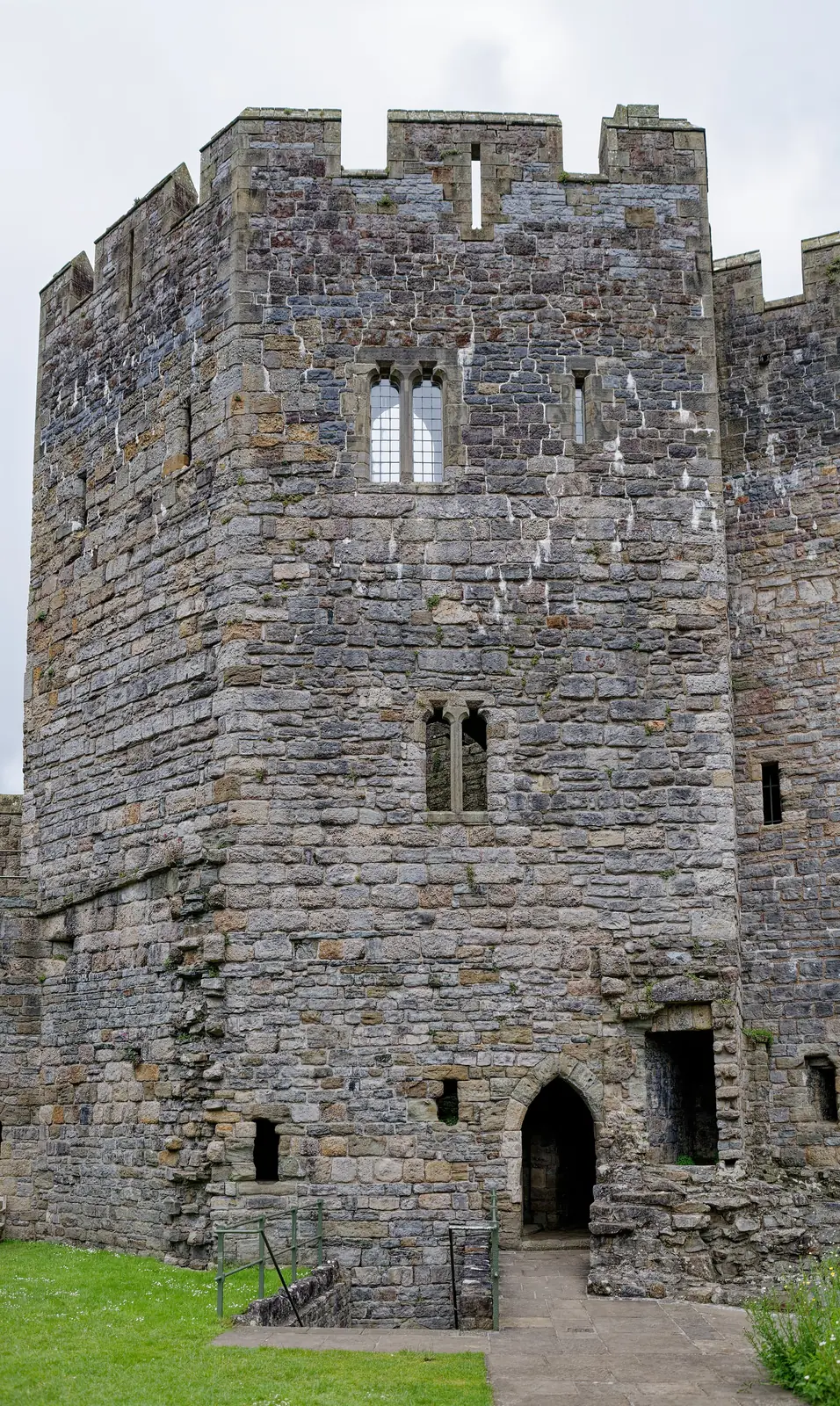
The Black Tower: one of the castle’s lesser-seen facesKing’s Gate and the wall-walk: the lift up, the stairs the rest of the wayThe Queen’s Gate battlements: a walk above the rooftopsThe Well Tower: square-cut and quietly overlookedThe Eagle Tower: steps up to the castle’s grandest tower
What stays with you
The parts people remember
A fortress that begins at the waterline and keeps going up.
01
Straight out of the quay
There is no approach lawn. The towers rise directly from the stone quay, and the water sits at the foot of the wall with the town pressed up behind.
02
Through King's Gate
The gate is the pinch point, and the wards beyond open flat and wide: far more ground inside the walls than the outside face suggests.
03
Into a spiral stair
The towers are entered by narrow turning stairs, worn and dim, where progress is one step at a time and the room above arrives without warning.
04
Stone in bands
The masonry is laid in colour: limestone and darker sandstone running in courses across the polygonal towers, with stone sentry boxes set along the wall-walk.
05
The walk along the top
The battlements carry you back around the full circuit, with water directly below the parapet and the town roofs held inside the walls, until the gate returns you to ground level.
A castle you climb through rather than look at.
From the Caernarfon archive
A conquest, a revolt, and two princes.
Four field notes on this castle’s record: construction, war, ceremony, and the one story that isn’t quite history.
Most of this is documented fact. One entry is a famous legend, and it is labelled as one.
Field notes
Four entries. Open one to read the note.
Construction Fact
1283: a castle begins
Field note I · filed under construction
Edward I’s master builder raised a fortress designed to look like an empire, not just a castle.
What is known
Construction began in 1283 under Edward I, with James of St George as master architect. Cadw records the combined castle, town-walls and quay project as taking around 47 years and costing roughly £25,000.
Why it looks like this
The polygonal towers and banded stonework were designed to echo the walls of Constantinople and Roman imperial architecture: a deliberate statement of authority, according to Cadw.
What to notice there
The Eagle Tower, with its three turrets, is the castle’s most powerful single feature. Look for the eagle figures that gave it its name.
War & rebuilding Fact
1294: nearly lost
Field note II · filed under the revolt
Only eleven years after building began, the still-unfinished castle was taken and burned.
What is known
In 1294, the revolt led by Madog ap Llywelyn saw Welsh forces capture the town and burn what was flammable of the castle, then defended by only a ditch and a temporary barricade.
What happened next
English forces recaptured the town by late 1295, after which extensive rebuilding of the castle and town walls took place.
What to notice there
The castle you walk through today is largely the rebuilt, post-1295 fortress: a reminder that its completeness was never guaranteed.
Royal ceremony Fact
1911 & 1969: two investitures
Field note III · filed under ceremony
This isn’t only medieval history: it’s where two twentieth-century royal ceremonies actually happened.
What is known
The castle hosted the investiture of Edward, Prince of Wales (later Edward VIII) in 1911, and of Charles, Prince of Wales (later Charles III) in 1969.
The 1969 backdrop
On the eve of the 1969 ceremony, two men died when a device they were reportedly planting near the railway line at Abergele exploded prematurely; a second device exploded in Caernarfon’s Love Lane shortly before the ceremony began. The investiture went ahead as planned.
What to notice there
The Royal Welch Fusiliers Museum, inside the castle, sits alongside this more recent layer of the site’s history.
Legend Legend
The prince who spoke no English
Field note IV · filed under the unproven
One of Wales’s most famous royal stories was probably never true, and saying so plainly is the honest position.
What is known
Edward I’s son was born nearby in 1284 and later became the first English Prince of Wales.
What tradition says
The famous story holds that Edward promised the Welsh “a prince born in Wales who spoke no English,” then presented his infant son. It is a well-known tale, but it can only be traced to the 16th century, and may well be apocryphal.Records unclear
What to notice there
Cadw’s own account of the castle also draws on the older Welsh tale of Macsen Wledig’s dream of a great fortress: another layer of legend woven into the stone, not documented history.
Don’t let the day end at one pin.
Four stops that turn Caernarfon into a North Wales day.
About 5 miles north-east
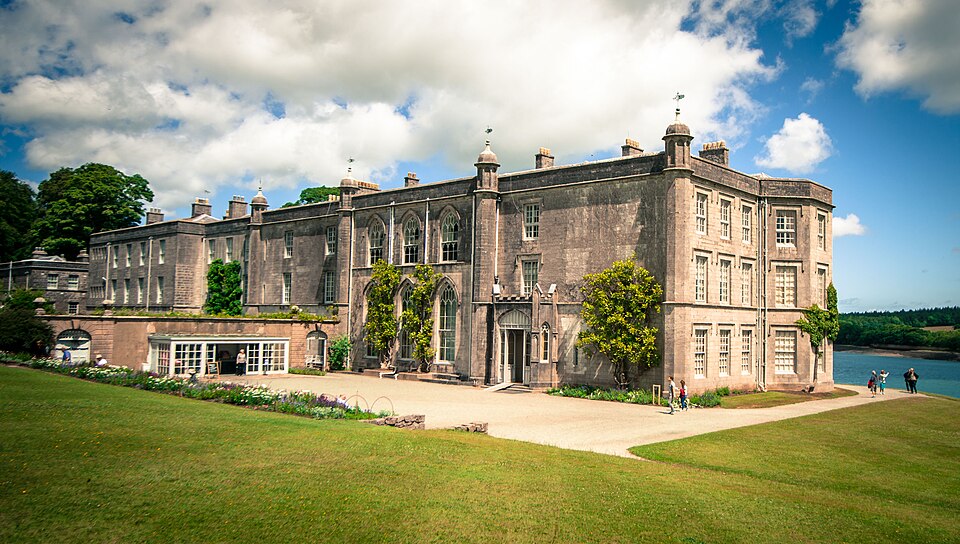
Plas Newydd
A National Trust house and garden looking across the Menai Strait toward Eryri.